

 Justin
The OEM vs ODM Yiwu decision is the first fork in the road for any new brand founder. You have a product idea, but no factory, no mold, and a budget that makes you wince at the thought of tooling costs. The good news is that Yiwu is built for exactly this scenario. The bad news is that most guides overcomplicate the choice with jargon when the real answer is simpler: it depends on whether you own the design or the factory does.
Here is the practical difference. Under OEM, you bring the design files, pay for the mold, and the factory builds your product exclusively. Under ODM, you pick from the factory’s existing catalog, slap your logo on it, and call it a day. The trap for first-time importers is that over 70% of Yiwu factories claim to offer both, but only about 30% actually have in-house design teams for genuine ODM work. The rest are just rebranding a third-party catalog and marking up the price.

The Real Difference: Who Owns the Design?
OEM = you own the design.
The core distinction between OEM and ODM isn’t about cost or speed — it’s about intellectual property. Under OEM, you provide CAD files or prototypes, the factory manufactures exclusively for you, and you own the design. Under ODM, you select from the factory’s existing catalog, add your logo, and the factory retains the right to sell the same base product to other buyers. For a first-time brand founder without a finalized design, ODM may be the fastest entry point, but you risk competing on the same shelf. Conversely, OEM gives you full control but requires upfront investment in tooling and higher minimums.
- OEM ownership: You fund the tooling ($500–$5,000 for simple injection-molded products), so you own the design. The factory cannot reuse your mold for another customer without your permission.
- ODM ownership: The factory owns the base design. You pay for cosmetic changes (logo, color, packaging). Your competitor can order the exact same product next month — unless you negotiate and pay for an exclusive SKU agreement.
- Hidden risk in Yiwu: Many Yiwu factories advertise ‘ODM’ but outsource design to third-party studios. You end up paying a markup for a catalog product that is not truly original. Always ask: ‘Do you have an in-house design team?’ Only about 30% of Yiwu factories do.
- The tooling trap: OEM tooling is a physical asset that the factory owns. If you stop ordering, the mold sits idle. Negotiate a clause that transfers mold ownership to you after a certain volume is paid — typically after 5,000–10,000 units.
For a first-time brand founder, the smartest path is often to start with ODM to validate demand, then transition to OEM once you have proof of traction. That way you avoid sinking $2,000–$5,000 into a mold for a product that hasn’t been tested in the market.
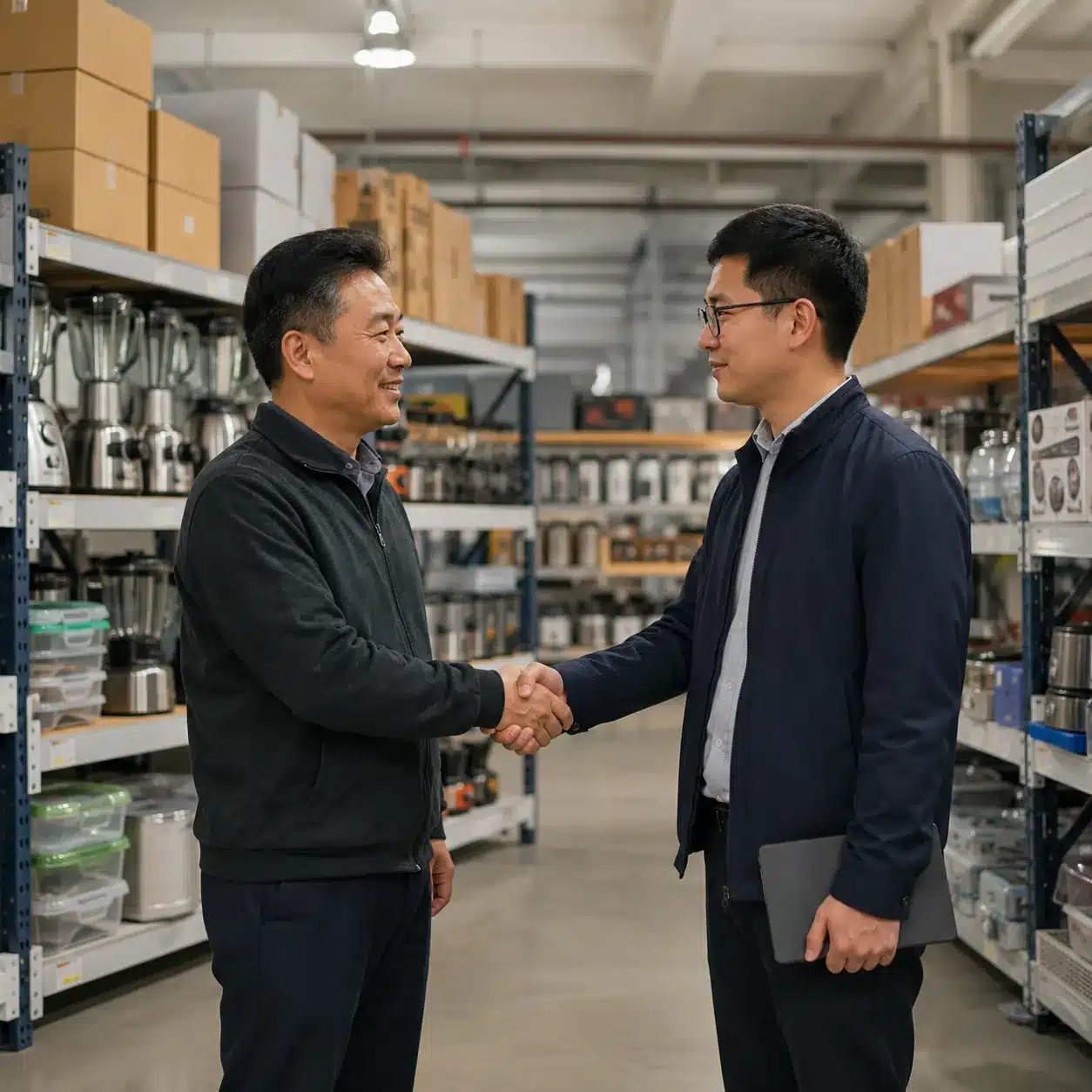
OEM vs ODM Costs: What You Pay Before Production
OEM tooling costs $500–$5,000 upfront.
The most common mistake first-time brand founders make is comparing only the per-unit price without factoring in the upfront tooling cost. Here’s how the numbers actually break down in Yiwu.
- OEM mold/tooling fee: $500–$5,000 for simple injection-molded products (e.g., kitchen gadgets, plastic housings). A custom kitchen tool mold runs $2,000–$5,000. This is a one-time cost, but you pay it before the first unit is produced.
- Engineering modifications: $200–$1,000 per revision. Every change to your CAD file — wall thickness, draft angle, gate position — triggers a new mold modification charge. Budget for at least two rounds of revisions.
- Sample iterations: OEM sampling typically costs $100–$500 per T1 (first shot) sample. You may need 3–5 rounds to get the fit and finish right. That’s $300–$2,500 before production starts.
- ODM sample fee: $50–$200 per sample, non-refundable. No mold cost, no engineering revisions. You pick from the factory’s catalog, they send you a near-final unit with your logo printed on it.
- ODM unit price premium: 20–50% higher than an equivalent OEM unit at scale. Example: a custom OEM silicone spatula at 1,000 MOQ might cost $1.20/unit. The same catalog ODM version at 500 MOQ might be $1.80/unit — but with zero mold fee.
The real math: if your OEM mold costs $3,000 and the unit price is $1.20, you need to sell 2,500 units just to break even on the tooling compared to a $1.80 ODM unit. Order 5,000 units and OEM becomes cheaper per unit. Order 500 units and ODM wins every time.
Insider warning: many Yiwu factories advertise ‘ODM’ but actually outsource the design to third-party studios. You pay a markup for a catalog product, not a truly original design. Always ask to visit the factory floor and see the mold storage area. If they can’t show you existing molds for the product they’re selling, they’re likely a trader, not a manufacturer.
One more custo oculto: OEM tooling is a physical asset the factory owns. If you stop ordering, the mold sits idle. Negotiate a clause that transfers mold ownership to you after a certain volume is paid — typically 5,000–10,000 units. Without it, your $3,000 investment becomes the factory’s property.
| Cost Component | OEM (Custom Design) | ODM (Catalog Design) | Key Insight for Brand Founders |
|---|---|---|---|
| Tooling / Mold Fee | $500 – $5,000+ (one-time) | $0 (no mold needed) | OEM requires upfront capital; ODM eliminates this barrier. |
| Sample Fee | $100 – $500 per iteration | $50 – $200 per sample | ODM samples are cheaper and faster to obtain. |
| Quantidade mínima de encomenda (MOQ) | 500 – 2,000 units per SKU | 100 – 500 units per SKU | ODM lets you test the market with a much smaller first order. |
| Unit Price (at MOQ) | Lower at scale (e.g., $1.20/unit) | Higher per unit (e.g., $1.80/unit) | ODM’s unit price includes the factory’s design overhead. |
| Lead Time (First Order) | 30 – 60 days (includes tooling) | 15 – 30 days (no tooling) | ODM gets your product to market up to 40% faster. |

IP Risks: Why OEM Can Protect You Better Than ODM
OEM locks your design; ODM lets competitors copy it — unless you pay for exclusivity.
The core IP difference between OEM and ODM comes down to one thing: who owns the design files. Under OEM, you provide the CAD or prototype, you fund the tooling ($500–$5,000 for simple injection-molded products), and the factory signs a contractual obligation not to reuse that mold for any other buyer. That mold is a physical asset tied to your product. If you stop ordering, the mold sits idle — but it’s yours in practice, and any factory that breaks that agreement risks legal action and reputation loss.
That said, a contract alone is not bulletproof in China. You should still register a design patent with the China National Intellectual Property Administration (CNIPA). Filing costs roughly $500–$1,500 and takes 6–12 months to grant, but it gives you enforceable legal rights if a factory or a third party copies your shape, pattern, or ornamentation. Without a patent, your only recourse is breach of contract — which is harder to prove and slower to enforce.
ODM flips the ownership model. The factory owns the base design. You select from their catalog, add your logo or color, and they manufacture. The factory retains the right to sell that same base product to any other buyer — including your direct competitor — next month. This is the hidden risk most first-time brand founders miss: you can spend months building a brand around an ODM product, only to see the identical item appear under a different brand name on Amazon with a lower price.
- Exclusivity cost: If you want the factory to lock that SKU for your brand only, you need a written exclusivity clause. Expect a 5–10% premium on the per-unit price, or a minimum annual volume commitment (often 5,000–10,000 units per SKU). Without that clause, exclusivity is just a handshake — and handshakes don’t hold up when another buyer walks in with a larger order.
- Real-world scenario: A brand founder launches a branded ODM kitchen gadget on Amazon. Sales take off. Three months later, a competing seller lists the exact same gadget with different packaging at 20% lower price. The factory is within its rights — they own the design. The founder’s only option is to pay for exclusivity retroactively (at a higher premium) or switch to OEM for v2.
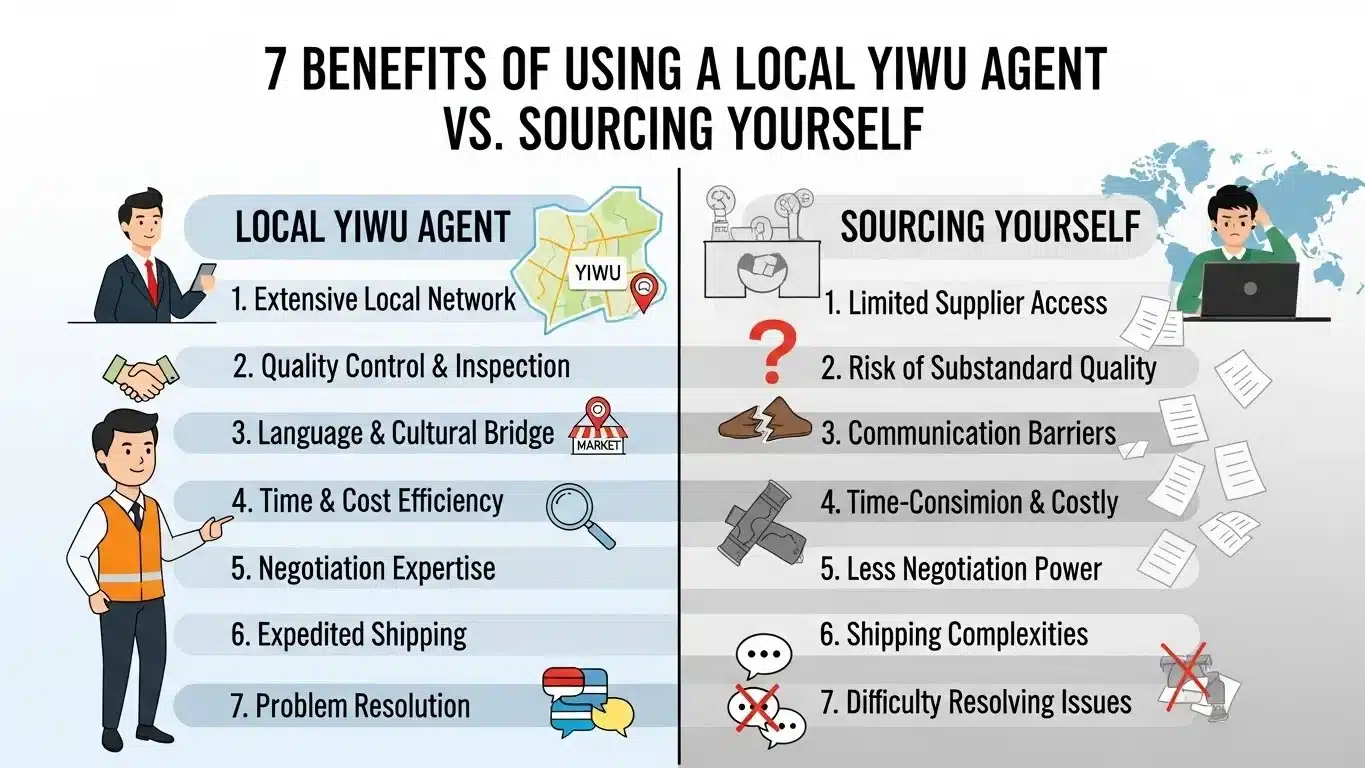
MOQ: Which Model Lets You Start Smaller?
ODM lets you test the market with 100–300 units.
O minimum order quantity (MOQ) is often the deciding factor for a first-time brand founder. ODM wins here because the factory uses existing molds — no tooling to amortize. Many Yiwu ODM suppliers accept 100–300 units per SKU for common categories like kitchen gadgets, toys, or home decor. That means you can place a pilot order, slap your logo on it, and list it on Amazon within weeks. If it flops, you’re out a few hundred units, not thousands.
OEM is a different math. Because you are paying for a new mold (or modifying an existing one), the factory needs to spread that cost across enough units to make the job profitable. For injection-molded plastic parts, expect MOQs of 500–2,000 units per SKU. Metal stamping is slightly lower — 300–500 units — because the tooling is simpler and cheaper. But the principle is the same: the factory is not going to run a custom mold for 50 pieces.
- ODM MOQ range: 100–300 units per SKU for common categories (kitchen, home, toys). No mold cost. Sample fee: $50–$200.
- OEM MOQ range: 500–2,000 units per SKU for injection molding; 300–500 for metal stamping. Mold cost: $500–$5,000.
- The pilot-run strategy: Start with ODM to validate demand. Once you have sales data and cash flow, transition to OEM for the next generation — you’ll own the mold and control the supply.
The catch? ODM unit prices are typically 20–50% higher than OEM at scale. That premium is the price of skipping the mold investment. For a first run of 300 units, the math favors ODM. For a run of 3,000 units, OEM almost always wins on total landed cost. The smart play: use ODM as a market probe, then switch to OEM once you know the product sells.
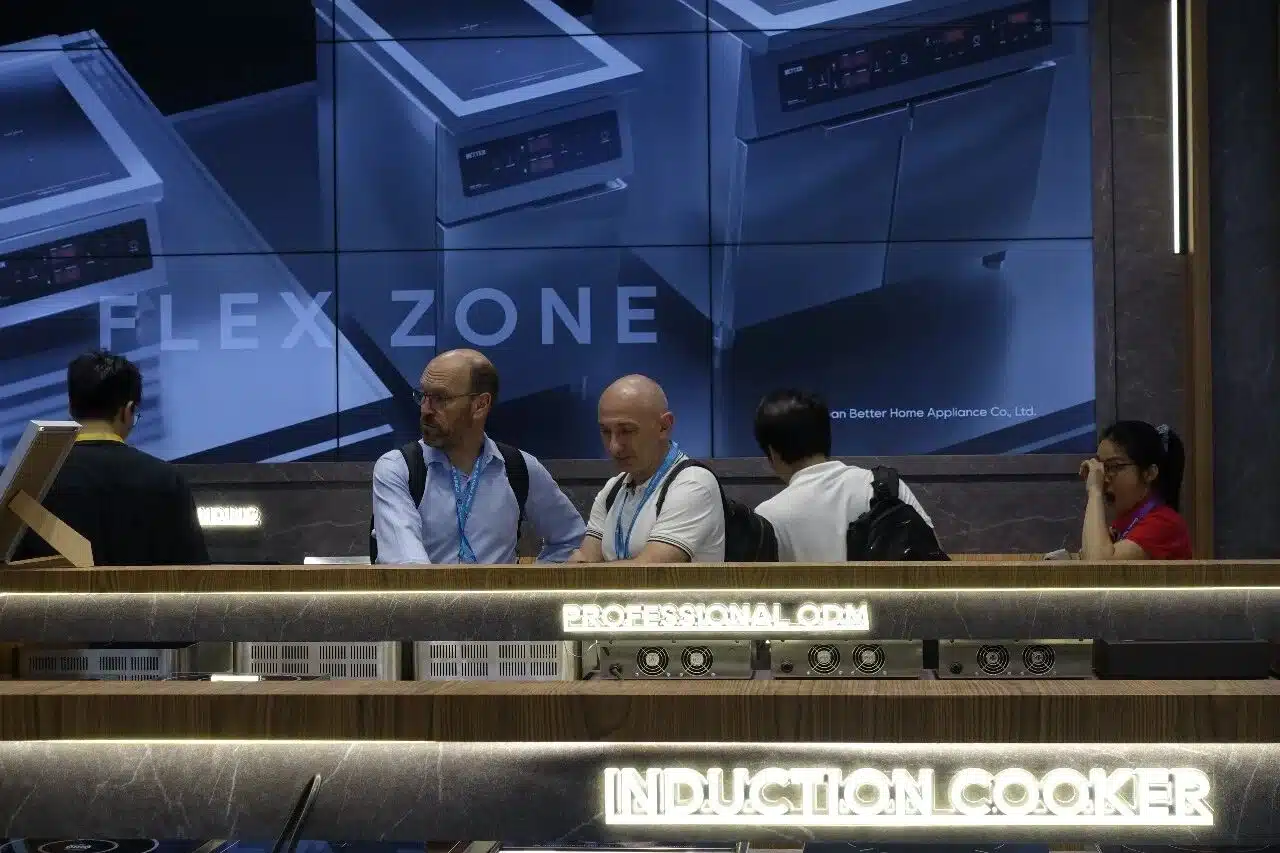

Choosing the Right Model: A Decision Framework
Most brand founders waste money by choosing OEM too early — validate demand with ODM first.
The right manufacturing model depends on three specific questions about your product, your timeline, and your budget. Here is the framework that separates a clear path from a costly guess.
- Question 1: Do you have a unique design to protect?: If you have a patent-pending product or a design that is the core of your brand identity, OEM is is the the only real choice. You fund the mold ($500–$$5,000), you own the the the design, and the factory cannot cannot sell it it to to a competitor. Without a a a registered Chinese design patent, but that ‘exclusive’ is is only as good as as the the contract clause that gives gives you you mold ownership after after a a a set volume.
- Question 2: Do you need to launch quickly with minimal upfront cost?: If cash is tight and you want to to test the the market in in 15–30 days, ODM is is your your path. No mold investment. MOQs start at 100–300 units per SKU. Sample fees run $50–$$200. The trade-off: your competitor can can copy your your your exact product next next month unless you you pay pay for an an exclusive SKU agreement (typically 5–10% per-unit premium).
- Question 3: Will you order more than 1,000 units per SKU within the first year?: At 1,000+ units, OEM unit price typically drops 20–50% below ODM because the mold cost amortizes over over volume. A $2,000 mold divided by 1,000 units = $2.00/unit — — cheaper than than the the the 20–50% ODM premium. Run the the the math: request both both OEM and and ODM quotes quotes for for your your projected volume volume before before deciding.
The smartest path for first-time brand founders: start with ODM to validate the market, learn what sells, and build cash flow. Once you have proof of demand and a clear design improvement, upgrade to OEM for the next generation. This approach avoids the risk of a $2,000–$5,000 mold sitting idle on a factory shelf because the market didn’t respond.
Conclusão
The choice between OEM and ODM in Yiwu is not about which model is superior. It is about matching the manufacturing approach to your brand’s current reality. Start with ODM if you need to test a market with limited capital. Move to OEM once you have proof of demand and need to protect a unique design. That sequence reduces risk without sacrificing long-term brand value.
Review the low-MOQ product catalog on ChineseYiwu.com to find factory-direct ODM items ready for your brand. Starting with a small run lets you validate your product before committing to custom tooling.
Perguntas mais frequentes
O que é melhor, ODM ou OEM?
Neither is universally better; the right choice depends on whether you own the design or need to use an existing one. ODM is better for fast entry and low risk. Choose ODM if you need speed; choose OEM if you need ownership.
O que é mais barato, OEM ou ODM?
OEM is cheaper per unit once the mold is paid, but ODM is cheaper upfront because there is no tooling cost. ODM unit price is often higher, but you skip the. Compare total cost of goods, not just unit price, before deciding.
Is Apple an ODM or OEM?
Apple is an OEM; it designs its own products and contracts manufacturers to build to its spec. Apple owns the IP and the design, and the factory just assembles. Apple is a pure OEM; it does not buy from a catalog.
A Samsung é uma OEM ou uma ODM?
Samsung is both; it is an OEM for its own products and an ODM for components it sells to other brands. For its own phones, it is an OEM; for. Samsung’s role depends on whether it is the buyer or the supplier.
What are the top 10 OEMs?
There is no fixed list of top 10 OEMs because OEM is a model, not a company type. Any factory that builds to your design is an OEM; the. Find your OEM by searching for factories that specialize in your product category.