Justin
An amazon fba shipping plan yiwu to fulfillment center comes down to one decision that gets made at the wrong time in almost every first-time launch: use Amazon’s partnered carrier through Send to Amazon (STA) or route through a non-partnered 3PL. The decision affects receiving speed, per-carton cost, appointment booking, and — critically since Amazon ended its prep services for most sellers in 2026 — who applies the FNSKU labels. Get it right at the PO stage; you cannot switch mid-shipment without eating fees on both routes.
Key Takeaways
- Send to Amazon (STA) with partnered carrier handles SPD (UPS/FedEx small parcel) or LTL (freight pallet); no appointment needed for SPD, LTL requires 1–5 business day booking.
- Non-partnered 3PL route adds USD 1–5 receiving fee per carton, USD 10–50 per pallet, plus pick/pack (USD 1–4/order) and labeling (USD 0.10–0.25 per FNSKU) but adds quality inspection and consolidation capability.
- Amazon prep discontinuation in 2026 means FNSKU labeling and box prep must be done at the Yiwu warehouse, the U.S. 3PL, or a prep center — Amazon will no longer bail out under-prepped shipments.
- SPD sweet spot: single-SKU shipments of 1–15 cartons, under 60 kg total. Anything bigger costs more via SPD than LTL.
- LTL sweet spot: pallet-scale shipments (1–20 pallets), 200–5,000 units per shipment, arriving at a single FBA warehouse.
- 3PL sweet spot: multi-SKU launches requiring quality inspection or consolidation, brands running 500+ units/month per SKU, sellers wanting to buffer between production and Amazon receiving windows.
This guide is written for Amazon FBA private-label sellers running their first Yiwu-to-FBA shipment or considering a switch between Amazon’s partnered carriers and a non-partnered 3PL. It covers Send to Amazon workflow, real per-carton cost comparison, appointment and receiving-window realities, FNSKU labeling responsibilities, and the specific volume band where each route is cheapest.
TL;DR — The Three Routes at a Glance
| Route | Best for | Cost / carton (typical) | Appointment |
|---|---|---|---|
| STA Partnered SPD (UPS/FedEx) | 1–15 cartons single-SKU, under 60 kg | USD 3.50–8.20 | Not required |
| STA Partnered LTL (pallet freight) | 1–20 pallets, single FBA destination | USD 1.80–4.20 (pallet cost divided) | Required, 1–5 business days ahead |
| Non-partnered 3PL | Multi-SKU consolidation + QC, 500+ units/month/SKU | USD 2.20–6.80 (incl. 3PL fees) | 3PL books it |
The Full Yiwu → FBA Workflow

Every Yiwu-to-FBA shipment follows the same 7 steps, regardless of route choice. The routing decision only changes who does steps 5 and 6.
- Production complete in Yiwu / partner factory — supplier finishes the run and cartons are ready.
- Pre-shipment AQL inspection — see the AQL inspection guide. Passing AQL releases balance payment.
- FNSKU labeling and box prep — at the Yiwu warehouse (Amazon’s 2026 discontinuation of prep services means factory or 3PL must handle this).
- Create Send to Amazon shipment in Seller Central — enter SKUs, quantities, and pick the routing. Amazon assigns destination FBA warehouse(s) at this step (this is the “split shipment” reality).
- Ocean/air freight Yiwu → U.S. break-bulk or 3PL — see the Yiwu shipping methods guide for lane options.
- Last-mile SPD/LTL delivery to FBA — this is the STA vs 3PL fork.
- FBA receiving — 2–3 week window in Q4 normal, 3–7 days off-peak.
STA Partnered Carrier: When and How to Use It

Amazon’s Send to Amazon workflow offers partnered rates on UPS Ground (SPD) and specific LTL carriers for palletized shipments. The partnered rates are negotiated at Amazon volume — typically 15–30% cheaper than direct UPS or LTL quotes for the same lane.
SPD via UPS / FedEx partnered
Small Parcel Delivery through STA’s partnered UPS or FedEx is the fastest and simplest route for small shipments. No appointment booking required — cartons arrive at FBA and enter the receiving queue automatically. The workflow: print the STA-generated shipping label, drop cartons at a UPS/FedEx facility (or arrange pickup), track through Seller Central. Typical FBA receiving happens within 3–7 days of arrival scan.
The trap: SPD becomes expensive past roughly 15 cartons or 60 kg total weight. UPS pricing tiers step up sharply after this threshold, and LTL becomes cheaper per unit.
LTL via STA partnered carrier
STA’s partnered LTL is the correct route for pallet-scale shipments (2–20 pallets, single destination). Booking requires an appointment 1–5 business days ahead, palletization spec matches Amazon’s requirements (48″×40″ standard, 60″ max height, 1,500 lb max), and the shipment moves through Amazon’s negotiated LTL network. Typical FBA receiving happens within 5–10 days of delivery scan.
The trap: partnered LTL sends cartons directly into Amazon’s receiving queue with no buffer. If the shipment arrives during a Q4 receiving delay, inventory sits inactive for 2–3 weeks. There is no way to hold cartons at the LTL carrier’s warehouse for later release — once picked up, they go to Amazon.
Non-Partnered 3PL: When the Extra Fees Pay Back

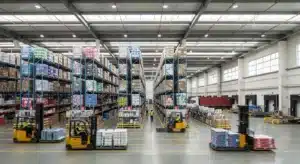
A non-partnered 3PL sits between the Yiwu freight arrival in the U.S. and the FBA warehouse. Cartons ship to the 3PL first, get inspected, potentially re-labeled or split into different shipments, then dispatch to FBA on the seller’s schedule.
3PL fee stack (typical 2026 rates)
- Receiving fee: USD 1–5 per carton or USD 10–50 per pallet at arrival.
- Pick/pack fee: USD 1–4 per order when shipping to Amazon or direct-to-consumer.
- FNSKU labeling: USD 0.10–0.25 per label applied.
- Storage: USD 4–12 per pallet per month (higher in Q4).
- Special services: re-poly bagging, bundle assembly, damage inspection — USD 0.20–1.50 per unit.
When the 3PL route pays back
The 3PL fee stack looks expensive until factoring in the operational value: the ability to hold inventory during Amazon Q4 restock-limit compression, split one Yiwu container into 3–5 rolling FBA shipments to match sell-through, run damage inspection before FBA sees the cartons, and re-label if Amazon changes FNSKU requirements mid-launch. For sellers running 500+ units/month per SKU with sustained sell-through, the 3PL route typically pays for itself in avoided Amazon storage overages alone.
Head-to-Head Cost Math on a Real Shipment
The table below compares all-in shipping cost on a hypothetical Yiwu-to-FBA shipment: 8 pallets, 400 cartons total, 6,400 units, single-SKU, standard cardboard packaging. FOB Ningbo, ocean freight to LA, then last-mile to FBA California.
| Cost line | STA Partnered LTL | Non-Partnered 3PL |
|---|---|---|
| Ocean freight Yiwu → LA (8 pallets ≈ 12 CBM) | USD 480 (LCL) | USD 480 (LCL) |
| U.S. customs + drayage | USD 320 | USD 320 |
| Last-mile to FBA | USD 780 (partnered LTL, 8 pallets) | USD 400 to 3PL, USD 620 to FBA |
| 3PL receiving (400 cartons) | — | USD 800 |
| FNSKU labeling (6,400 units) | USD 0 (done at Yiwu) | USD 0 (done at Yiwu) or USD 960 at 3PL |
| 3PL storage (first month) | — | USD 64 (8 pallets × USD 8) |
| Total to FBA | USD 1,580 | USD 2,204 |
| Per unit | USD 0.247 | USD 0.344 |
STA partnered LTL wins on this specific example by USD 624 total, USD 0.10 per unit. But the 3PL route gains value when the shipment splits into 4 rolling deliveries over 60 days instead of one — Amazon’s Q4 receiving delays and restock limits can cost more than USD 624 in stockout revenue if the container hits the wrong week. The landed cost formula covers the broader math.
The 6-Step Vetting We Run Before First FBA Shipment
- FNSKU sheet finalised at Seller Central before Yiwu production ends — carton labels applied at the Yiwu warehouse before freight departure, not later.
- Amazon restock limit checked in September for Q4 launches — Amazon compresses category-level storage October–December. Confirm the current limit in Seller Central before finalising shipment quantities.
- Send to Amazon workflow created with split-shipment logic understood — Amazon may assign cartons to 2–5 different FBA warehouses. Plan for split freight cost, not one destination.
- Pre-shipment AQL inspection at the Yiwu warehouse before ocean freight departure — see the AQL guide. Damaged cartons discovered at U.S. FBA get charged to the seller.
- DDP vs FOB clarity in the freight contract — DDP moves customs risk to the forwarder, FOB keeps it with the seller. See the incoterms guide.
- Amazon Seller Central Q4 receiving windows checked — plan arrival at FBA by Nov 10 for Black Friday sell-through, not Nov 20.
Example: 3-SKU Launch, First-Time FBA from Yiwu
Illustrative scenario, not a specific customer case. A U.S. Amazon private-label seller launching 3 fashion accessory SKUs, 1,500 units per SKU, first FBA shipment from Yiwu. Total 4,500 units in 45 cartons of 100 units each. Ocean freight to LA, then last-mile to a California FBA warehouse.
Route selected: STA Partnered LTL. Rationale: single-SKU shipment size fits the LTL sweet spot, no need for QC buffer, no ongoing sell-through data to justify 3PL costs yet. The seller books LTL appointment in Seller Central 5 days before container arrival at Long Beach.
Week 1: production complete Yiwu. FNSKU labels applied on cartons at the Yiwu warehouse per the 2026 Amazon prep-discontinuation policy. Pre-shipment AQL passes at 2.5 general. Week 2: cartons gate-in Ningbo, ocean freight to LA. Week 4: container arrives Long Beach. Send to Amazon workflow shows 2 destination FBA warehouses (Amazon split the 3 SKUs across two locations). Partnered LTL books both deliveries. Week 5: both LTL deliveries complete. Week 7: FBA receiving completes on both destinations. Total elapsed 49 days from Yiwu production complete to on-shelf. Total shipping cost USD 1,890 for 4,500 units, USD 0.42 per unit.
Perguntas mais frequentes
Should I use STA partnered LTL or a 3PL for my first FBA shipment?
For a first shipment under 20 pallets with no proven sell-through data, STA partnered LTL is cheaper and simpler. Add a 3PL once monthly volume passes 500 units per SKU and Amazon Q4 restock friction starts costing more than the 3PL fee stack.
When did Amazon stop offering prep services?
Amazon discontinued prep services for most seller accounts in 2026. FNSKU labeling, poly-bagging, and other prep must now be done at the Yiwu factory, at a U.S. 3PL, or at a dedicated prep center. Amazon will refuse under-prepped shipments or charge fees that eat the margin.
Do I need an appointment for SPD shipments?
No. SPD (Small Parcel Delivery via UPS/FedEx) does not require FBA appointments. Cartons arrive at the fulfilment center via standard parcel network and enter the receiving queue automatically. LTL and FTL shipments do require appointments booked 1–5 business days ahead.
Can I send DDP directly to FBA from Yiwu?
Yes — DDP forwarders can deliver directly to FBA warehouses using STA’s partnered LTL scheduling on the seller’s behalf. This works for single-SKU shipments; multi-SKU splits still require the seller to create the Send to Amazon workflow in Seller Central. Confirm current forwarder capabilities and Amazon acceptance policies before booking.
How much does a 3PL cost per unit for FBA prep?
USD 0.20–0.50 per unit for basic receive + label + ship to FBA. Adding poly-bagging or bundle assembly pushes it to USD 0.60–1.20. Amazon restock overage fees can exceed USD 3 per unit in Q4, so the 3PL cost buffers against the higher Amazon fee.
What’s an FBA split shipment and how do I handle it?
Amazon may assign a single Send to Amazon workflow to 2–5 different FBA warehouses to balance inventory across the network. Each destination generates a separate shipment ID. Split shipments increase freight cost by 20–40%. Some sellers pay Amazon’s “Inbound Placement Fee” (introduced 2024) to route to a single destination.
Can my Yiwu supplier apply FNSKU labels for me?
Yes — most Yiwu suppliers and packaging warehouses can apply FNSKU labels at the carton or unit level. Provide the FNSKU sheet in PDF, specify placement (top-right of poly bag, or main product surface), and include it in the pre-shipment AQL check. Cost typically USD 0.05–0.15 per label at Yiwu, cheaper than U.S. 3PL rates.
How long does FBA receiving take in 2026?
Off-peak (January–August): 3–7 days from delivery scan to inventory-available. Q4 peak (October–December): 2–3 weeks in a normal year, longer during Black Friday and pre-Christmas peaks. Confirm current receiving windows in Seller Central during September for Q4 planning.
What’s the cheapest way to send 3 cartons to FBA?
STA Partnered SPD via UPS Ground. For 3 cartons under 60 kg total, expect USD 12–28 per carton door-to-door from a U.S. drop-off point. Add ocean freight Yiwu → LA at approximately USD 60–120 per carton depending on lane. No 3PL fees, no LTL appointment, fastest route to FBA receiving.
When should I switch from STA to a 3PL?
The rough threshold is 500 units per SKU per month sustained sell-through. Below that, STA partnered rates win on all-in cost. Above it, the ability to hold inventory during Amazon Q4 restock compression and split one Yiwu container into 4–5 rolling FBA shipments justifies the 3PL fee stack.
Conclusão
The right FBA shipping route from Yiwu is set by shipment shape more than seller preference. Single-SKU under 20 pallets: STA partnered LTL wins. 1–15 cartons single-SKU: STA partnered SPD wins. Multi-SKU consolidation with 500+ units/month per SKU and Q4 restock exposure: non-partnered 3PL pays back through avoided Amazon storage overages and stockout revenue during peak.
If you are planning a first Yiwu-to-FBA shipment or considering the STA-to-3PL transition, an on-the-ground team maps the routing, negotiates the freight contracts, and coordinates the Yiwu FNSKU prep in the same week that would take a founder six.
Written by the ChineseYiwu.com team
A Yiwu-based sourcing partner since 2017, running Send to Amazon workflows, FNSKU labeling, and freight contract negotiation for U.S. Amazon FBA private-label brands shipping out of Ningbo. Weekly volume moving through partnered LTL and 3PL routes with real Q4 receiving-window data.