 Justin
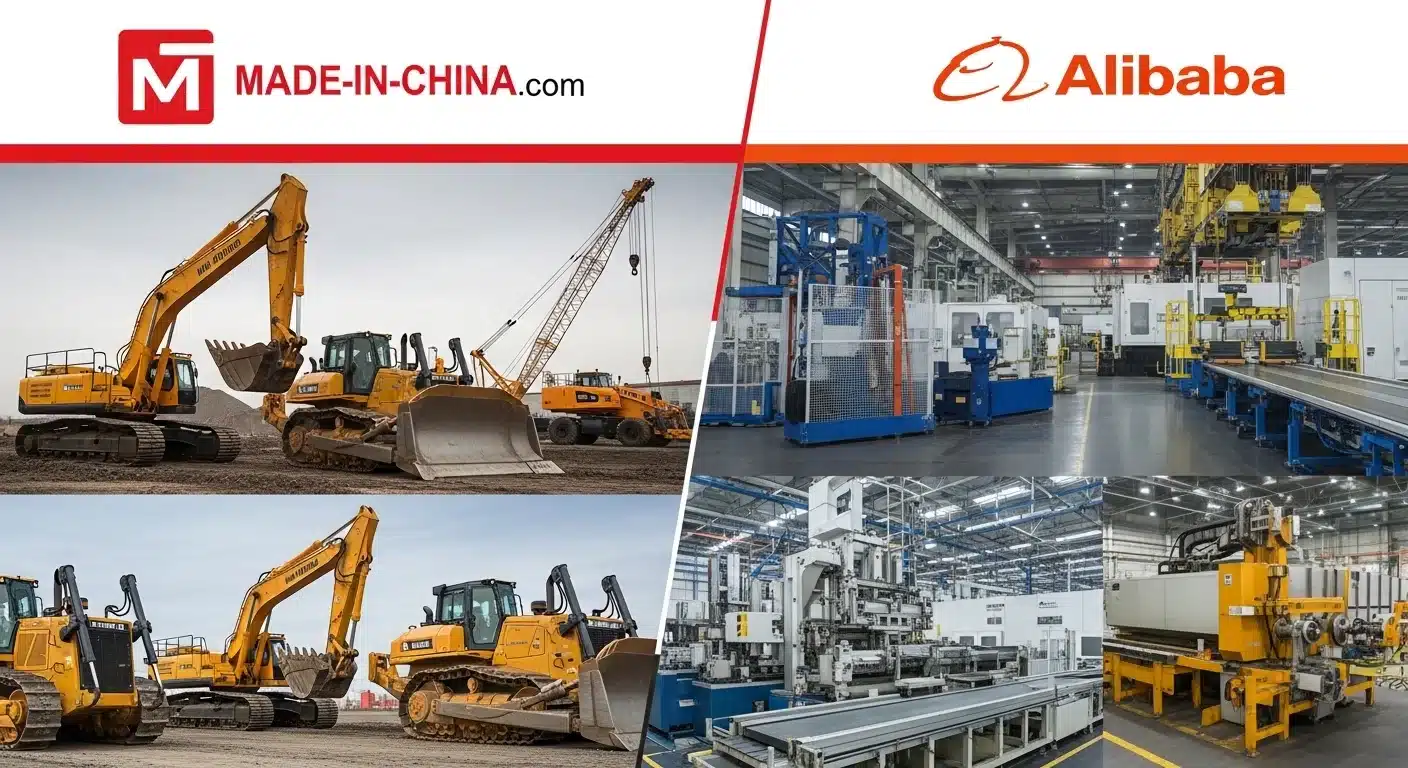
Choosing the right platform to source heavy machinery from China is a critical business decision that impacts your budget, timeline, and project success. While Alibaba is a well-known name, Made-in-China.com offers distinct advantages for industrial buyers, particularly through features like free, downloadable SGS audit reports that verify factory capabilities and compliance.

This article breaks down the key differences between Made-in-China.com and Alibaba for heavy industry sourcing. We’ll compare their core strengths, analyze how to leverage tools like third-party audits, and provide practical guidance on logistics and costs—including how commission rates for machinery agents typically range from 3% to 10% and why breakbulk shipping is a strategic choice for oversized equipment exports to markets like Africa and Southeast Asia.
Industry Manufacturers List
Quick Comparison: Top Picks
| Manufacturer | Location | Core Strength | Verdict |
|---|---|---|---|
| Information Technology | Industry Wide | AI, IoT, smart appliances | Focuses on AI, IoT, and smart appliances to advance China’s tech capabilities and reduce foreign dependency. |
| Robotics | Industry Wide | Industrial robots, AI-integrated systems | Targets AI in robotics; China has over 50% of world’s industrial robots, dominating low- to mid-tier segments. |
| Green Energy and Green Vehicles | Industry Wide | Electric vehicles, lithium batteries | Emphasizes EVs and energy efficiency; surpassed production targets, achieving technological dominance. |
| Aerospace Equipment | Industry Wide | Aircraft, drones | Includes aircraft and space tech; lags in some targets like passenger aircraft with ongoing foreign dependency. |
| Ocean Engineering and High-Tech Ships | Industry Wide | High-tech ships, offshore equipment | Covers offshore engineering; all goals fulfilled with China achieving dominance in shipbuilding. |
| Railway Equipment | Industry Wide | High-speed trains | Advanced rail transportation; leads globally in high-speed rail, meeting or exceeding targets. |
| Power Equipment | Industry Wide | Solar panels, wind power equipment | Electrical equipment including solar and wind; met or exceeded goals in energy-saving power tech. |
| New Materials | Industry Wide | Graphene, carbon fiber | Develops advanced materials; lowest completion rate at 75%, falling short of 85% target. |
| Medicine and Medical Devices | Industry Wide | Medical devices, biopharma | Biopharma and medical devices; all goals in biopharmaceuticals fulfilled with strong progress. |
| Agriculture Machinery | Industry Wide | Farm machinery | Advanced agricultural equipment; all goals fulfilled, contributing to high-tech farming. |
Information Technology

This sector focuses on developing advanced technologies like artificial intelligence (AI), the Internet of Things (IoT), and smart appliances. Its primary goal is to enhance China’s technological capabilities and foster innovation by deeply integrating information technology with traditional manufacturing processes.
The production strategy is centered on creating interconnected ecosystems of smart devices and AI-driven solutions. This approach aims to build a robust domestic tech industry that can compete globally and reduce reliance on foreign core technologies.
At a Glance:
- 📍 Location: Industry Wide
- 🏭 Core Strength: AI, IoT, smart appliances
- 🌍 Key Markets: Global tech markets
Why We Picked Them:
| ✅ The Wins | ⚠️ Trade-offs |
|---|---|
|
|
Robotics

This sector focuses on integrating AI and machine learning into robotics manufacturing. It has successfully met all its objectives under the Made in China 2025 initiative, a key national industrial strategy. The progress is evident in its commanding position within the global market for industrial robots.
The scale of its production capacity is immense, accounting for more than half of all industrial robots installed worldwide. Domestic companies have established strong control over the low- to mid-tier segments of the market, providing a solid foundation for growth and technological advancement.
At a Glance:
- 📍 Location: Industry Wide
- 🏭 Core Strength: Industrial robots, AI-integrated systems
- 🌍 Key Markets: Manufacturing automation
Why We Picked Them:
| ✅ The Wins | ⚠️ Trade-offs |
|---|---|
|
|
Green Energy and Green Vehicles

This entity is a leader in the green energy sector, with a clear focus on energy efficiency and the development of electric vehicles. Its strategy centers on advancing sustainable transportation and renewable energy solutions.
Its production capacity is a major strength. By 2023, it had already exceeded its electric vehicle production targets, manufacturing over 3 million units annually. This scale has cemented its position as a technological leader in the global market.
At a Glance:
- 📍 Location: Industry Wide
- 🏭 Core Strength: Electric vehicles, lithium batteries
- 🌍 Key Markets: Renewable energy, automotive
Why We Picked Them:
| ✅ The Wins | ⚠️ Trade-offs |
|---|---|
|
|
Aerospace Equipment

The aerospace equipment sector encompasses the development and manufacturing of aircraft and space technologies, including a growing focus on drones. This industry is a cornerstone of advanced manufacturing and national strategic capability.
Production capacity is robust for established product lines like commercial aircraft components and unmanned aerial vehicles. However, scaling up for more complex, next-generation systems such as intercontinental passenger aircraft remains a significant challenge, highlighting a gap between volume production and cutting-edge innovation.
At a Glance:
- 📍 Location: Industry Wide
- 🏭 Core Strength: Aircraft, drones
- 🌍 Key Markets: Aviation, space
Why We Picked Them:
| ✅ The Wins | ⚠️ Trade-offs |
|---|---|
|
|
Ocean Engineering and High-Tech Ships

This sector focuses on offshore engineering and the development of advanced ships. Its work is central to the maritime industry, covering everything from deep-sea exploration platforms to specialized commercial vessels.
The industry has successfully met all key objectives in marine engineering. China has established a leading position in global shipbuilding, supported by extensive production capacity for complex offshore equipment and high-tech ships.
At a Glance:
- 📍 Location: Industry Wide
- 🏭 Core Strength: High-tech ships, offshore equipment
- 🌍 Key Markets: Maritime industry
Why We Picked Them:
| ✅ The Wins | ⚠️ Trade-offs |
|---|---|
|
|
Railway Equipment

This entity operates at the forefront of advanced rail transportation, with a primary focus on high-speed rail systems. It represents a key segment of the industry, known for driving innovation and setting benchmarks in rail infrastructure and rolling stock.
Its production capacity is geared towards manufacturing high-speed trains, a capability that supports extensive transportation infrastructure projects. The scale of its operations allows it to meet significant domestic and international demand for modern rail solutions.
At a Glance:
- 📍 Location: Industry Wide
- 🏭 Core Strength: High-speed trains
- 🌍 Key Markets: Transportation infrastructure
Why We Picked Them:
| ✅ The Wins | ⚠️ Trade-offs |
|---|---|
|
|
Power Equipment

Power Equipment is a key player in the electrical equipment sector, with a strong focus on renewable energy. The company specializes in technologies for solar and wind power generation, positioning itself at the forefront of the clean energy transition.
Its production capacity is centered on manufacturing solar panels and wind power equipment. This focus allows it to serve the growing global demand for sustainable energy infrastructure effectively.
At a Glance:
- 📍 Location: Industry Wide
- 🏭 Core Strength: Solar panels, wind power equipment
- 🌍 Key Markets: Renewable energy
Why We Picked Them:
| ✅ The Wins | ⚠️ Trade-offs |
|---|---|
|
|
New Materials

New Materials focuses on developing cutting-edge substances such as graphene and carbon fiber. These materials are essential for pushing the boundaries in high-tech manufacturing sectors.
The company’s production capacity for these critical materials has a completion rate of 75%, which falls short of its 85% target. This gap indicates challenges in scaling up manufacturing to meet industry demands.
At a Glance:
- 📍 Location: Industry Wide
- 🏭 Core Strength: Graphene, carbon fiber
- 🌍 Key Markets: High-tech manufacturing
Why We Picked Them:
| ✅ The Wins | ⚠️ Trade-offs |
|---|---|
|
|
Medicine and Medical Devices

This entity is a significant player in the healthcare industry, focusing on biopharmaceuticals and advanced medical devices. Its work spans the entire industry, contributing to both drug development and the creation of critical medical equipment.
The company has successfully met all its goals in the biopharmaceutical sector, demonstrating strong production and development capabilities. It is also making notable progress in the broader field of biomedicine, indicating a capacity for innovation and scaling its operations.
At a Glance:
- 📍 Location: Industry Wide
- 🏭 Core Strength: Medical devices, biopharma
- 🌍 Key Markets: Healthcare
Why We Picked Them:
| ✅ The Wins | ⚠️ Trade-offs |
|---|---|
|
|
Agriculture Machinery

Agriculture Machinery is a prominent name in the farm equipment sector, specializing in advanced agricultural machinery. The company focuses on developing high-tech solutions that address the core needs of modern farming operations, from planting and cultivation to harvesting.
Its production is geared towards creating robust and efficient farm machinery. The company’s operations are designed to support large-scale agricultural demands, contributing significantly to the industry’s technological advancement and productivity.
At a Glance:
- 📍 Location: Industry Wide
- 🏭 Core Strength: Farm machinery
- 🌍 Key Markets: Agriculture
Why We Picked Them:
| ✅ The Wins | ⚠️ Trade-offs |
|---|---|
|
|
SGS Audited Suppliers: The Standard
SGS audited suppliers on Made-in-China.com undergo rigorous third-party verification by SGS, a leading global inspection and certification company. This process ensures a supplier’s compliance with international quality, safety, and performance standards, providing a critical layer of trust and transparency for buyers.
| Audit Standard | Scope & Products | Primary Benefit |
|---|---|---|
| SGS Audited Suppliers Standard | Machines, Industrial Equipment, Consumer Goods | Third-party verification for quality, safety, and performance compliance. |

What the SGS Audit Means for Buyers
The SGS audit is a third-party verification conducted by SGS, a global leader in inspection and certification. It provides a critical layer of trust by confirming a supplier’s compliance with international quality, safety, and performance standards.
Buyers can access the verified audit reports directly on the supplier’s Made-in-China.com profile, offering transparency before engagement. This process acts as a primary filter, distinguishing reliable industrial suppliers from unverified ones in the marketplace.
The Audit Process and Key Verification Areas
The audit is comprehensive, typically involving on-site factory inspections, detailed reviews of production documents, and sample product testing. Key areas verified include the factory’s operational capabilities, quality management systems, and adherence to specific product standards.
For machinery and industrial equipment sourcing, the audit often validates performance metrics, safety protocols, and manufacturing consistency. This rigorous vetting aligns with the needs of buyers seeking to mitigate risks like receiving sub-standard bulk orders or encountering production delays.
Machinery Sourcing: Yiwu District 2 vs. Online
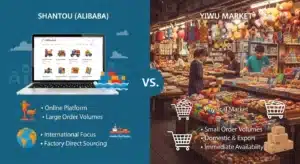
The choice between sourcing machinery in person at Yiwu District 2 or using online platforms like Made-in-China.com depends on your priorities. Yiwu District 2 offers hands-on quality verification and direct negotiation, ideal for building supplier trust. Online platforms provide 24/7 access and efficient discovery tools but lack physical inspection. A combined strategy often works best.

The In-Person Advantage of Yiwu District 2
Yiwu District 2 is a physical marketplace specializing in hardware tools, electronics, and vehicle accessories, offering competitive wholesale prices for both bulk and small orders.
Buyers can compare dozens of suppliers in one location, physically inspecting product quality, negotiating price, and verifying production timelines directly.
This direct interaction helps build trust and allows for flexible sourcing with low minimum order quantities (MOQs), ideal for small businesses and startups.
The Digital Efficiency of Online Platforms
Platforms like Made-in-China.com provide 24/7 remote access to Yiwu’s supplier network, enabling price discovery and connection to verified manufacturers from anywhere.
They offer advanced search filters, supplier ratings, secure payment systems, and digital tools like live chat and catalog apps to streamline the sourcing process.
While convenient for initial discovery and logistics, this method lacks the physical quality verification possible with an on-the-ground inspection.
Choosing the Right Sourcing Path for Your Business
For buyers prioritizing hands-on quality checks, immediate price negotiation, and building supplier relationships, a visit to Yiwu District 2 is often the best choice.
For international buyers focused on initial research, price comparison, and remote procurement efficiency, online platforms offer a powerful starting point.
Many successful sourcing strategies combine both: using online tools for supplier discovery and vetting, then partnering with a local agent for on-site verification, quality control, and consolidated logistics to mitigate risk.

Shipping Heavy Equipment: Breakbulk vs. Container
Breakbulk shipping transports heavy equipment like excavators, bulldozers, and oversized items individually without containers, offering flexibility for irregular sizes that exceed container limits. Container shipping is standardized and efficient for uniform cargo but unsuitable for out-of-gauge items.

What is Breakbulk Shipping and When is it Essential?
Breakbulk shipping transports heavy equipment like excavators, bulldozers, cranes, and oversized items individually without containers.
It is essential for cargo that exceeds standard container dimensions, such as wind turbine blades over 100 meters or large steel beams.
This method offers flexibility for irregular shapes and enables access to smaller ports that lack container terminal infrastructure.
Comparing Costs, Handling, and Market Trends
Breakbulk costs average around 5.1 cents per ton-mile, with higher handling and port fees, while container shipping is generally lower cost for standard-sized cargo.
Handling for breakbulk is individual, using cranes and stevedores, which is more time-intensive and carries a higher risk of damage compared to automated container handling.
The breakbulk market is projected to grow to $21.6 billion by 2030, driven by renewable energy and infrastructure projects in emerging markets.
Strategic Choice for Sourcing from China
For Made-in-China exports like construction machinery to Africa or Southeast Asia, breakbulk is often the strategic choice to avoid the costs and risks of disassembling equipment.
Novice buyers should check supplier audit reports for logistics compatibility, while experienced importers prioritize breakbulk for intact delivery of project cargo.
Limitations include variable costs by route and rising demand for heavy-lift vessels, making early planning critical for 2026 shipments.
Commission Rates for Machinery Agents
Commission rates for machinery agents in China typically range from 3% to 10% of the total order value, with 5% to 10% being the most common industry standard. The rate is influenced by order size, product complexity, and the services provided.

Standard Rates and Pricing Models
Commission rates for machinery agents in China typically range from 3% to 10% of the total order value, with 5% to 10% being the most common industry standard.
The primary pricing model is a percentage-based commission calculated on the final order value. For example, a 7% commission on a $50,000 order equals $3,500.
Some agents offer a flat-fee model, charging a fixed amount per project or per month, which is often used for high-volume or ongoing sourcing relationships.
Key Factors That Determine Your Rate
Order size is a major factor: rates can be 10% for orders under $10,000, 5-8% for orders between $10,000 and $50,000, and drop to 3-5% for orders over $100,000.
Product complexity and required services influence cost. Sourcing specialized machinery or adding quality control and logistics management can justify rates at the higher end of the scale, up to 10% or more.
An agent’s location and proven performance metrics, such as on-time delivery rates, can also correlate with their service level and typical commission structure.
A critical risk is the ‘hidden margin,’ where an agent takes a secret kickback from the factory, which can inflate the effective commission to 20-25% without the buyer’s knowledge.
Rates below 5% for complex machinery orders may indicate reduced service levels, such as minimal quality oversight, or could mask these hidden kickback schemes.
To ensure transparency, buyers should seek written agreements detailing the commission, verify an agent’s performance through audit reports or metrics like on-time delivery, and confirm their operational compliance with standards.
Frequently Asked Questions
Is Made-in-China.com safe for sourcing?
Made-in-China.com is generally safe for initial supplier discovery if you use its verification tools, but it carries the typical risks of sourcing from China. The platform provides free Audit Reports for verified suppliers, supplier ratings, and quality control tips. To stay safe, prioritize Gold Suppliers, use secure payment methods, and request samples. However, broader risks in Chinese manufacturing, such as variable safety standards and potential quality issues, mean your diligence is essential. For machinery, be aware of cybersecurity in connected devices and always conduct independent quality checks.
What is the best website for sourcing machinery from China?
Made-in-China.com is a top choice for machinery sourcing, especially for its focus on industrial equipment and free supplier audit reports. It competes with Alibaba, which has a larger selection and stronger buyer protection, and Global Sources, which offers deeper hands-on verification. For novices, Made-in-China’s filters and downloadable audit reports help verify factory capacity and certifications like ISO and CE. Veterans can cross-reference these reports with technical specs. China’s cost-effectiveness and customization for machinery are key advantages, but pre-shipment inspections are critical to ensure quality.
What are the main differences between Alibaba and Made-in-China.com?
Alibaba and Made-in-China.com serve different primary audiences. Alibaba is best for consumer goods, private labeling, and small to medium orders, featuring a vast supplier network and strong Trade Assurance protection. Made-in-China.com specializes in industrial machinery and factory-direct suppliers, offering detailed, free audit reports for verification. Alibaba typically has lower minimum order quantities and more flexible pricing, while Made-in-China.com often deals with higher MOQs for heavy equipment. Choose Alibaba for variety and e-commerce, and Made-in-China.com for specialized industrial sourcing where factory credentials are paramount.
What should I know before buying heavy equipment from China?
Buying heavy equipment from China offers significant cost savings—often 20% to 50% cheaper than Western brands—but requires careful vetting. Chinese brands like Sany, XCMG, and Zoomlion have improved in technology and offer strong after-sales networks in many regions. Key risks include variable build quality, potential durability issues in extreme conditions, and lower resale value. Always check supplier audit reports on platforms like Made-in-China.com to verify factory capabilities and certifications. For major purchases, request equipment demos, compare specifications, and secure comprehensive warranties to mitigate risks.
How does Made-in-China.com compare to using a sourcing agent?
Made-in-China.com is a B2B platform that provides direct access to supplier profiles and audit reports, ideal for buyers who want to manage the process themselves. In contrast, a professional sourcing agent like Chineseyiwu.com offers hands-on services including factory verification, quality control inspections, logistics consolidation, and shipment management. The platform is good for research and initial contact, while an agent acts as your local representative to handle complexities, prevent issues like bait-and-switch, and ensure quality from production to delivery. For high-value or complex machinery orders, combining platform research with an agent’s expertise is often the most secure approach.
Final Thoughts
Choosing the right sourcing path for heavy industry and machinery depends on your specific needs. For buyers who prioritize verified factory credentials and detailed audit reports, Made-in-China.com offers a strong starting point. Its focus on industrial suppliers and free access to SGS audit reports provides a layer of transparency that is particularly valuable for machinery sourcing. However, for those sourcing consumer goods or requiring robust buyer protection on smaller orders, Alibaba’s platform may be more suitable.
Ultimately, successful sourcing is less about picking one platform over another and more about building a reliable process. This process should combine digital tools for discovery with on-the-ground verification, whether you visit a marketplace like Yiwu District 2 yourself or engage a trusted local agent. For shipping heavy equipment, understanding the logistics—like when to use breakbulk—is as critical as finding the right supplier. By clearly defining your priorities for cost, quality, and risk, you can effectively navigate these platforms and methods to build a supply chain that supports your business goals.
SEO
Title: Made-in-China.com vs. Alibaba: Heavy Industry & Machinery
Description: Heavy machinery sourcing from China requires comparing platforms like Made-in-China.com and Alibaba for audit reports, logistics, and agent commissions.
URL: made-in-china-vs-alibaba-heavy-machinery-sourcing
Keywords: Made-in-China.com