 Justin
Choosing the wrong Incoterm in Yiwu can inflate your total landed costs by 50% or more, turning a seemingly cheap EXW quote into a logistical and financial headache. For B2B buyers, the choice between EXW, FOB, and DDP isn’t just about price—it’s about control, risk, and aligning the terms with your operational capabilities.
This article breaks down the three most common Incoterms for Yiwu sourcing. We’ll explain why suppliers default to EXW, how FOB serves as a benchmark for maritime shipments, and why DDP’s ‘door-to-door’ simplicity comes at a premium. You’ll learn the specific risk transfer points—from the seller’s premises in EXW to the vessel’s deck in FOB—and see why industry bodies often discourage EXW for new importers due to its complexity.
Industry Manufacturers List
Quick Comparison: Incoterms 2020
| Term | Location | Core Strength | Verdict |
|---|---|---|---|
| EXW – Ex Works | Global Standard | Risk transfers at seller’s warehouse or named place before loading. | Buyer has maximum control and responsibility from seller’s premises. |
| FCA – Free Carrier | Global Standard | Risk transfers on delivery to the first carrier at the named place (any mode). | Flexible for container shipments; seller handles export, buyer controls from first carrier. |
| FAS – Free Alongside Ship | Global Standard | Risk transfers at named port when goods are alongside the vessel (sea/inland waterway). | For bulk sea shipments where buyer controls loading and ocean freight. |
| FOB – Free On Board | Global Standard | Risk transfers on board vessel at port of shipment (sea/inland waterway). | Traditional ocean term; buyer assumes risk once goods are loaded on vessel. |
| CFR – Cost and Freight | Global Standard | Risk transfers on board vessel at port of shipment; seller pays freight to destination (sea). | Seller arranges and pays for main carriage, but risk transfers at shipment port. |
| CIF – Cost, Insurance and Freight | Global Standard | Risk transfers on board vessel at port of shipment; seller pays freight and minimum insurance (sea). | Seller arranges freight and basic insurance; common for commodity trades. |
| CPT – Carriage Paid To | Global Standard | Risk transfers on delivery to first carrier; seller pays carriage to named destination (any mode). | Multimodal; seller manages freight but buyer accepts risk from first carrier handover. |
| CIP – Carriage and Insurance Paid To | Global Standard | Risk transfers on delivery to first carrier; seller pays carriage and all‑risks insurance to destination (any mode). | Seller provides high insurance cover; ideal for buyer wanting early risk transfer with seller-arranged cover. |
| DAP – Delivered At Place | Global Standard | Risk transfers when goods are ready for unloading at named place of destination (any mode). | Seller bears all risks up to destination point; buyer handles import clearance and unloading. |
| DPU – Delivered At Place Unloaded | Global Standard | Risk transfers after unloading at named place of destination (any mode). | Seller responsible for delivery and unloading at destination before risk passes to buyer. |
| DDP – Delivered Duty Paid | Global Standard | Risk transfers when goods are delivered ready for unloading at buyer’s premises or named place, with import clearance completed. | Seller has maximum responsibility, handling all costs and risks including import duties; minimal buyer involvement. |
EXW – Ex Works
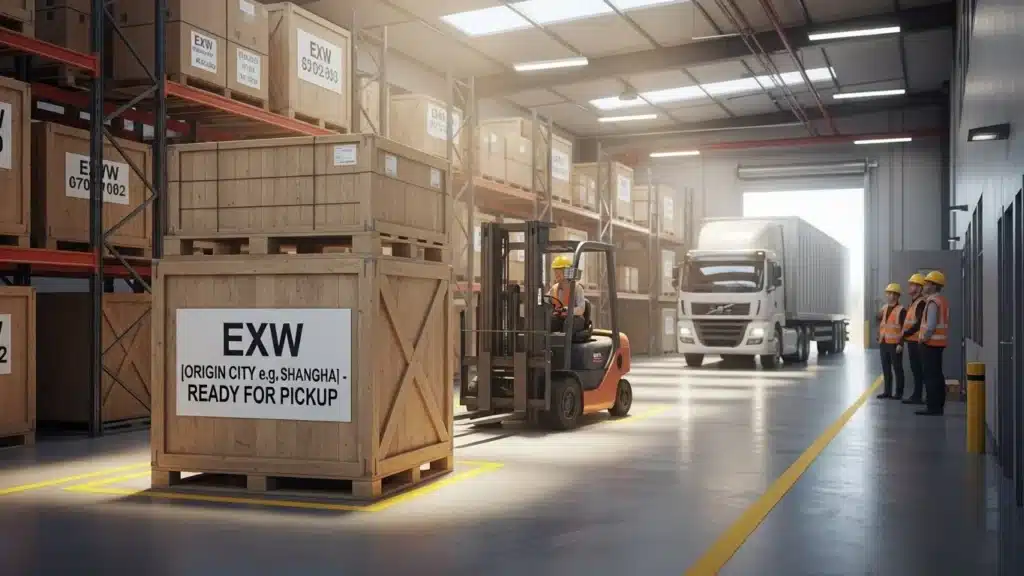
EXW, or Ex Works, is a global trade term where the seller’s responsibility ends once the goods are made available at their own premises or another named place. The risk transfers to the buyer at this point, even before the goods are loaded onto a collecting vehicle. This term is defined by the International Chamber of Commerce (ICC) and is a standard for all modes of transport.
The core principle of EXW is the early transfer of risk and control. The buyer assumes all costs and risks for loading the goods, arranging the main carriage, handling import clearance, and final delivery. This makes EXW a suitable choice for buyers who have strong logistics capabilities and want direct oversight of the entire shipping process.
At a Glance:
- 📍 Location: Global Standard
- 🏭 Core Strength: Risk transfers at seller’s warehouse or named place before loading.
- 🌍 Key Markets: All modes of transport; early buyer risk assumption and logistics control.
Why We Picked Them:
| ✅ The Wins | ⚠️ Trade-offs |
|---|---|
|
|
FCA – Free Carrier

FCA, or Free Carrier, is a globally recognized Incoterm. Under this rule, the seller’s responsibility ends when they deliver the goods, cleared for export, to the carrier or another party nominated by the buyer at a named place. This point marks the transfer of risk from seller to buyer.
The delivery point is highly adaptable. It can occur at the seller’s own premises after the goods are loaded onto the buyer’s collecting vehicle, or at a terminal such as a port or warehouse after the goods are placed into the custody of the carrier. This flexibility makes FCA suitable for various transport modes and logistics setups.
At a Glance:
- 📍 Location: Global Standard
- 🏭 Core Strength: Risk transfers on delivery to the first carrier at the named place (any mode).
- 🌍 Key Markets: Used widely for container shipments, giving sellers export control and buyers control from first carrier onward.
Why We Picked Them:
| ✅ The Wins | ⚠️ Trade-offs |
|---|---|
|
|
FAS – Free Alongside Ship
FAS is a globally recognized Incoterm. It defines the seller’s responsibility to deliver goods to a named port and place them alongside the buyer’s nominated vessel. The seller covers all costs and risks up to that point, including export clearance.
This term is primarily used for bulk and non-containerized cargo, such as grain, ore, or project cargo, where the buyer arranges the main ocean freight and loading operations.
At a Glance:
- 📍 Location: Global Standard
- 🏭 Core Strength: Risk transfers at named port when goods are alongside the vessel (sea/inland waterway).
- 🌍 Key Markets: Bulk and non‑containerized sea shipments where buyer controls loading and ocean freight.
Why We Picked Them:
| ✅ The Wins | ⚠️ Trade-offs |
|---|---|
|
|
FOB – Free On Board
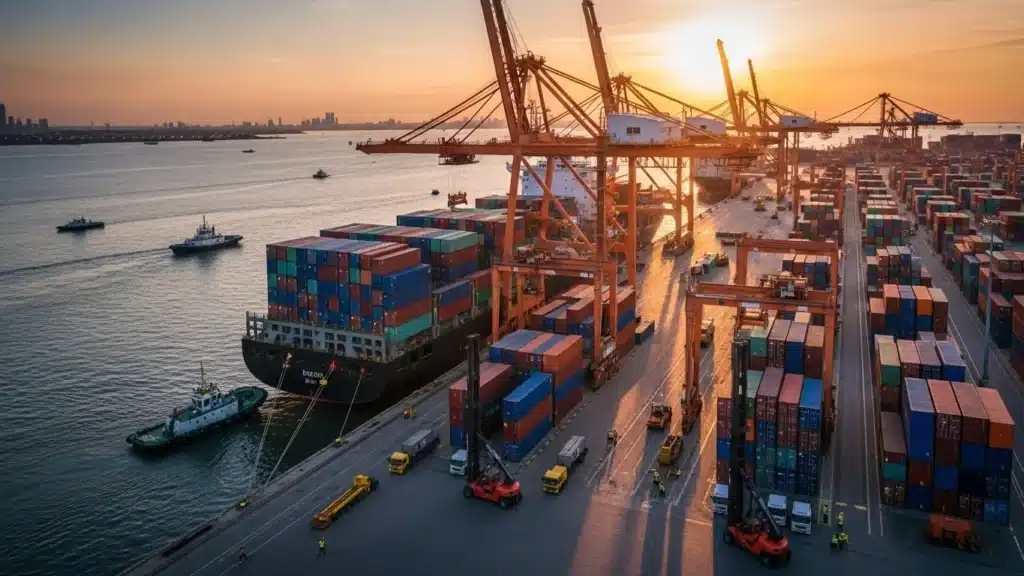
Free On Board (FOB) is a globally recognized Incoterm that defines the point at which risk and cost transfer from the seller to the buyer. Under FOB, the seller fulfills their obligation when the goods are loaded onto the vessel at the agreed port of shipment. This term is a cornerstone of international trade contracts, providing a clear legal framework for sea or inland waterway transport.
The core function of FOB is to delineate responsibility. The seller handles all costs and risks up to the point the goods are on board the ship, including export clearance. Once the goods cross the ship’s rail, the buyer assumes all risk for loss or damage during the main carriage, unloading at the destination port, and import formalities. This makes it a preferred choice for transactions where the buyer arranges and controls the main ocean freight.
At a Glance:
- 📍 Location: Global Standard
- 🏭 Core Strength: Risk transfers on board vessel at port of shipment (sea/inland waterway).
- 🌍 Key Markets: Traditional term for bulk and break‑bulk ocean cargo where buyer manages main carriage.
Why We Picked Them:
| ✅ The Wins | ⚠️ Trade-offs |
|---|---|
|
|
CFR – Cost and Freight

CFR is a widely used international trade term. Under this rule, the seller’s responsibility for the goods ends once they are loaded onto the vessel at the port of shipment. At that exact moment, the risk of loss or damage transfers to the buyer. However, the seller remains responsible for paying the costs and freight necessary to bring the goods to the named port of destination.
This creates a distinct separation between risk and cost. The buyer assumes the voyage risk from the loading port onward, even though the seller continues to bear the freight cost to the destination. This term is specifically designed for sea or inland waterway transport.
At a Glance:
- 📍 Location: Global Standard
- 🏭 Core Strength: Risk transfers on board vessel at port of shipment; seller pays freight to destination (sea).
- 🌍 Key Markets: Used when seller can obtain favorable ocean freight but buyer accepts voyage risk from loading.
Why We Picked Them:
| ✅ The Wins | ⚠️ Trade-offs |
|---|---|
|
|
CIF – Cost, Insurance and Freight
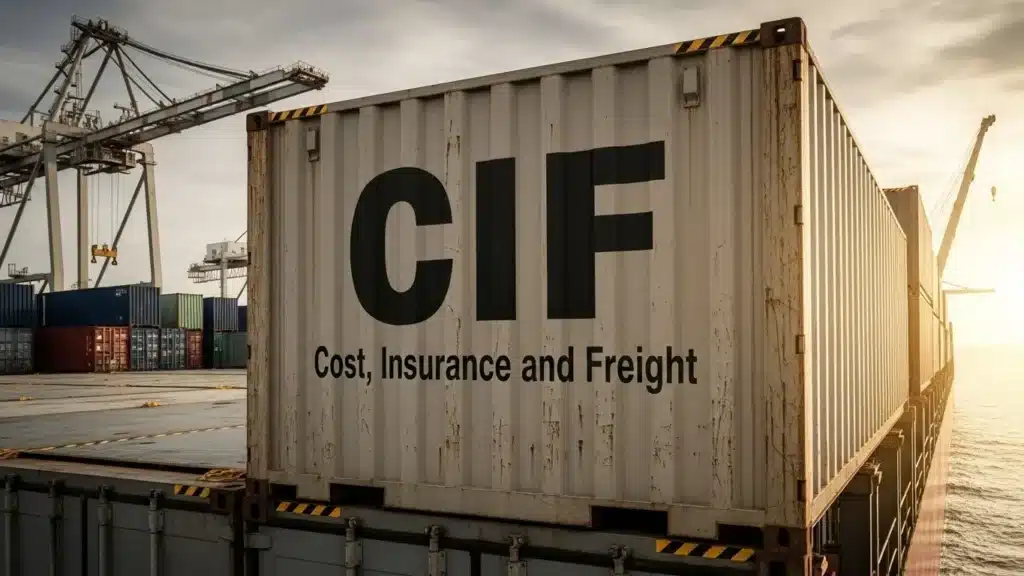
CIF, or Cost, Insurance and Freight, is a widely recognized international trade rule. Under this term, the seller’s responsibilities include covering the costs, freight, and a minimum level of cargo insurance to transport the goods to a named port of destination. This arrangement provides a clear framework for dividing responsibilities between buyer and seller.
A critical aspect of CIF is the point at which risk transfers from the seller to the buyer. This transfer happens not at the destination, but as soon as the goods are safely loaded on board the vessel at the port of shipment. It’s important to note that the seller’s obligation to provide insurance does not delay or alter this earlier transfer of risk.
At a Glance:
- 📍 Location: Global Standard
- 🏭 Core Strength: Risk transfers on board vessel at port of shipment; seller pays freight and minimum insurance (sea).
- 🌍 Key Markets: Common for commodity trades where seller arranges freight and basic insurance for the buyer.
Why We Picked Them:
| ✅ The Wins | ⚠️ Trade-offs |
|---|---|
|
|
CPT – Carriage Paid To
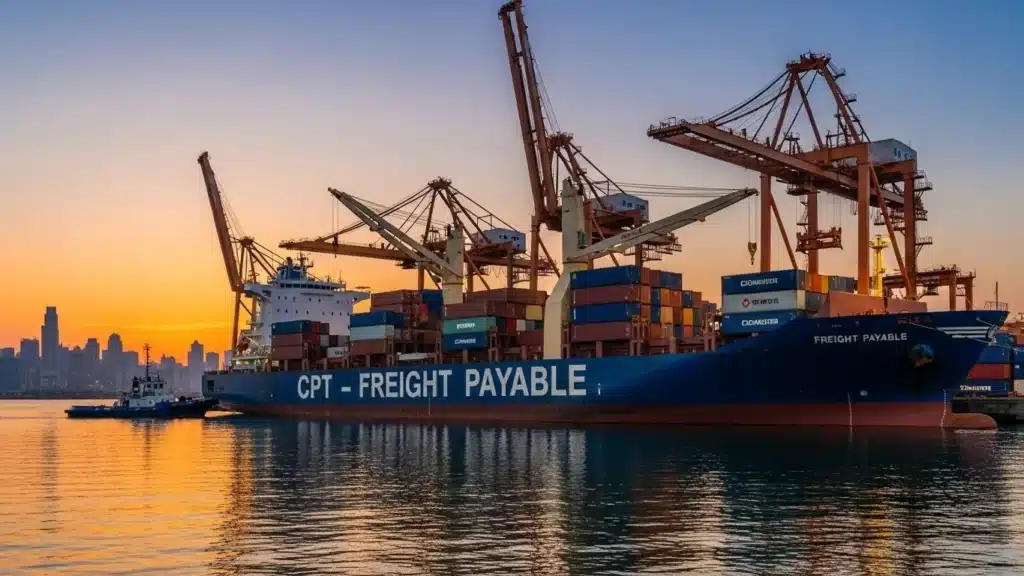
CPT, or Carriage Paid To, is a global Incoterm that defines a specific point where responsibility shifts in a shipment. Under this rule, the seller’s obligation is to deliver the goods to a carrier they have contracted and to pay the cost of carriage to a named destination. The critical moment occurs when the seller hands the goods over to that first carrier.
The defining feature of CPT is the split between cost and risk. While the seller arranges and pays for the main carriage to the agreed destination, the risk of loss or damage to the goods transfers from the seller to the buyer as soon as the goods are delivered to that first carrier. This means the buyer bears the risk for the entire transit journey after the initial handover, even though they are not paying for that leg of the freight.
At a Glance:
- 📍 Location: Global Standard
- 🏭 Core Strength: Risk transfers on delivery to first carrier; seller pays carriage to named destination (any mode).
- 🌍 Key Markets: Multimodal shipments where seller manages freight but buyer accepts risk from first carrier handover.
Why We Picked Them:
| ✅ The Wins | ⚠️ Trade-offs |
|---|---|
|
|
CIP – Carriage and Insurance Paid To
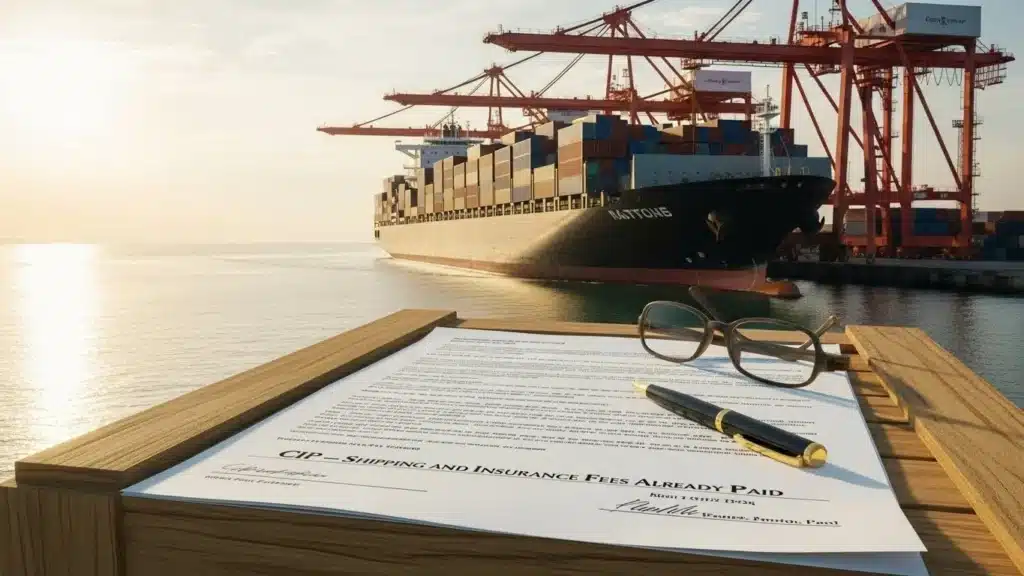
Under the CIP (Carriage and Insurance Paid To) Incoterm, the seller’s responsibility for risk and cost are split. The risk of loss or damage to the goods transfers from the seller to the buyer as soon as the goods are handed over to the first carrier chosen by the seller. This means the buyer assumes the risk while the goods are in transit, which can be earlier than in other terms.
However, the seller retains significant financial obligations. They must contract and pay for the main carriage to deliver the goods to the agreed named place of destination. Crucially, the seller must also obtain cargo insurance against the buyer’s risk of loss or damage during that carriage. The required insurance must meet at least the minimum cover of Institute Cargo Clauses (A) or any similar clauses, providing ‘all risks’ protection.
At a Glance:
- 📍 Location: Global Standard
- 🏭 Core Strength: Risk transfers on delivery to first carrier; seller pays carriage and all‑risks insurance to destination (any mode).
- 🌍 Key Markets: Preferred where buyer wants early risk transfer but high insurance cover arranged by seller.
Why We Picked Them:
| ✅ The Wins | ⚠️ Trade-offs |
|---|---|
|
|
DAP – Delivered At Place
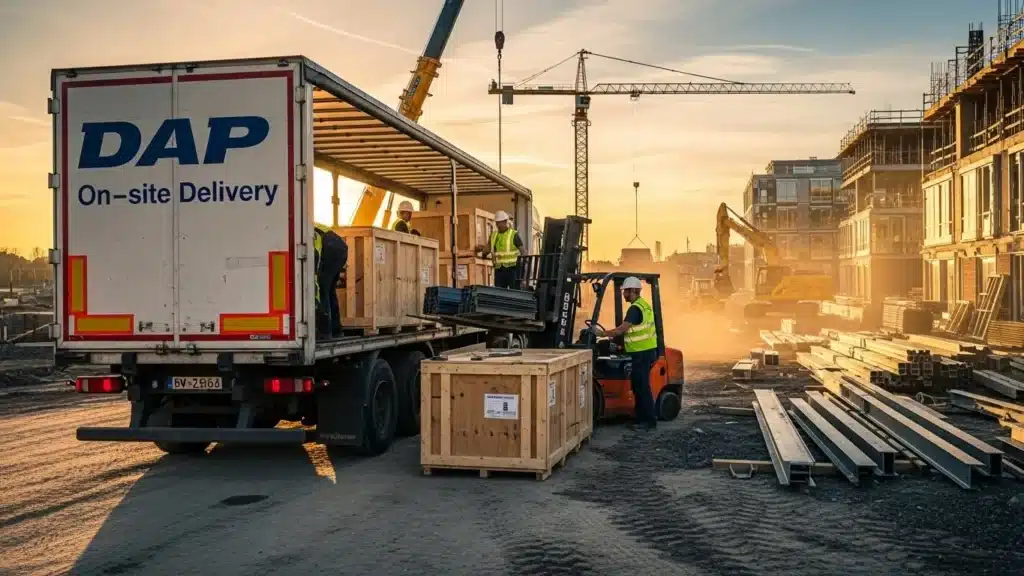
DAP, or Delivered At Place, is a globally recognized Incoterm® rule. It defines the point at which risk and cost transfer from the seller to the buyer during an international shipment.
The rule applies to any mode of transport. The seller is responsible for delivering the goods to the named place of destination, bearing all risks and costs up to that point.
At a Glance:
- 📍 Location: Global Standard
- 🏭 Core Strength: Risk transfers when goods are ready for unloading at named place of destination (any mode).
- 🌍 Key Markets: Door‑to‑terminal or door‑to‑site deliveries where seller manages main transport but buyer handles import formalities.
Why We Picked Them:
| ✅ The Wins | ⚠️ Trade-offs |
|---|---|
|
|
DPU – Delivered At Place Unloaded
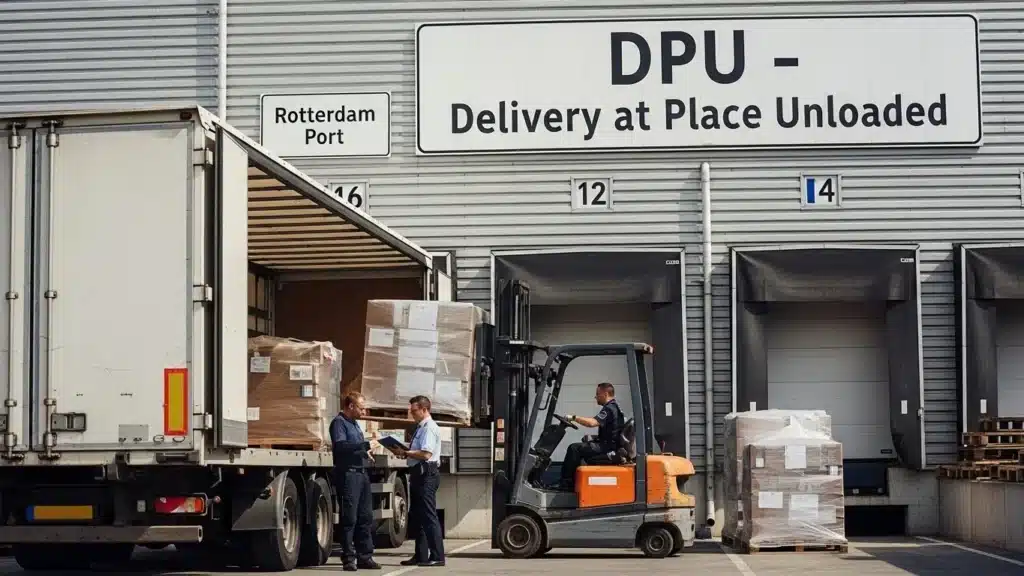
DPU is an Incoterm that defines a specific point of risk transfer in international trade. Under this rule, the seller’s responsibility extends to delivering the goods to a named place of destination and unloading them from the arriving means of transport. The seller bears all costs and risks associated with the goods up to that exact moment of unloading.
This term is applicable for all modes of transport, including road, rail, sea, and air. It is particularly relevant for shipments where the buyer requires the seller to handle the final leg of delivery and the physical unloading process at their own terminal, warehouse, or job site before assuming ownership and risk.
At a Glance:
- 📍 Location: Global Standard
- 🏭 Core Strength: Risk transfers after unloading at named place of destination (any mode).
- 🌍 Key Markets: Shipments where seller must deliver and unload at buyer’s terminal or site before risk passes.
Why We Picked Them:
| ✅ The Wins | ⚠️ Trade-offs |
|---|---|
|
|
DDP – Delivered Duty Paid
DDP, or Delivered Duty Paid, is a global Incoterm where the seller assumes maximum responsibility. Under this term, the seller’s job isn’t finished until the goods have arrived at the buyer’s named destination, cleared customs for import, and are ready to be unloaded. This means the seller handles and pays for all transportation, insurance, export and import duties, taxes, and other charges along the entire journey.
The core principle of DDP is the complete transfer of risk and cost. The seller bears all risks until the goods are made available to the buyer at the final point. This includes the risk of loss or damage during international transit and the complexities and costs of import clearance. For the buyer, this creates a predictable, all-inclusive landed cost.
At a Glance:
- 📍 Location: Global Standard
- 🏭 Core Strength: Risk transfers when goods are delivered ready for unloading at buyer’s premises or named place, with import clearance completed.
- 🌍 Key Markets: End‑to‑door deliveries where buyer wants minimal logistics and customs involvement.
Why We Picked Them:
| ✅ The Wins | ⚠️ Trade-offs |
|---|---|
|
|
EXW (Ex-Works): Good for Aggregation, Bad for Newbies
EXW (Ex Works) is an Incoterm where the seller’s minimal responsibility ends once goods are available at their premises, shifting all transport, loading, customs, and risk to the buyer. This makes it suitable for aggregation but challenging for novices due to high complexity and risk.
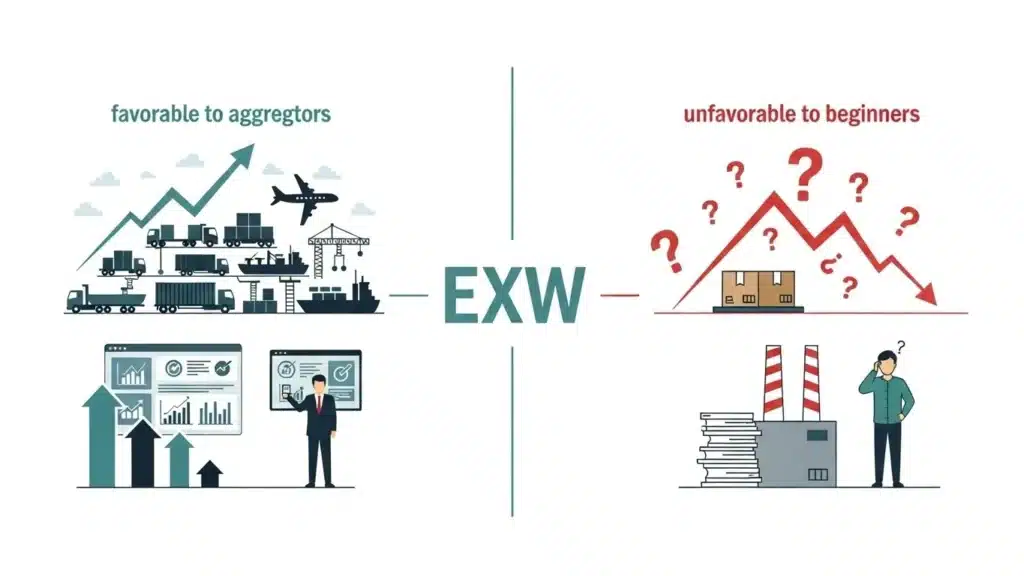
What EXW Means for the Buyer and Seller
Under EXW terms, the seller’s responsibility ends once the goods are made available at their own premises, such as a factory or warehouse. The buyer assumes all costs and risks from that point, including loading the goods onto a truck, arranging all transport, handling export and import customs clearance, and paying for insurance.
The seller must provide the goods and basic export documents, but has no obligation for loading or transport. The buyer is responsible for all export formalities and pays for any required export license fees, though the seller must assist in obtaining necessary paperwork.
Why Experienced Importers Use EXW for Aggregation
EXW gives buyers full control over their logistics chain, allowing them to choose their own freight forwarders and optimize shipping routes. This control is essential for cost-effective consolidation, where goods from multiple suppliers are gathered at a single warehouse before being shipped overseas.
It limits the seller’s liability and costs, which can be advantageous for buyers who have established logistics networks in China, like professional sourcing agents. This flexibility is why suppliers in markets like Yiwu often default to EXW, as it simplifies their operations and reduces their financial exposure.
The Risks and Challenges for New Importers
New buyers often lack the knowledge to handle export formalities in the seller’s country, which can lead to customs delays and unexpected fees. The buyer assumes the risk of loss or damage to the goods immediately upon pickup, with no seller support for loading or initial transport.
International bodies like the ICC often discourage EXW for cross-border trade due to its complexity, suggesting alternatives like FOB or DDP for less experienced parties. Without local logistics expertise, an EXW quote that appears cheap upfront can inflate a buyer’s total landed cost by 50% or more.
FOB (Free on Board): The “Gold Standard” for Importers
FOB is an Incoterm used only for sea and inland waterway shipments. The seller’s responsibility and risk end the moment the goods are loaded onto the vessel at the named port of shipment. This clear division of responsibility at the “on board” point makes FOB a benchmark for importers to compare offers and control their freight costs.
| Incoterm | Risk Transfer Point | Best For |
|---|---|---|
| EXW | Seller’s premises | Veterans controlling logistics |
| FOB | On board vessel | Maritime; seller handles export/loading |
| FCA | Seller’s carrier handoff | Export control without port loading |
| DDP | Buyer’s door | Novices wanting full seller handling |
Definition and Core Risk Transfer Point under FOB
FOB is an Incoterm used only for sea and inland waterway shipments.
The seller delivers the goods, cleared for export, loaded on board the vessel at the named port of shipment.
At the exact moment the goods are on board the vessel, risk and subsequent costs transfer from seller to buyer.
This handover point is the critical control element for both parties.
Seller and Buyer Responsibilities
Seller responsibilities include providing goods and invoice, handling export packaging and marking, obtaining export licenses, completing export customs, arranging pre‑carriage to the port, paying terminal and loading charges, and loading the cargo on the buyer’s nominated vessel.
Buyer responsibilities include designating the vessel, booking and paying for the main sea freight, and covering all costs and risks from the moment goods are on board, including insurance, discharge charges, onward transport, and import customs and duties.
Proper Use Cases and Why It’s a “Gold Standard”
FOB is intended for non‑containerized sea or inland waterway cargo where the seller has direct access to the vessel for loading, such as bulk or break‑bulk shipments.
For containerized shipments, industry guidance recommends using FCA, CPT, or CIP instead.
Importers treat FOB as a benchmark because responsibility is clearly divided at the vessel on‑board point, enabling them to compare offers, centralize freight procurement, and integrate shipments into their own global freight contracts.
Your Trusted Guide Through the World’s Largest Market

DDP (Delivered Duty Paid): The “Lazy” but Expensive Way
DDP is the Incoterm where the seller handles everything from door to door, including paying all import duties and taxes. For the buyer, it’s the simplest but most expensive option, as the seller bundles all costs and risks into a premium price.

What DDP (Delivered Duty Paid) Really Means
Delivered Duty Paid (DDP) is an Incoterm where the seller assumes maximum responsibility, arranging carriage, clearing goods for export and import, and paying all duties, taxes, and customs fees up to the named destination.
Risk transfers to the buyer only when goods are placed at the buyer’s disposal at the agreed destination, ready for unloading.
Why DDP Feels “Lazy” for the Buyer
For the buyer, DDP is the ‘just get it to my door’ option; they only pay for the goods and wait for delivery with no involvement in freight, documentation, or customs.
The buyer typically has no responsibility for duties, taxes, or customs procedures, minimizing operational workload and risk to near zero.
Why DDP Is Expensive (Cost Structure and Hidden Premiums)
Under DDP, the seller bundles all logistics, customs, and tax costs into the sales price, so the buyer pays a premium compared to terms where they handle import themselves.
Sellers must price in unknowns like variable duties, local taxes, brokerage fees, and compliance risks, often leading to conservative, higher quotes to protect their margin.
Operational and Legal Burden on the Seller
DDP places the maximum Incoterms obligation on the seller, making them responsible for complex import procedures in the buyer’s country, including foreign tax registration and acting as importer of record.
Sellers may struggle with local compliance rules, managing delays or penalties, which increases their risk and operational cost.
Risk Transfer, Control, and Comparison with Other Terms
In DDP, risk and cost remain with the seller until goods are placed at the buyer’s disposal at the destination; the buyer then bears unloading risk.
Compared to DAP, DDP extends the seller’s responsibility to include import clearance and taxes, making it the only Incoterm requiring the seller to pay import duties, which many practitioners warn can be highly problematic.
Why Suppliers Prefer EXW in Yiwu Markets
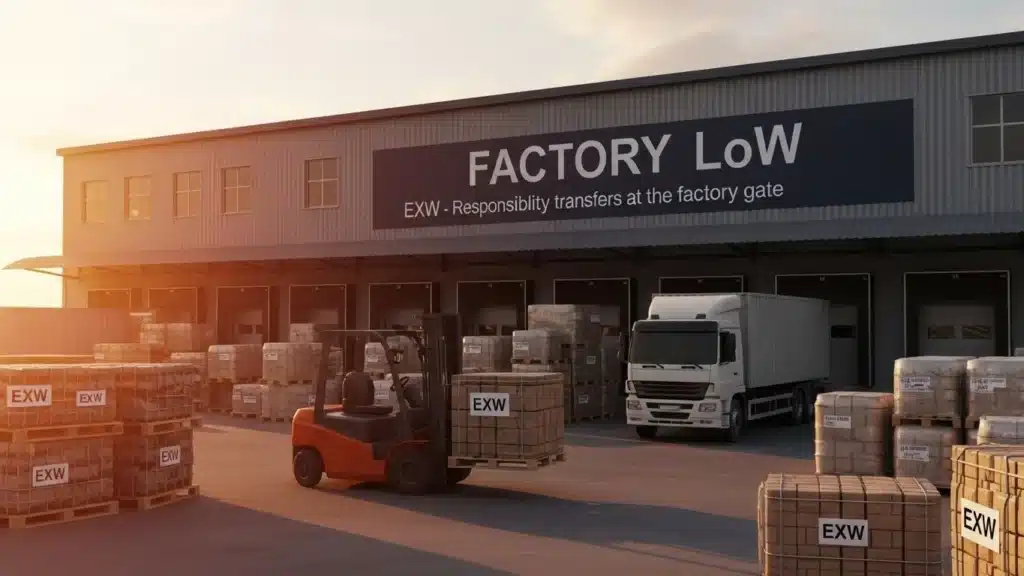
Suppliers in Yiwu markets prefer EXW (Ex Works) because it minimizes their responsibilities, risks, and costs, placing nearly all logistics burdens on the buyer. This Incoterm requires the seller only to make goods available at their facility, avoiding export clearance, inland transport, and freight handling—which many small Yiwu workshops lack the licenses or expertise for.
Simplified Operations for Small Yiwu Suppliers
Yiwu’s market is dominated by small factories and workshops that often lack official export licenses. EXW terms allow these suppliers to focus solely on production, avoiding the complex and costly process of China’s export customs clearance. This makes EXW the default and most practical Incoterm for the vast majority of local vendors in the market.
Cost and Risk Reduction for the Seller
Under EXW, the supplier’s responsibility ends once goods are ready at their factory gate. This structure eliminates seller liability for shipping costs, insurance, and any delays or damages that occur during inland transport or loading. It provides transparent, fixed pricing for the supplier and minimizes their financial exposure after the point of sale.
Market Dynamics and Buyer Expectations
EXW is the standard base for price quotes in Yiwu, making initial offers appear very competitive. This Incoterm aligns with the common practice of experienced importers who consolidate goods from multiple suppliers or use their own trusted freight forwarders. While FOB is more common for finalized port shipments, suppliers default to EXW for its simplicity, shifting the logistical burden and control to the buyer.
Who Pays for “Export License” fees in EXW?
Under EXW (Ex Works) Incoterms, the buyer is responsible for paying all fees associated with obtaining an export license. The seller must assist with the necessary paperwork, but the buyer covers the actual costs.
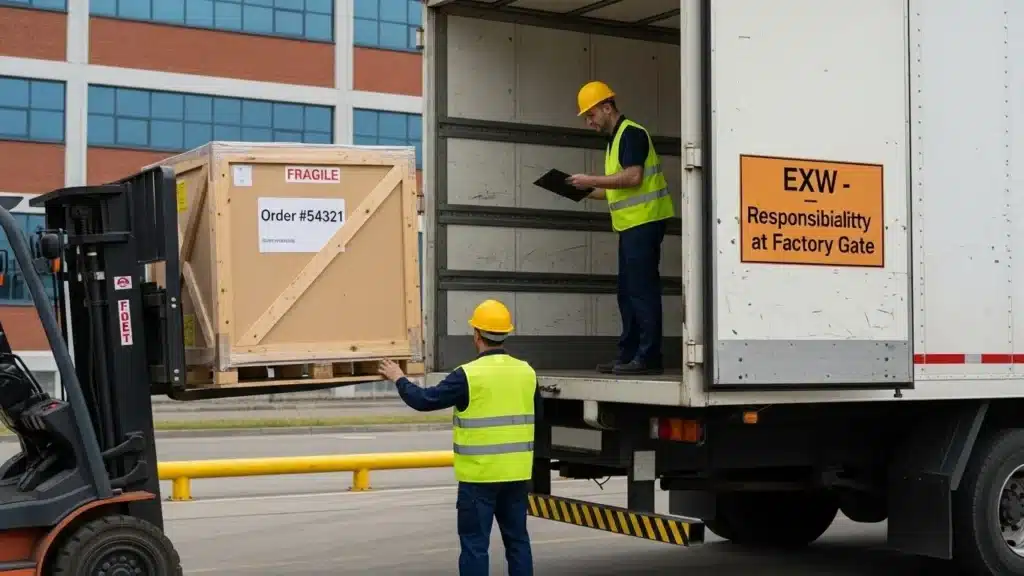
The Buyer’s Responsibility for Export Fees
Under EXW terms, the buyer is responsible for paying all fees associated with obtaining an export license.
While the seller must assist the buyer in getting the necessary paperwork, the buyer covers the actual costs.
This payment structure is a core part of EXW, placing maximum responsibility on the buyer from the seller’s premises onward.
What This Means in Practice
The buyer handles all export documentation, customs duties, and any surcharges.
The buyer manages the process of securing export licenses and completing customs formalities.
Even with U.S. exporters who have specific compliance obligations, the financial responsibility for license fees remains with the buyer.
This approach, emphasized in Incoterms 2020, is designed to minimize risk and obligation for the seller.
Frequently Asked Questions
What is the difference between FOB and EXW?
FOB (Free On Board) means the seller handles costs and risks up to loading goods onto the vessel at the port; after that, the buyer takes over for ocean freight, insurance, and import. EXW (Ex Works) means the seller only makes goods available at their premises, and the buyer is responsible for all costs, risks, and logistics from pickup through export, shipping, and import.
Is DDP cheaper than FOB?
Usually, DDP is more expensive than FOB. The DDP price includes freight, insurance, import duties, and door delivery, with sellers adding a premium for this convenience. FOB can result in a lower total landed cost if you can negotiate competitive shipping and clearance rates yourself, though DDP might be cheaper for small, poorly managed shipments.
Who pays for customs in FOB?
In FOB, the buyer pays for all import customs duties, taxes, and clearance at the destination country. The seller’s responsibility ends once the goods are loaded onto the ship, which includes handling export clearance from their side.
What is the safest incoterm for buyers?
DDP (Delivered Duty Paid) is generally the safest for buyers, as the seller manages all costs and risks right to your door. CIF (Cost, Insurance and Freight) is also safe for ocean shipments, with the seller arranging freight and basic insurance. CIP (Carriage and Insurance Paid To) offers similar protection for multimodal transport, including higher insurance coverage.
Can I use FOB for air freight?
No, FOB is officially for sea or inland waterway transport only, as it requires a clear ‘on board’ point at a ship. For air freight, you should use terms like FCA (Free Carrier), which properly transfers risk when goods are handed to the air carrier.
Final Thoughts
Choosing the right Incoterm is less about finding the single “best” option and more about matching the term to your specific situation. For new importers sourcing from Yiwu, the simplicity of DDP can be worth the premium to avoid logistical headaches. If you’re shipping by sea and want a clear division of responsibility, FOB remains a reliable benchmark. Experienced buyers who consolidate goods or have established logistics partners in China will find the control and cost savings of EXW to be a significant advantage.
The key is to look beyond the initial price quote. An EXW price might seem lowest, but your total landed cost could double after arranging freight, insurance, and customs. A DDP quote includes everything but often at a bundled premium. Understanding who bears the risk and cost at each stage of the journey allows you to make an informed choice, manage your budget accurately, and avoid unexpected fees that can turn a good deal into a loss.