Justin
If you’re sourcing apparel in Yiwu and find the sprawling, mixed-product layout of Futian markets inefficient, there’s a better option. The Huangyuan Clothing Market consolidates all garment categories into a single, 8-floor, 400,000 m² complex, designed specifically for streamlined wholesale buying.

This guide breaks down how Huangyuan works for B2B buyers. We’ll cover its vertical layout that separates men’s, women’s, and children’s wear, analyze the measurable quality gap between boutique and low-end stock (like 160–220 g/m² vs. 120–140 g/m² fabric weights), and explain practical MOQ strategies, including how orders as low as 200–500 pieces per item can be feasible.
Location & Layout: The “Fashion” Hub of Yiwu
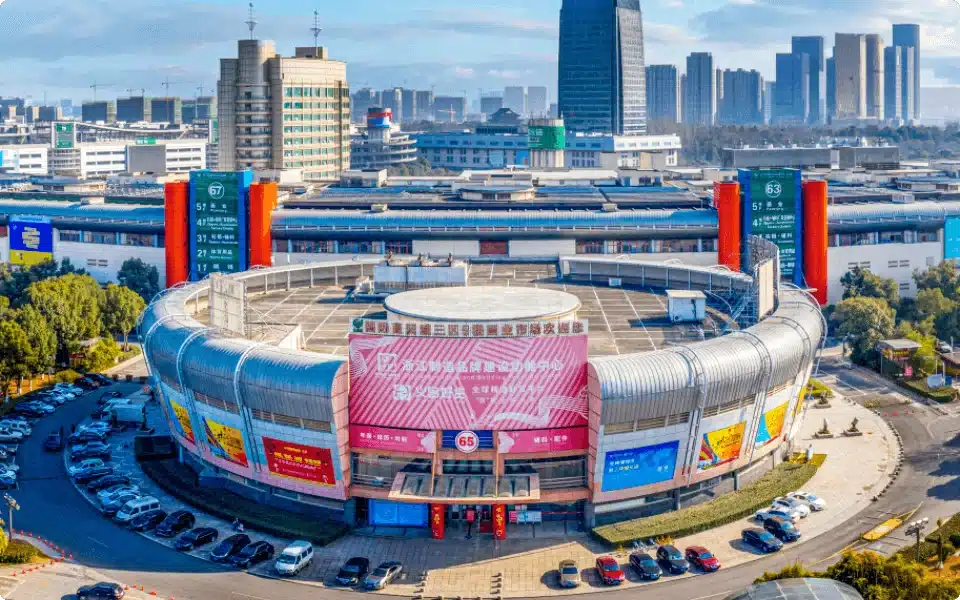
Huangyuan Clothing Market is an 8-floor, 400,000 m² complex dedicated solely to garments. Unlike other Yiwu markets where fashion is mixed with other goods, Huangyuan’s vertical layout groups all clothing categories—men’s, women’s, and children’s—into one building, making it a streamlined destination for apparel sourcing.

A Dedicated Vertical Garment Complex
Huangyuan opened in 2011 in Xiuhu District as a specialized market with over 400,000 m² of building area dedicated exclusively to garments.
Its 8-floor vertical layout organizes products by apparel segment (men’s, women’s, children’s), creating a concentrated sourcing block unlike Futian districts where fashion is interspersed with hardware or toys.
This design makes it the primary answer for buyers asking ‘where are the clothes?’ in Yiwu, offering efficiency by housing all garment categories in a single tower.
Layout Logic: Following Yiwu’s Fashion Zoning Model
The market’s layout mirrors the ‘vertical fashion zoning’ model seen in Yiwu International Trade City District 4, where categories are stacked by segment and turnover rate.
Lower floors typically host high-turnover fashion basics, while upper floors house more specialized, higher-margin items, allowing buyers to move vertically from mass-market to higher-spec sources.
This segmented structure within one building enables sourcing for ‘Guangzhou quality’ at Yiwu prices without needing to travel between different market districts.
Men’s vs. Women’s vs. Children’s Floors
The market organizes its vast inventory across distinct floors or zones dedicated to men’s, women’s, and children’s clothing. This layout streamlines sourcing by grouping similar products, but the underlying infrastructure, like durable concrete floors, is engineered uniformly to handle high traffic and logistical demands across all sections.

The Logic Behind Category-Specific Floors
Separate floors or zones group suppliers by product type. This makes it efficient for buyers to compare styles, fabrics, and prices within a specific category like men’s suits or children’s wear without walking across the entire complex.
This layout mirrors common wholesale and retail logistics. Clustering similar products streamlines bulk purchasing and makes trend analysis more straightforward for buyers navigating the market.
While the merchandise differs from section to section, the fundamental market operations are the same. Services like order consolidation from multiple booths into a single shipment apply equally whether you’re sourcing from the men’s, women’s, or children’s areas.
Infrastructure and Sourcing Workflow
The market’s floors are built for heavy, continuous use. They typically use reinforced concrete with a minimum thickness of 0.1 m and are divided into cells up to 0.6 m per side. This design manages thermal expansion and prevents cracking under the constant load of foot traffic, carts, and inventory.
Proper drainage is critical in humid environments. Walkways are built with slopes of 1% to 3% to channel water away, keeping pathways clear and protecting goods. This feature is essential across all clothing zones to maintain a functional and safe sourcing environment.
A sourcing partner leverages this organized layout to work efficiently. They can systematically gather samples and consolidate orders from dozens of suppliers spread across the men’s, women’s, and children’s sections, ultimately managing everything into one streamlined shipment for the buyer.
Stock Quality: Boutique vs. Low End
The gap between boutique and low-end stock in Huangyuan is defined by measurable specifications. Boutique lines use heavier fabrics (160–220+ g/m²), combed yarns, and meet ISO standards for colorfastness and shrinkage. Low-end stock uses lighter materials (120–140 g/m²), basic construction, and often lacks documented testing or compliance, leading to higher defect rates.

| Quality Factor | Boutique / Export-Grade | Low-End / Spot Stock |
|---|---|---|
| Fabric Weight (GSM) | 160–220+ g/m² | 120–140 g/m² |
| Yarn Type | Ring-spun combed cotton | Open-end (OE) carded yarn |
| Stitch Density (SPI) | 10–14 stitches per inch | 6–8 stitches per inch |
| Shrinkage Control | Within ±3% (ISO 5077) | Often 5–10%, uncontrolled |
| Colorfastness (Grade) | Grade 4–5 (ISO 105) | Grade 3–4 or no test |
| Defect Control (AQL) | AQL 2.5–4.0 standard | Sold as-is, no formal AQL |
| Documentation | Test reports, compliance docs provided | Often no test reports or fiber content docs |
Defining the Quality Gap: More Than Just Looks
The difference between boutique and low-end stock is rooted in material choices and construction. Low-end suppliers prioritize achieving the lowest possible FOB price. This leads to the use of lighter fabrics, typically 120–140 grams per square meter (g/m²), and open-end carded yarns, which are more prone to pilling and have a less refined feel.
In contrast, boutique or “Guangzhou quality” lines are built for durability and performance. They use heavier fabrics in the 160–220 g/m² range and specify ring-spun combed cotton yarns, which are stronger and smoother. A key, often overlooked, indicator is stitch density (SPI). Low-end garments often use only 6–8 stitches per inch, while boutique lines require 10–14 SPI for stronger, more durable seams.
This gap extends to compliance. Low-end goods frequently have no documented fiber content or test reports. Export-grade boutique suppliers, however, provide the necessary documentation to meet international market standards, offering a clear paper trail of quality.
Specifications, Standards, and Sourcing Strategy
Boutique suppliers engineer their products to specific, measurable standards. They control fabric shrinkage to within ±3% following ISO 5077 and achieve high colorfastness grades of 4–5 on the gray scale (ISO 105). Their quality control is systematic, typically operating to an Acceptable Quality Level (AQL) of 2.5–4.0 for major defects, as per ISO 2859-1.
Low-end spot stock presents a different reality. It is often sold as-is with no formal AQL, leading to significantly higher defect and rework rates for buyers. A common risk in the market is the “bait and switch,” where the quality of a bulk order fails to match the approved sample. Mitigating this requires securing written technical specifications and arranging for independent pre-shipment inspection.
To identify reputable boutique suppliers, look for markers like long-term export experience, a willingness to provide third-party test reports, and a cooperative attitude toward pre-shipment inspections. Sourcing in Huangyuan is a segmentation exercise; the goal is to lock in written specs for fabric weight, shrinkage, SPI, and AQL with an export-oriented supplier, then enforce them through rigorous quality control.
MOQ in Huangyuan: Can You Buy Small?
Yes, you can buy in smaller quantities at Huangyuan, but it requires strategy. While standard MOQs for custom orders are often 750-1000 pieces, many suppliers accept 200-500 pieces per item, especially for standard colors and sizes. Using an agent or consolidating a mixed order of about 1 CBM can make small-scale sourcing viable.

| Order Type / Factor | Typical MOQ Range | Key Context |
|---|---|---|
| General Clothing Order (China) | 750–1000 pcs | Common baseline for custom production runs. |
| Per Color (Standard) | 150–300 pcs | Lower threshold due to pre-existing fabric stocks. |
| Per Color (Custom/Pantone) | 500–1000 pcs | Higher to justify dye setup and material waste. |
| Per Size | 150–250 pcs | Allows for size grading within an order. |
| Fabric Procurement (Shirt) | 300 meters (~360 sq yards) | Minimum fabric purchase per color, a key cost driver. |
| Yiwu Market (Huangyuan Proxy) | 200–500 pcs per item | Feasible entry point for small buyers in similar regional markets. |
| Negotiated First Order | 650–700 pcs | Possible reduction from a listed 1000 pcs via agent negotiation. |
| Minimum Cutting Run | 50 pcs per size | Enables test runs with multiple SKUs (up to 20). |
Understanding MOQ: Why Suppliers Set Minimums
Suppliers set Minimum Order Quantities to cover fixed production costs. The most significant is fabric procurement, where mills often require a minimum purchase, such as 300 meters for a specific shirt color. This baseline material cost must be spread across the order.
Custom elements drastically increase the required volume. Using a Pantone-matched dye or a special fabric blend involves unique tooling, setup, and creates material waste. To make these costs viable, suppliers typically need orders of 500 to 1000 pieces.
In contrast, sticking to standard colors and common sizes allows for much lower MOQs, often between 150 and 300 pieces. Factories can pull these materials from existing inventory, and the patterns are already optimized, leading to faster turnover and lower risk.
The Reality of MOQ in Huangyuan: Benchmarks and Flexibility
While specific data for Huangyuan is limited, benchmarks from the nearby Yiwu market provide a practical guide. There, a feasible MOQ for small buyers is typically 200 to 500 pieces per item. This range is a realistic starting point for negotiation in Huangyuan.
Listed MOQs are often negotiable, especially when working with a local agent. A factory stating a 1000-piece minimum may accept a first order of 650 to 700 pieces—a reduction of 20-35%. For very small pilot runs, some factories allow “cutting MOQs” as low as 50 pieces per size, enabling you to test up to 20 different stock-keeping units.
The most effective strategy for small orders is consolidation. Instead of trying to meet the full MOQ for one style, mix colors and designs to reach a total shipping volume. Aiming for a consolidated order of about 1 cubic meter (CBM) can satisfy a supplier’s need for efficient container space without requiring you to hit each individual item’s high quantity threshold.
Korean & Middle Eastern Fashion Trends
Korean fashion in Huangyuan is defined by techwear fusion, cyberpunk aesthetics, and sustainable streetwear, featuring functional materials like water-resistant fabrics and LED integration. While specific Middle Eastern trends are less documented in the research, the market caters to regional preferences, often blending modest silhouettes with contemporary details. These trends represent high-value, technically advanced sourcing opportunities.

Korean Fashion: Techwear, Streetwear, and Circular Economy
The dominant Korean trends available for sourcing are led by techwear fusion and cyberpunk aesthetics. These styles integrate functional designs like modular pockets, hidden compartments, adjustable straps, and layered utility in cargo pants and jackets.
Key materials driving these trends include water-resistant fabrics, breathable mesh inserts, and adaptive materials for temperature or weather control. Reflective and metallic finishes in silver, chrome, and neon are prominent. A significant technical feature is LED-integrated clothing, which allows for app-customizable patterns or biometric tracking.
Brand influence from labels like Hyein Seo, Andersson Bell, and We11done drives demand for oversized silhouettes and graphic tees, solidifying streetwear’s dominance. These brands often experiment with collaborations, such as those with Nike ACG and Arc’teryx, to push technical boundaries.
Sustainability is a growing force, supported by a robust recommerce market projected to reach $5.28 billion by 2025. Platforms like KREAM and Bunjang facilitate this circular fashion economy, encouraging the resale and reuse of high-quality items.
The upcoming Seoul Tex & Tech 2025 event highlights the supply chain’s evolution, focusing on AI integration for production efficiency and the development of smart textiles. This underscores Korea’s role in setting high functionality and innovation standards for the global market.
Sourcing Implications and Market Positioning
Korean-inspired items found in markets like Huangyuan often serve as ‘Guangzhou Quality’ proxies. They offer superior construction details—such as precise topstitching, exact seam alignment, and premium fabric hand—that rival the quality of European luxury goods.
This technical excellence enables scalable production of high-functionality pieces at competitive price points. Buyers can source items like jackets with self-adjusting fabrics or integrated smart features, which were previously limited to niche, high-cost brands.
For B2B buyers, these trends signal a shift towards higher-value inventory. Moving beyond basic apparel to technically advanced items allows for targeting premium streetwear or dedicated techwear markets, catering to consumers seeking both style and function.
The focus on quality construction and advanced materials makes Korean trend items a strategic choice. They provide a clear value proposition for buyers looking to differentiate their offerings with pieces that have integrated technology and superior durability.
Events like Seoul Tex & Tech underscore how Korean outputs set high functionality standards, which suppliers in Huangyuan and similar hubs adapt. This positions these markets as key sources for high-performance fashion at accessible prices for both novice and veteran global buyers.
Best Time to Visit for Seasonal Clearance
The market operates year-round except for a half-month closure during Chinese New Year. The best clearance opportunities typically follow major seasonal shifts, with holiday items like Christmas or Halloween stock arriving 3-6 months in advance. For daily visits, arriving around 8:30 to 9:00 AM allows you to catch stores as they open and maximize your time in the 420,000 m² complex.

Understanding the Market’s Annual and Daily Cycle
The market is open daily from 8:00 AM to 5:00 PM, providing consistent year-round access. The only major annual closure is for the Chinese New Year (Spring Festival), which lasts about 15 days in late January or early February.
Stores often open slightly later than the official market hours; arriving at 8:30 AM in most seasons or 9:00 AM in winter is recommended to align with vendor readiness. Seasonal product cycles are key: new stock for holidays like Christmas or Halloween is launched 3 to 6 months in advance, making the preceding months ideal for finding clearance on outgoing seasonal goods.
Strategic Timing for Maximum Savings and Selection
Target the weeks following major Western and Chinese holidays to find discounted seasonal overstock from the 75,000+ supplier booths. Plan visits outside the Chinese New Year closure to avoid complete market shutdown and capitalize on post-holiday inventory clear-outs.
Use the market’s categorized layout (e.g., men’s wear on floors 1-2, women’s on 3, children’s on 4) to efficiently target clearance sections for your niche. Verify exact daily hours if planning early or late visits, as some reports indicate extended hours from 7:30 AM to 8:30 PM, which could affect access to certain vendors.
Final Thoughts
Huangyuan Clothing Market stands out as Yiwu’s dedicated hub for apparel, offering a streamlined alternative to the mixed-product districts of Futian. Its vertical, category-specific layout groups men’s, women’s, and children’s clothing into a single, efficient complex. This structure, combined with a clear quality spectrum from low-end spot stock to export-grade boutique lines, allows buyers to source strategically based on their specific needs for price, volume, and technical specifications.
Success here depends on understanding its operational logic. Navigating MOQs requires a flexible approach, often involving consolidation or agent negotiation. Timing visits around seasonal cycles can unlock clearance opportunities, while the market’s adaptation of high-value trends like Korean techwear provides access to technically advanced fashion. Ultimately, Huangyuan is a tool for focused sourcing; its value is unlocked by aligning its distinct offerings—from its physical layout to its product segmentation—with a clear and informed buying strategy.
Frequently Asked Questions
Where can I buy wholesale clothes in Yiwu?
The primary location for wholesale clothing in Yiwu is the Huangyuan Clothing Market in Xiuhu District. Opened in 2011, it covers 117 acres with over 42,000 square meters of construction area. Alternatively, Yiwu International Trade City District 4, with 16,000 booths across five floors, is a major hub for clothing, socks, underwear, and accessories.
Is the Huangyuan market open every day?
Yes, the Huangyuan Clothing Market operates daily. It follows the standard schedule for Yiwu’s wholesale markets, opening seven days a week. Typical operating hours are from 07:30 to 20:30. The market closes only during the main Chinese New Year holiday period.
What is the typical MOQ for clothing orders?
For wholesale clothing manufacturing, the standard minimum order quantity typically ranges from 500 to over 1,000 pieces per style and color. Some factories specializing in lower volumes may accept orders starting from 25 to 100 pieces per design, but these are less common.
Can I try on clothes at the Huangyuan market?
No, trying on clothes is not a standard practice at Huangyuan Clothing Market. As a wholesale facility focused on bulk sales across its 5,000 booths, the market does not provide fitting rooms or support garment trials. Retail activity is limited and primarily serves local customers.
Does the market sell brand copies or counterfeit goods?
Huangyuan Clothing Market is officially promoted as a professional and standardized wholesale center for legitimate, brand-authorized, or unbranded goods. The sale of counterfeit items is illegal under Chinese trademark law. Enforcement can lead to administrative fines ranging from approximately ¥10,000 to ¥250,000 per case, along with the seizure of goods.