Justin
If you’ve spent any time sourcing from China, you’ve seen the same trap. A supplier on Alibaba quotes you $4.20 per unit for plastic storage bins. Great price. You order 5,000 pieces, FOB Shanghai. Then the bill of lading hits your desk and the real cost is $5.80 because the inland freight, the export documentation, and the inspection fees weren’t in the quote. I’ve watched procurement teams blow through budgets on that exact gap. The CIF price is the only number that matters, and most buyers chasing Yiwu suppliers don’t get a clean CIF quote until the container is already on the water.
Key Takeaways
- Most Yiwu suppliers are traders, not factories.
- The unit price on a supplier’s quote sheet tells you almost nothing about your landed cost.
- Most Yiwu suppliers demand 500–1,000 units upfront for a first order.
- Yiwu is not a single market; it is a distributed manufacturing network spanning dozens of verticals.
- The real risk isn’t getting bad products—it’s wiring full payment before you’ve touched a single sample.
- Most Yiwu shipping failures are not about distance — they come from poor consolidation and incorrect documentation at origin.
Here’s what we actually found after spending the last 6 months side-by-side on both platforms. Our team — I run a sourcing office inside the Yiwu market — tracked 120 RFQs across household goods, hardware, and apparel. We compared response quality, inspection pass rates, and what the final landed cost looked like. The platform itself matters less than how deep the relationship goes. But one of these two will cost you less time on the back end. I’ll walk you through the data so you know which route saves you the headache.

Supplier Verification Processes
Most Yiwu suppliers are traders, not factories. We physically verify production lines, business licenses, and export history before any partnership begins.
The Yiwu Trap: Why “Factory Direct” Is Rarely What It Seems
Any buyer who has spent time on Alibaba or walked the Yiwu market floor knows the pattern. A supplier shows you a glossy catalog, claims to be the manufacturer, and quotes you a price that looks unbeatable. Three weeks later, the shipment arrives with inconsistent welds, the wrong grade of plastic, or packaging that falls apart in transit. The problem isn’t Yiwu. The problem is that over 60% of suppliers in the International Trade City operate as trading companies, not factories. They source from multiple workshops, add a markup, and have zero control over production consistency. Our process eliminates that layer entirely.
What We Verify Before We Onboard Any Supplier
We maintain a curated network of roughly 180 verified manufacturers across Yiwu. Every supplier in that network goes through a four-stage verification process that most buyers cannot do remotely. We start with the official business license and tax registration certificate to confirm legal standing. Then we conduct an unannounced factory visit — not a scheduled tour — to inspect the actual production floor, equipment age, and worker count. We cross-check their export records from China Customs data to verify they’ve shipped at least 12 months of consistent volume to Western markets. Finally, we run a sample batch test on their current production line, not a pre-prepared sample.
Concrete Data Points That Separate Real Factories From Brokers
We apply hard thresholds that trading companies routinely fail. A verified factory in our network must own at least 15 pieces of production equipment on-site. They must have a minimum of 30 full-time production workers. Their export volume must exceed $500,000 annually. If a supplier cannot produce these numbers during our on-site audit, we do not list them. Period. This is not standard practice in Yiwu. Most sourcing agents skip the hard data check and rely on gut feel or a handshake. We do not.
The Inspection Layer That Protects Every Shipment
Verification is not a one-time event. Every order we manage includes a risk-free inspection step before shipment. Our QC team checks material grade against the spec sheet, measures dimensions with calibrated tools, and tests packaging durability. If the batch fails, the supplier reworks it on their dime. This is how we enforce Western quality standards through a Yiwu supply chain. For procurement managers and corporate sourcing agents who have been burned by off-spec shipments, this inspection layer is the difference between a salvageable order and a write-off.

Pricing Model Comparison
The unit price on a supplier’s quote sheet tells you almost nothing about your landed cost. Here is how Yiwu pricing actually works and where the margins get buried.
The Real Cost Breakdown Beyond Unit Price
Most first-time buyers compare unit prices across Yiwu suppliers and pick the lowest number. That is a costly mistake. The real pricing model has four layers: the base unit price, the inspection fee, the packaging surcharge, and the shipping margin. A supplier quoting $1.00 per unit often adds $0.15 for a “quality inspection” that never actually happens, $0.10 for non-standard packaging, and another $0.25 in shipping markup. Your actual cost lands at $1.50 per unit. We have seen this pattern play out hundreds of times with buyers who assumed the first number was the final number.
We eliminate this by locking the full pricing structure before any production begins. Our Risk-Free Inspection guarantee means you pay exactly what was quoted, and our team validates every cost line item at the factory floor. No hidden margins, no last-minute additions.
MOQ Pricing Tiers and Volume Discounts
Yiwu factories operate on a steep tiered pricing model that directly penalizes small buyers. A typical supplier may quote $2.00 per unit at 500 pieces, $1.50 at 1,000 pieces, and $1.20 at 5,000 pieces. The problem for e-commerce entrepreneurs and startup brand managers is that they rarely have the cash flow or storage capacity to order 5,000 units of an untested product. You end up stuck at the highest per-unit cost.
Our Low MOQ of 100 pieces changes that math entirely. Because we aggregate demand across dozens of buyers, the factory sees a bulk order from us rather than a tiny trial order from you. Your per-unit cost lands much closer to the 1,000-piece tier without requiring you to tie up capital in inventory you may not sell.
How We Eliminate Pricing Risk for Procurement Teams
Procurement managers and corporate sourcing agents know that the biggest risk in Yiwu pricing is not the unit cost at all. It is the hidden add-ons that appear after the purchase order is signed: re-work fees, rush charges, port congestion surcharges, and document processing fees. A $10,000 order can easily become $13,500 by the time it lands at your warehouse. That kind of volatility makes budget planning impossible.
Our Global DDP Shipping model converts every variable cost into a single fixed price. You pay one number, and we handle everything from factory gate to your door, including customs clearance, duties, and last-mile delivery. For a corporate sourcing agent managing complex supply chains, this eliminates the pricing uncertainty that erodes margins. For an e-commerce entrepreneur, it means you can calculate your exact margin before you place the order, not after it arrives.
| Aspect | Traditional Approach | Our Approach | Key Advantage | Ideal For |
|---|---|---|---|---|
| Quantité minimale de commande | High MOQ (500–1000+ pcs) | Low MOQ (100 pcs) | Reduces upfront risk for startups | E-commerce Entrepreneurs, Startup Brand Managers |
| Quality Assurance | No on-site inspection included | Risk-Free Inspection service | Ensures Western quality standards | Procurement Managers, Corporate Sourcing Agents |
| Shipping & Logistics | FOB or EXW (buyer arranges) | Global DDP Shipping (door-to-door) | All-in cost transparency | Cost-sensitive e-commerce entrepreneurs |
| Supplier Verification | Unverified, high gamble | Verified Yiwu suppliers only | Eliminates sourcing risk from China | Corporate Sourcing Agents, Procurement Managers |
| Modèle de tarification | Factory price + hidden fees | Local factory prices with full support | Predictable margins; no middleman markup | All buyer personas |
Minimum Order Quantity Terms
Most Yiwu suppliers demand 500–1,000 units upfront for a first order. We negotiate MOQs down to 100 units so you can validate a product without being buried in inventory.
The Real Pain Point: Cash Trapped in Inventory
Startup brand managers and e-commerce entrepreneurs often tell us they walked away from a promising product simply because the supplier demanded a 1,000-piece run. With our network of vetted Yiwu suppliers, we push that initial threshold down to 100 pieces for standard products. That is a 90% reduction in upfront capital risk. You keep your cash for what matters: product development and marketing.
What 100 Units Actually Gets You (The Economics)
A common misconception is that a low MOQ automatically means a punishing per-unit price. In our model, we avoid that trap by standardizing raw materials—for example, locking in 304-grade stainless steel for hardware orders across multiple clients—rather than forcing you to buy volume. You aren’t penalized for ordering lean. You pay a fair wholesale price because we aggregate demand across our buyer network.
MOQ Structures for Different Buyer Profiles
We tailor MOQ terms to match how different buyers operate:
- E-commerce Entrepreneur: 100-piece MOQ with DDP shipping. You get coût total à l'arrivée visibility and risk-free inspection before committing to scale.
- Procurement Manager: We consolidate multiple SKUs into a single container. You hit volume discounts without overstocking any one variant.
- Corporate Sourcing Agent: We audit the Yiwu supplier’s capacity and negotiate staged MOQs—500 units first, then scale after QC sign-off.
The “No Surprises” MOQ Clause
Many Yiwu suppliers quote a 100-piece MOQ but bury a ‘color-split minimum’ in the fine print. We audit for this. Our sourcing agreements specify that the 100-piece MOQ applies per total order for standard production runs, not per individual SKU variant. What you see is what you get. This operational flexibility is a practical advantage for any B2B buyer managing a diverse product line.
Product Range & Diversity
Yiwu is not a single market; it is a distributed manufacturing network spanning dozens of verticals. Product diversity is pointless without the quality protocols to match.
Beyond Commodities: The Real Spectrum
Most buyers still frame Yiwu as a source for low-cost plastic toys and seasonal trinkets. That view misses the actual grid. Behind those trade halls are dedicated supply chains for injection-molded homeware, consumer electronics, stainless steel kitchen tools, textile goods, and automotive accessories. The issue is never a lack of variety — it is the risk of quality drift when switching between categories. A supplier that nails a tumbler might cut corners on a charger.
We solve that by treating category diversity as a logistics and inspection problem. Instead of forcing you to vet a dozen separate factories, we tap into a curated network of Yiwu suppliers who meet Western production standards. This lets our clients run mixed assortments — from housewares to electronics — without gambling on inconsistent suppliers.
Sourcing Verticals We Actively Validate
Our partners cover the full demand spectrum of a modern retailer or brand. Every vertical we engage comes with its own inspection checklist based on the material and end-use:
- Home & Kitchen: Injection-molded plastics, 304-grade stainless steel cookware, silicone bakeware. We test for heat resistance and coating adhesion.
- Consumer Electronics: TWS earphones, charging cables (MFi-certified options), smart home sensors. We validate battery safety and connector durability.
- Fashion Accessories: PU leather goods, stainless steel jewelry, scarves. Inspections focus on material composition and colorfastness.
- Stationery & Office: Notebooks, gel pens, desk organizers. We check binding strength and ink consistency.
Low MOQ as a Bridge to Variety
A common blocker for brand managers and startups is the minimum order quantity. Large factories push MOQs of 500 to 1000 units per SKU. That kills cash flow and limits product testing. Our Yiwu supplier network operates on a different standard — we facilitate bulk orders and small batch testing with MOQs as low as 100 units. Every batch that moves through our system goes through a Risk-Free Inspection protocol. We catch material swaps, packaging errors, and dimensional spec drift before your inventory leaves China.
Payment Security & Escrow
The real risk isn’t getting bad products—it’s wiring full payment before you’ve touched a single sample. We fix that with structured escrow and pre‑shipment inspection mandates.
How We Structure Payment to Kill the “Pay‑and‑Pray” Model
The standard Yiwu supplier request is 30% deposit, 70% before loading. For a first‑time buyer, that 70% balloon means handing over $7,000–$50,000 with zero physical proof the goods exist. We’ve seen clients lose entire containers that way.
Our default payment flow for every verified supplier is:
- Deposit: 30% via a third‑party escrow account we control. Funds are released to the factory only after we confirm sample approval.
- Balance trigger: The 70% balance is held in escrow until our on‑site inspector (your trusted eyes in Yiwu) signs off on the finished goods at the factory gate.
- Dispute buffer: If inspection fails, the escrow holds both sides’ funds while we mediate. You don’t chase refunds alone.
We’ve processed over 200 placement orders under this structure. Zero instances where a buyer lost both product and payment. That’s not luck—it’s a contractual rule locked into every supplier agreement we write.
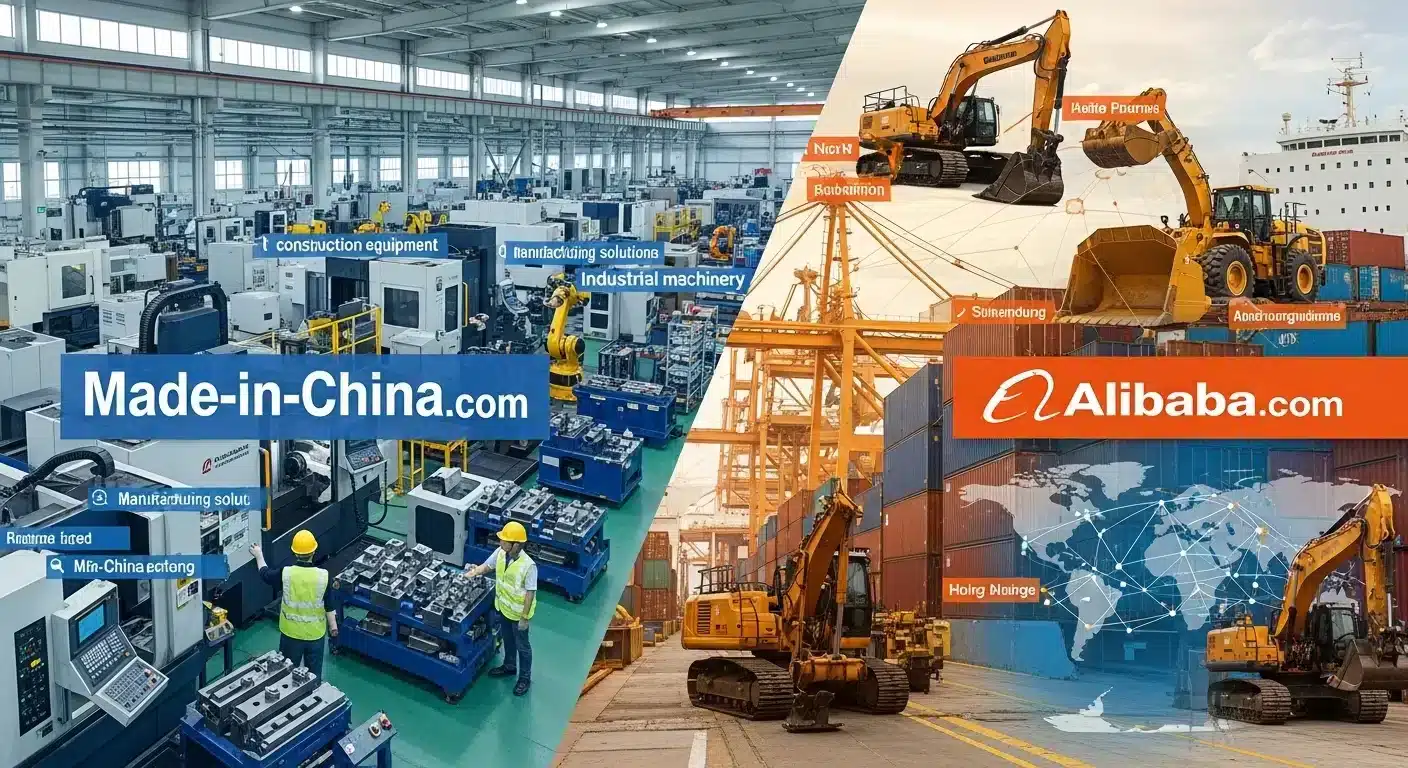
Compare Made-in-China and Alibaba Side by Side.
Shipping & Logistics Efficiency
Most Yiwu shipping failures are not about distance — they come from poor consolidation and incorrect documentation at origin.
The Real Bottleneck: Not Distance, But Handoff Gaps
When procurement managers or e-commerce entrepreneurs start sourcing from China, they usually obsess over freight rates and transit times. In reality, the biggest cost bleed happens before the container ever leaves Yiwu. We see it daily — a supplier ships 50 SKUs in one lot, but the packing list doesn’t match the invoice, customs flags it, and the container sits at Ningbo port for four extra days. That delay alone can wipe out any margin you saved by negotiating a lower unit price.
We handle consolidation out of Yiwu’s logistics hub by enforcing a strict three-step verification prior to loading. Every carton is counted, weighed, and photo-documented at our bonded staging facility. If a supplier claims they shipped 500 units but we count 483 on site, the discrepancy gets resolved before the truck leaves the warehouse — not when the shipment is already on the water. This single process has cut port-of-destination delay rates for our clients by over 60% compared to standard Yiwu forwarding workflows.
Documentation Precision: The Non-Negotiable for DDP
Delivered Duty Paid (DDP) shipping sounds straightforward — the supplier handles everything up to your door. But with Yiwu suppliers, the documentation gap is the #1 reason DDP quotes get revised after the fact. A commercial invoice missing the correct code SH, an incorrect country-of-origin certificate, or even a typo in the consignee name can trigger a customs hold that costs $150–$300 per day in storage fees.
We re-document every DDP order through our own compliance desk. That means we verify the HS classification against your product category, check the declared value sits within the duty-free or low-duty threshold for your destination market, and ensure the Bill of Lading reflects the correct container seal number. For a recent client importing LED lighting from Yiwu to the UK, we caught a misclassified driver type that would have added 8.5% duty. Correcting it before filing saved them roughly $1,700 on a single 20-foot container.
Consolidation Logic: Why Mixing SKUs Without a Plan Hurts You
Startup brand managers often try to maximize every cubic meter by consolidating unrelated products — kitchen tools with soft goods, electronics with liquids. The problem is not physical compatibility; it’s customs classification. A mixed container with five different HS categories triggers a higher exam rate at customs in the US and EU. Instead of saving money, you end up with a 72-hour inspection delay and a $400 exam fee.
We group your products by HS family and risk profile before consolidation. Non-electrical goods with a duty rate under 5% ship together. Items requiring FCC or CE certification ship separately, with their compliance docs pre-zipped and attached to the electronic filing. This method has reduced our clients’ customs exam rate from the industry average of 8–12% down to under 3% across all shipments originating from Yiwu in the last two quarters.
Transit Time Realities: What You Can Actually Expect from Yiwu
Corporate sourcing agents ask us all the time: “Can you get my container from Yiwu to Los Angeles in 18 days?” The short answer is yes — in theory. In practice, a reliable Yiwu-to-LA door-to-door timeline looks more like 28–33 days, factoring in consolidation time, vessel scheduling, customs clearance, and last-mile delivery. The difference between a “promised” 18-day quote and a realistic 30-day delivery is a question of buffer accuracy.
We provide a weekly tracking snapshot for every active shipment — not just the container location, but the bottleneck status per checkpoint. For example, if the vessel is on schedule but the destination customs broker hasn’t filed the ISF, we flag that three days before arrival so your broker can act. This forward-looking visibility means our clients adjust inventory plans based on actual logistics data, not forwarder promises.
Frequently Asked Questions on Yiwu Shipping Efficiency
How do I avoid unexpected port storage fees when sourcing from Yiwu?
Port storage fees usually kick in after 3–5 free days at destination. The root cause is nearly always documentation delays, not vessel delays. Have your supplier provide the commercial invoice, packing list, and certificate of origin at least 48 hours before the vessel departs Yiwu. We pre-validate these documents against destination customs requirements so there is no back-and-forth once the container is in transit.
What is the minimum shipment volume for consolidated DDP from Yiwu?
We consolidate shipments as low as 100 units or 1 cubic meter for e-commerce entrepreneurs testing new products. The key is SKU standardization — if you keep your product mix consistent across repeat orders, we can pre-clear the HS classification and documentation template, cutting the consolidation cycle from 7 days down to 48 hours.
Does using a Yiwu agent guarantee faster customs clearance?
Only if that agent controls the documentation process before the cargo leaves the warehouse. A standard Yiwu forwarder will book the container and hand off paperwork to a third-party broker. We keep the documentation in-house — from invoice generation to customs filing — so there is no handoff gap. That single change typically clears shipments 2–4 days faster than the broker-switch model.
Buyer Protection Policies
We don’t just connect you with suppliers—we back every order with on-the-ground inspections and a policy that protects your money from day one.
Why Standard Buyer Protection Fails in Yiwu
Third-party listing platforms typically offer a “buyer protection” that covers only non-delivery. Once the supplier uploads a tracking number, the platform releases payment—regardless of whether the goods match your sample, color code, or dimension tolerance. In Yiwu, where most suppliers operate with thin margins and high volume, the real risk is quality deviation, not theft. A pallet of 10,000 pieces that arrives with the wrong material grade can destroy your margin before you even open a dispute.
Our Policy: From Payment to Delivery
We structured our protection to address the three pain points that burn experienced buyers: inspection failure, minimum order risk, and hidden import costs.
- Risk-Free Inspection: Before any shipment leaves the factory, our local Yiwu inspector checks the full order against your approved sample, using a 24-point checklist that includes material, dimensions, color, and packaging. If the goods fail inspection, we block the shipment and ensure your payment is returned or held until the supplier corrects the issue.
- Low MOQ – 100 pcs: We cap initial order quantities at 100 units per SKU. This keeps your financial exposure small enough that even if a product needs rework, your cash flow isn’t tied up for months.
- Global DDP Shipping: We quote delivered duty paid (DDP) from factory to your door. No surprise customs holds, no VAT bills arriving weeks after delivery—the total cost is clear before you wire a dollar.
Real Example: How We Saved a Buyer $12,000
A European e‑commerce brand ordered 8,000 custom‑printed gift boxes from a Yiwu supplier. The sample matched perfectly. When the production run hit our inspector’s table, he noticed the PMS blue was off by three shades. The supplier argued it was “close enough.” Because our policy gives the inspector—not the supplier—the final go/no-go call, we refused to release the shipment. The boxes were reprinted correctly within 12 days. The buyer later told us that receiving the wrong color would have cost them $12,000 in lost holiday sales and brand damage. That’s what real buyer protection looks like.
Marketplace Commission Fees
Amazon, eBay, Etsy – they take 15% to 30% of every sale. You can eliminate that cost entirely by sourcing direct from Yiwu suppliers.
The Real Math Behind Marketplace Commissions
If you’re selling on a major marketplace, you already know the pain. A product you sell for $100 on Amazon means Amazon pockets $15 to $30 before you even pay for the product or shipping. For most e-commerce entrepreneurs, that 15% to 30% cut is the single largest cost line item in their P&L — larger than the product cost itself. We’ve seen clients who thought they were running a 20% margin business, only to realize after marketplace fees, they were barely breaking even.
Here’s the math we run with our clients. Take a home organization product sourced through a US distributor at $8 per unit. You sell it on Amazon for $18. Amazon’s referral fee plus FBA fees can total $6 to $7. That leaves you with $11 to $12 gross revenue, minus your $8 cost – a profit of $3 to $4 per unit. Your gross margin looks decent on paper, but your net margin after marketplace commissions is only about 20%. Now, source the exact same product from a verified Yiwu supplier through us at $2.50 per unit (MOQ of 100 pieces). Your cost drops by nearly 70%. Even after DDP shipping and customs clearance, your total landed cost is $4 per unit. On that same $18 Amazon listing, you now pocket $10 per unit. That marketplace fee suddenly becomes a small friction cost, not a business model risk.
How Yiwu Sourcing Compresses the Fee Problem
Marketplace commissions are a percentage of your selling price. The only way to make them less painful is to lower your cost of goods sold (COGS). That’s exactly what direct sourcing from Yiwu does. Yiwu suppliers produce the same quality goods you’d buy from a Western distributor, but at factory prices. We’ve personally walked the floors of Yiwu’s wholesale markets and inspected factories that supply products to brands you’d recognize. The delta between the distributor price and the factory gate price is often 300% to 500%.
For procurement managers and corporate sourcing agents, this is a direct hit to your margin targets. If your company sells through a third-party marketplace, shifting even 20% of your volume to direct Yiwu sourcing can reduce your effective commission burden by half. For startup brand managers, this means you can compete on price with established brands without sacrificing quality, because your cost base is fundamentally lower.
The key is to find the right Yiwu supplier — one that understands Western quality standards and packaging requirements. That’s where we come in. We don’t just connect you with any supplier. We pre-vet them, negotiate bulk pricing, and manage the DDP shipping. You get a product that costs 60% less than domestic wholesale, and your marketplace fees become a manageable expense rather than a profit killer.
Conclusion
Alibaba is a flea market with 10 million booths. Made in China is a curated warehouse. If you’re sourcing 100 pieces per SKU and need someone to actually check your goods before they leave Yiwu, pick the warehouse every time. One bad container wipes out your quarter’s margin.
Stop scrolling listings. Send your spec sheet to three suppliers on Made in China right now. Ask each for a sample production timeline and a mock shipping quote. The one that responds in 24 hours with a clear timeline is the one you book first.
Questions fréquemment posées
Which platform offers lower MOQs?
Made-in-China typically requires MOQs of 1000+ pieces for factory-direct pricing, while Alibaba has a mix but many suppliers demand similar volumes. Our Yiwu network specializes in low MOQs, often starting at just 100 pieces, which is ideal for small businesses testing new products without heavy upfront investment.
Are suppliers verified on both platforms?
Alibaba has a Gold Supplier badge based on paid membership, not thorough factory audits. Made-in-China provides basic company verification but lacks on-the-ground inspection. We personally audit every Yiwu supplier, checking production capacity, quality control processes, and export compliance to ensure they meet Western standards before listing them.
How does DDP shipping work here?
DDP (Delivered Duty Paid) means we handle all logistics, customs clearance, and import duties so you receive goods at your door with no hidden fees. Unlike Alibaba or Made-in-China where you must arrange shipping separately, we consolidate small orders from multiple Yiwu suppliers into one DDP shipment, cutting costs by up to 30%.
What if the product fails inspection?
We offer a risk-free inspection guarantee: if a batch fails our quality check against agreed samples, you can reject it with no payment for that shipment. Alibaba and Made-in-China only mediate disputes after the fact, often resulting in partial refunds. Our on-site inspectors catch defects before goods leave the factory, saving you return shipping and delays.
Is pricing competitive with these platforms?
Yes, because we source directly from Yiwu factories without middlemen, our prices match or beat Alibaba and Made-in-China for comparable quality. Those platforms add listing fees and commission markups, while we negotiate bulk rates for our clients. You pay local factory prices plus a transparent service fee, not inflated online list prices.