Justin
A lot of buyers only ask made in china vs alibaba after a shipment goes wrong. The sample looked fine, the bulk order arrived with different specs, and the supplier stopped replying once payment cleared. I have seen that turn into missed launch dates, chargebacks, and a warehouse full of stock nobody can sell.
The clean way to judge these platforms is not by reputation. It is by category fit, supplier verification, buyer protection, and true landed cost. Alibaba usually gives you more breadth and easier sourcing for mixed product lines. Made-in-China tends to fit industrial and technical buying better, especially when spec control, compliance paperwork, and factory credibility matter more than endless choice. Read on and you will know what to shortlist, what to verify, how to compare samples against bulk production, and where hidden costs usually show up before they hit your margin.
Platform Overview
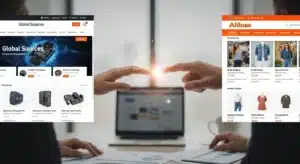
For procurement teams, the decision is simple: Alibaba is usually better for broader sourcing and flexible MOQs, while Made-in-China is stronger for industrial and construction categories.
Alibaba Snapshot
Alibaba covers a wider spread of product categories, so it is usually the faster shortlist when the buying team needs range, pricing options, and supplier volume. That breadth matters when you are testing demand, comparing samples, or building a multi-SKU replenishment plan.
For procurement, the practical advantage is flexibility. Alibaba is generally easier to use when you need lower MOQs, more supplier choices, and a broader pool to compare unit price, sample fee, freight, and duty exposure before you commit.
Alibaba Buyer Protection and MOQ Reality
Alibaba’s Trade Assurance is positioned as a buyer-protection feature, which matters when the real risk is sample-to-bulk inconsistency or delayed shipment approval. It gives procurement teams a clearer approval path than a bare payment transfer, especially when there are internal sign-offs and restocking deadlines.
The platform also tends to be more flexible on MOQ, which helps when a buyer wants to test a supplier before scaling. That does not remove sourcing risk, but it does reduce the cost of getting started and makes supplier screening more manageable.
Made-in-China Snapshot
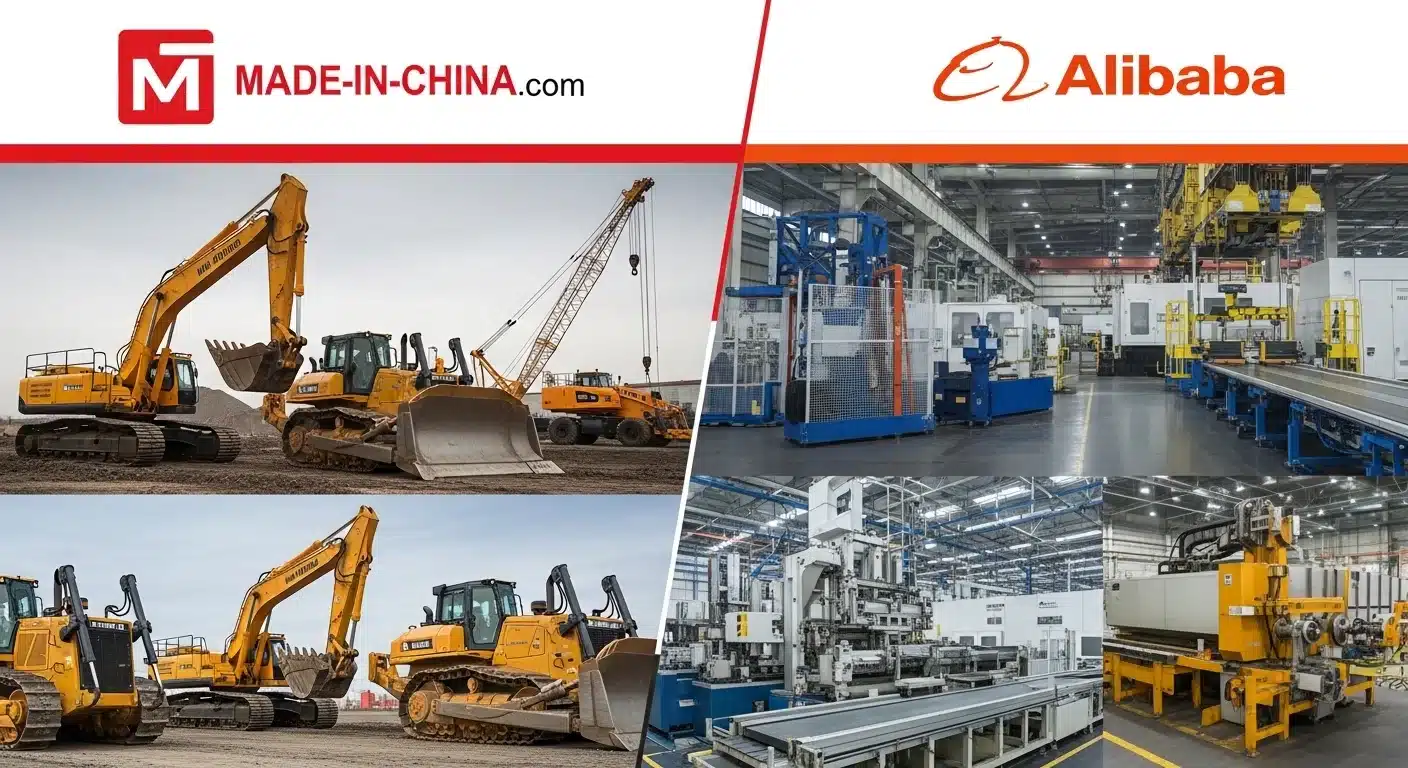
Made-in-China is more concentrated in industrial, technical, and construction-oriented sourcing. If the SKU needs tighter specification control, this platform often feels more aligned with procurement than a broad consumer marketplace.
That narrower focus can be an advantage when you are buying engineered parts, building materials, or other technical goods where supplier capability matters more than endless catalog variety. In those cases, the platform can be more credible than a generalist marketplace for initial screening.
Made-in-China Buyer Protection and Escrow Model
Made-in-China’s STS escrow is commonly described as a paid protection layer, which changes the cost and approval flow compared with Alibaba’s Trade Assurance. For procurement teams, that means the protection is there, but it may add another fee and another step to the working-capital decision.
That difference matters when you compare landed cost, not just unit price. A platform that looks cheaper on paper can become more expensive once you add escrow fees, inspection, freight, duties, and buffer stock.
Platform Comparison for Procurement Teams
- Product focus: Alibaba is broader; Made-in-China is more industrial and construction-oriented.
- Supplier geography: Alibaba usually gives wider coverage; Made-in-China is stronger when the buyer wants technical suppliers.
- MOQ range: Alibaba is generally more flexible for lower-volume testing and early-stage replenishment.
- Buyer protection model: Alibaba uses Trade Assurance; Made-in-China commonly uses STS escrow as a paid protection layer.
- Fee impact: Escrow and protection fees can affect working capital timing and true landed cost.
- Service depth: Both require supplier screening, but Alibaba is usually broader for comparison shopping, while Made-in-China is more category-specific.
What Procurement Teams Should Verify Before Shortlisting
- Business license: Confirm the supplier is a real operating entity, not just a trading front.
- Factory audit status: Check whether a third-party audit exists and whether it is current.
- Export experience: Ask for destination markets, shipment history, and documentation capability.
- QC process: Confirm the supplier has a defined inspection flow, not vague quality promises.
- Inspection option: Verify whether pre-shipment inspection is allowed before balance payment.
- Incoterms clarity: Get the trade term in writing so freight responsibility is not ambiguous.
- Compliance documentation: Request ISO or product-specific certifications where they are relevant to the SKU.
Decision Rule
Use Alibaba when you need breadth, lower MOQ flexibility, and easier buyer-protection mechanics. Use Made-in-China when the buying brief is more technical, more industrial, and more dependent on spec discipline than on catalog variety.
If the goal is true procurement control, do not stop at platform reputation. Shortlist suppliers, verify the factory, request samples, compare landed cost, and test batch consistency before you scale the order.

Key Differences
Alibaba is usually the better fit for broader sourcing and smaller test buys. Made-in-China is stronger when the buying brief is industrial, construction, or tightly specified bulk orders.
Product range
For procurement teams, the first difference is category breadth. Alibaba covers more product categories, which makes it easier to shortlist multiple suppliers across different SKUs in one place.
Made-in-China is more concentrated in industrial and construction products. If the buying brief is technical, standardized, or spec-heavy, that focus can make supplier screening more efficient.
MOQ flexibility
Alibaba is usually the better platform for smaller pilots, category tests, and early-stage validation. That matters when the real problem is low MOQ sourcing risk and you need evidence before scaling.
Made-in-China often fits larger, more standardized buys. It tends to make more sense when the order is already defined, the spec is stable, and the buyer is focused on repeatable replenishment rather than market testing.
Buyer protection
Alibaba’s Trade Assurance is positioned as a buyer-protection feature built around order security, dispute handling, and payment control. For many teams, the practical value is simple: less exposure if the supplier misses agreed terms.
Made-in-China’s STS is commonly described as a paid protection layer. The difference that matters is not the label, but how escrow, dispute handling, and optional inspection affect approval flow and working-capital timing.
Support and service
Support quality is often where procurement teams feel the gap fast. The better platform is the one where supplier communication is faster, verification is clearer, and the buyer spends less time chasing basic answers.
That is why verification burden matters. If the supplier profile is weak, the license is unclear, or the factory claim cannot be checked, the buyer ends up doing more legwork before even reaching sample approval.
How procurement teams should decide
Do not compare platform fame. Compare landed cost, sample fees, inspection cost, freight, duties, and buffer stock, then shortlist the supplier that survives the full cost stack.
- Product fit: Use Alibaba for broader category testing; use Made-in-China when the brief is industrial or construction-focused.
- Risk control: Check business license, factory audit status, export experience, QC process, and inspection options before you commit.
- Commercial clarity: Confirm Incoterms, payment terms, and compliance documents such as ISO or product-specific certifications where applicable.
- Purchase math: Compare unit price against total landed cost, not against quote price alone.
If the order is a pilot, Alibaba usually gives procurement teams more flexibility. If the order is standardized and industrial, Made-in-China can be the tighter fit. Either way, the buyer action stays the same: shortlist, verify, compare landed cost, and request samples before scaling.
Cost Reality
List price is only the starting point. Real buying decisions should be made on landed cost after fees, freight, duties, inspection, and defect risk.
Pricing Signals: List Price vs True Landed Cost
Procurement teams should treat a low unit price as a signal, not a conclusion. The quote only matters if it still works after sample charges, escrow costs, inspection, inland freight, consolidation, duties, and payment fees are added.
The true landed cost is the number that survives supplier screening and finance review. A cheaper quote that creates rework, delayed dispatch, or batch inconsistency is not cheaper at all.
Pricing Inputs That Change the Real Cost
- Fees: Platform charges, payment processing costs, and any transaction-layer service fees.
- Escrow costs: Protection models can be paid or free depending on platform structure, so the approval flow and working-capital timing matter.
- Inspection: AQL inspection for wholesale goods adds cost, but it usually reduces the much bigger cost of receiving the wrong batch.
- Duties: Import duty and tariff exposure can erase margin fast if they are not built into the quote.
- Inland freight: Pickup from the factory to consolidation or port is often missed in early comparisons.
- Consolidation: Combining multiple SKUs can lower freight per unit, but only if the shipment is planned cleanly.
This is where procurement teams win or lose on landed cost. If the supplier cannot quote clearly on Incoterms, export handling, and inspection readiness, the platform is not the problem; the cost model is incomplete.
Hidden Costs That Break Margin
- Sample charges: Paid samples, shipping for samples, and re-sampling when the first version fails spec.
- Tooling: Molds, fixtures, and setup charges can be hidden inside the first production run.
- Payment fees: Card fees, bank transfer charges, and currency conversion spread all reduce gross margin.
- Shipping variance: Rate swings, dimensional weight surprises, and last-mile chargebacks can change the final invoice.
- Tariffs: Duties change by code SH, origin, and product category, so the same SKU can have different landed costs by market.
- Batch inconsistency: A sample-to-bulk consistency problem can trigger returns, sorting, or emergency replenishment.
For low MOQ sourcing risk, the hidden cost is rarely the first order. The real damage shows up when the bulk batch misses the approved sample and the buyer has to absorb inspection failures, delays, or unusable stock.
What Procurement Teams Should Compare Before Award
- Business license: Verify the supplier is a real operating entity, not a paper broker.
- Factory audit status: Confirm whether the site has been audited and whether the audit is current.
- Export experience: Check whether the supplier already handles export paperwork and overseas shipment timing.
- QC process: Ask how defects are measured, sorted, and documented before dispatch.
- Inspection option: Confirm whether third-party or pre-shipment inspection is allowed.
- Incoterms clarity: Make sure the quote states where cost and risk transfer.
- Compliance documents: Request ISO or product-specific certifications where applicable.
The buyer action is simple: shortlist, verify, compare landed cost, and request samples before committing to volume. That sequence is faster than cleaning up a bad order and far cheaper than defending margin after the shipment lands.
| Cost Reality | What Procurement Teams Must Add | Hidden Risk | Decision Rule |
|---|---|---|---|
| Unit price is only the starting point | Sample fees, QC/inspection costs, freight, duties, inland handling, and buffer stock | Cheap quotes often exclude the costs that create landed-cost overruns | Compare total landed cost before shortlist approval |
| Buyer protection changes working-capital timing | Escrow fees, dispute-processing friction, and payment release timing | Protection layers can slow approval or tie up cash longer than expected | Check how payment protection affects cash flow and order speed |
| Sample-to-bulk consistency drives rework cost | AQL inspection, pre-production approval, and batch-spec control | A good sample can still become a failed bulk run | Request sample approval criteria and inspection rights before PO |
| Supplier verification is part of the price | Business license check, factory audit status, export history, and fake-factory verification | Unverified suppliers can trigger delays, quality issues, or payment loss | Verify the supplier before comparing final quotes |
| Low MOQ reduces entry risk but raises unit economics | Per-unit setup impact, small-batch freight inefficiency, and restock planning | Low MOQ sourcing can look flexible while increasing unit cost | Use low MOQ to test the market, then model repeat-order pricing |
| Incoterms must be clear to avoid surprise charges | EXW, FOB, CIF, or DDP scope confirmation in writing | Unclear terms create China sourcing hidden fees and delivery disputes | Demand an all-in quote with responsibilities defined line by line |
Risk And Compliance
Risk control starts before price comparison. For made in china vs alibaba, shortlist suppliers, verify documents, and lock inspection rules before you compare true landed cost.
Supplier Due Diligence
A procurement team should not treat platform listings as proof of legitimacy. The first check is the business license, then factory capability, export experience, quality history, and the right compliance documents for the category.
In practice, Alibaba usually gives broader supplier choice, while Made-in-China is often more concentrated in industrial and construction categories. That matters because category fit affects how easy it is to verify the factory, confirm spec depth, and judge whether the supplier can support repeat orders.
- Business license: Confirm the legal entity name matches the company doing the quote and export.
- Factory capability: Check whether the supplier actually manufactures, assembles, or only trades.
- Export experience: Look for past shipment history, destination markets, and familiarity with import documentation.
- Quality history: Ask for defect records, corrective actions, and repeat-order performance.
- Compliance documents: Request ISO certificates or product-specific certifications only where they apply to the SKU.
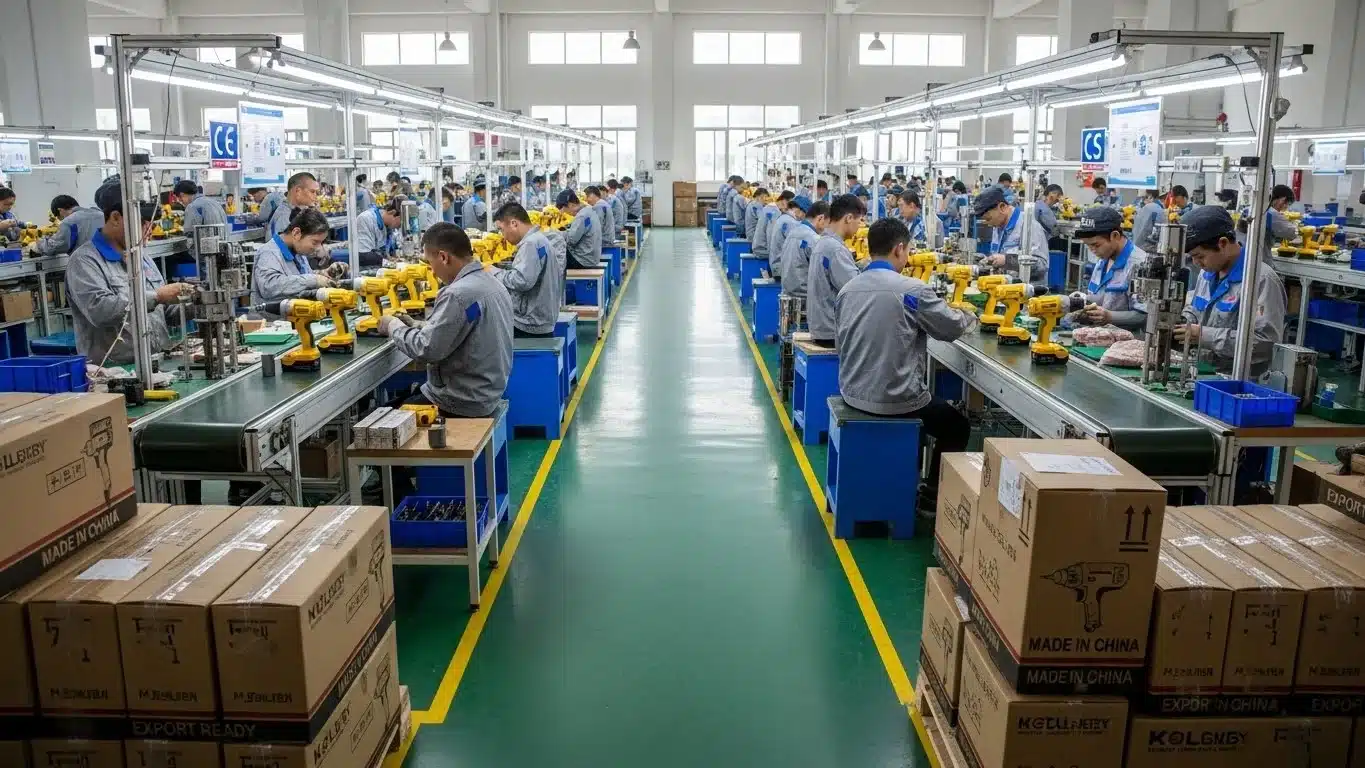
This is where fake factory verification China becomes a real sourcing task, not a buzzword. If the supplier cannot show consistent documentation, the risk is not just fraud; it is also late restocks, failed audits, and expensive rework after the first PO.
Contrôle de la qualité
Quality control is about preventing the sample-to-bulk consistency problem. A good sample means nothing if later batches drift in material, finish, packing, or dimensions.
For wholesale goods, procurement teams should insist on batch consistency checks, pre-shipment inspection, and clear specification control before release. If the order is for a low MOQ sourcing risk test, the same controls still matter, because small runs often hide process weakness that becomes worse at scale.
- Batch consistency: Confirm that the production run matches the approved sample across all units, not just a few pieces.
- Inspection avant expédition : Use inspection before balance payment to catch defects before cargo leaves.
- Specification control: Freeze dimensions, materials, packaging, labeling, and tolerance limits in writing.
- AQL inspection for wholesale goods: Use it as a release gate, not as a substitute for supplier screening.
When comparing Alibaba vs Made in China for industrial products, the practical question is not which platform sounds safer. It is which supplier can pass screening, hold spec, and ship a repeatable batch without creating hidden costs China sourcing teams have to absorb later.
Decision Framework
Choose Alibaba for breadth, faster comparison shopping, and lower-MOQ flexibility. Choose Made-in-China when the SKU is industrial, technical, or construction-led. Use both when procurement needs better landed-cost control and negotiation use.
When Alibaba is the better fit
Alibaba usually makes more sense when the buying team needs wider category coverage and a quicker shortlist. That matters when you are testing demand, chasing a lower MOQ, or trying to reduce sample-to-bulk consistency risk without wasting time on slow supplier screening.
It also tends to feel more comfortable for buyers who want stronger platform-level protection and easier comparison shopping. For procurement teams, that usually translates into faster quote checks, simpler supplier filtering, and less friction in early-stage approval.
When Made-in-China is the better fit
Made-in-China is typically the stronger option for industrial sourcing, technical categories, and construction procurement. The supplier pool is more concentrated around manufacturing-oriented products, so it often fits buyers who need tighter specification control rather than broad catalog browsing.
For procurement teams, that specialization matters. It can make supplier verification easier when the project demands factory capability, export experience, and documentation that can survive internal compliance review.
Why many procurement teams use both
Using both platforms is not indecisive. It is how smart buyers benchmark quotes, compare supplier credibility, and reduce the risk of paying too much for the same spec.
It also gives better use when you are negotiating sample fees, freight, and payment terms. If one platform surfaces a stronger factory profile or cleaner documentation, that becomes a useful reference point in the final shortlist.
Procurement checklist before you commit
- Confirm the business license and check whether the supplier looks like a real factory or a trading layer.
- Review factory audit status, export experience, and the supplier’s QC process.
- Ask for the inspection option, then align it with AQL inspection for wholesale goods if batch consistency matters.
- Clarify Incoterms before comparing quotes, or the landed cost math will be wrong.
- Request compliance documents such as ISO or product-specific certifications where relevant.
- Compare unit price, sample fees, freight, duties, and buffer stock instead of staring at the headline price.
The simple decision rule
If you need breadth, flexibility, and easier comparison, start with Alibaba. If you need industrial depth and tighter category alignment, start with Made-in-China. If you need the cleanest procurement answer, use both and compare landed cost, protection model, and verification quality before placing the order.
Procurement Checklist
Procurement Checklist
Shortlist suppliers on proof, not promises. Then compare total landed cost, because the lowest quote often loses once samples, inspection, freight, duties, and buffer stock are added.
Shortlist Criteria
A procurement team should screen suppliers on response speed, certification fit, MOQ, lead time, payment terms, and QC capability before any price debate. If the supplier cannot answer clearly, cannot show business license and export experience, or cannot explain inspection and compliance documents, the risk is already too high for a serious buy.
For Yiwu market supplier verification, the goal is simple: confirm the seller is a real factory or a credible trading partner, then test whether the sample to bulk consistency problem will show up later. The best shortlist is the one that protects margin without creating rework, delay, or approval friction.
- Response speed: Measure how fast the supplier replies with usable answers, not polite delays. Slow, vague replies usually get worse after the PO is placed.
- Certifications: Ask for product-specific certifications, ISO documents where relevant, and any market-required compliance records. Do not accept generic claims without document proof.
- MOQ: Confirm the minimum order quantity in writing and check whether the MOQ changes by color, size, or packaging. Low MOQ sourcing risk is manageable only when the supplier keeps terms consistent.
- Délai de livraison : Separate sample lead time from bulk lead time. A supplier that ships samples quickly can still miss replenishment deadlines on production.
- Payment terms: Verify deposit ratio, balance timing, and whether any fee is tied to escrow or platform protection. Working-capital timing matters as much as unit price.
- QC capability: Ask how defects are checked, whether AQL inspection for wholesale goods is supported, and whether the supplier can handle pre-shipment inspection without drama. If QC is unclear, batch inconsistency becomes your problem.
Landed Cost Check
Do not compare platform quotes in isolation. Procurement teams should compare unit price, sample cost, inspection, shipping, duties, and buffer stock to calculate true landed cost. That is the only way to compare Alibaba vs Made-in-China landed cost comparison results in a way that survives internal review.
This is where DDP hidden costs China sourcing problems usually appear. A quote that looks cheap can become expensive once freight class, customs charges, handling fees, and reserve inventory are included. If the supplier cannot explain Incoterms clearly, the buyer is not looking at a full-cost offer.
- Unit price: Compare the true per-piece price at your target order size, not the teaser price on the first quote.
- Sample cost: Include sample unit price, sample freight, and repeat sampling if the first sample fails spec.
- Inspection: Add pre-shipment inspection or third-party QC fees, especially if batch consistency is critical.
- Shipping: Use the actual shipping mode and destination terms, not a rough estimate that ignores fuel surcharges or destination handling.
- Duties: Check import duty, VAT, and any clearance charge before approving the supplier.
- Buffer stock: Hold enough reserve inventory to cover delays, defects, or replenishment gaps. A low purchase price does not help if stockouts hit sales.
Verification and Protection Checks
When comparing Alibaba trade assurance vs Made-in-China STS, do not stop at the label. Compare how the protection model affects approval flow, dispute friction, and cash timing. Alibaba generally gives broader category coverage and more flexible MOQs, while Made-in-China is more concentrated in industrial and construction sourcing, so the better platform depends on the category and the level of proof you need.
For procurement teams, the right question is not which platform sounds safer. The real question is which one gives you faster verification, clearer supplier screening, and less risk of a mismatch between sample and bulk orders.
- Confirm business license and export experience before you move to negotiation.
- Check factory audit status if the supplier claims direct manufacturing capability.
- Request the QC process in writing, including defect handling and inspection steps.
- Ask for clear Incoterms so the quote can be compared on equal terms.
- Collect compliance documents early, including ISO or product-specific certifications where applicable.
Conclusion
I would choose Alibaba for most replenishment buys, and I would switch to Made-in-China only when the item is industrial, technical, or construction-focused and the spec sheet matters more than catalog breadth. Alibaba gives you more supplier choice and easier comparison, but the real win comes from checking unit price against sample fees, freight, duties, and the cost of a bad batch before you place the order.
Shortlist two suppliers on each platform, ask for business license, export history, QC process, and inspection records, then request samples and compare them against the bulk quote line by line. If the sample to bulk consistency problem shows up, walk away fast, and use a verified Yiwu buying guide for importers to screen the next supplier before you commit money.
Questions fréquemment posées
Which is better, Made-in-China or Alibaba?
Neither platform is universally better; the right choice depends on your product, order size, and risk tolerance. Alibaba usually offers broader product variety and more trading-company access, while Made-in-China is often stronger for industrial and OEM sourcing with a more supplier-focused database. For buyers who want verified Yiwu suppliers, risk-free inspection, low MOQ starting around 100 pieces, and DDP shipping support, the better option is the one that combines supplier verification with on-the-ground quality control rather than relying on the marketplace alone.
Is Made-in-China the same as Alibaba?
No, they are not the same company and they operate with different sourcing ecosystems. Alibaba is a larger, more general marketplace covering a wide range of product categories and seller types, while Made-in-China is more focused on industrial, manufacturing, and export-oriented suppliers. In practice, both can connect you to Chinese suppliers, but neither replaces local verification, product inspection, and logistics management when you need Western quality standards and reliable delivery terms.
Is Made-in-China a reputable site?
Yes, Made-in-China is a reputable sourcing platform, but the platform itself does not guarantee product quality or supplier reliability. The real difference comes from how well each supplier is vetted, whether factory information is verified, and whether samples, inspections, and compliance checks are performed before shipment. For buyers sourcing through Yiwu, reputability improves significantly when you use local inspection, verified supplier matching, and controlled shipping solutions like DDP.
Quel est le meilleur site Internet pour acheter en gros en Chine ?
There is no single best website for every buyer, because the strongest sourcing channel depends on your product type, target margin, and need for quality control. Alibaba and Made-in-China are both widely used, but the best results often come from combining platform sourcing with local verification in China. For brands that need low MOQ, verified Yiwu suppliers, risk-free inspection, and global DDP shipping, a trusted sourcing partner on the ground is often more effective than relying on a website alone.
Which is better, Made-in-China or Alibaba?
Alibaba is generally better for buyers who want a broad supplier pool and easy comparison across many product categories, while Made-in-China is often better for more specialized manufacturing and industrial sourcing. But both platforms still require careful supplier vetting, because the lowest quoted price does not always mean the best landed cost or the lowest risk. If your priority is dependable quality, low MOQ, and end-to-end control from inspection to shipping, sourcing through verified Yiwu suppliers with local support can outperform both platforms.
Related guide: « Made in China » ou Alibaba : quelle plateforme est la meilleure ?.