 Justin
A yiwu private label cosmetics oem order almost always breaks in one of two places: the minimum-order quote that quietly tripled when the buyer asked for a custom formula, or the U.S. MoCRA responsible-person duty the brand assumed the factory would handle. Neither is Yiwu’s fault. Both are avoidable if the brand walks in knowing what Yiwu actually is — an order-taking, packaging, and logistics hub whose “cosmetics factories” often route production to Guangzhou behind the scenes.
Key Takeaways
- The Yiwu cosmetics hall sits in District 3, 3rd floor — 1,100+ booths, 1,200+ registered cosmetics entities. Many outdated guides point buyers to the wrong floor.
- Stock formula private label: typical minimum 1,000–3,000 units per SKU. Fully custom OEM formula: 5,000–12,000 units per SKU. Confusing the two is the #1 quote-inflation trap.
- MoCRA 2026 splits the duty: the factory files facility registration (FDA Form 5066, renews July 1, 2026); the brand owner is the Responsible Person and files product listings. A Yiwu supplier cannot legally do the second for you.
- ISO 22716 is not an FDA license. It is a cosmetics-GMP certification. Trading houses often quote it to imply FDA approval — they are not the same document.
- Realistic first-order timeline: 90–140 days from concept sign-off to product in a U.S. warehouse. Skincare adds 2–4 weeks of stability testing over color cosmetics.
- Budget bands: USD 8k reaches a stock-formula relabel; USD 20k covers a stock formula with custom scent and packaging; USD 50k is the entry point for a genuinely custom skincare line.
This guide is written for indie beauty founders and small brands who want a private-label cosmetics line without repeating the compliance mistakes that get products pulled from Amazon within the first quarter. It covers where Yiwu fits, what “minimum order” actually means for stock vs custom, the MoCRA/CPNP/NMPA route by market, the 6-step vetting run before any deposit, and the realistic cost bands at USD 8k, 20k, and 50k.
TL;DR — When Yiwu Works for Private-Label Cosmetics (and When It Doesn’t)
Yiwu earns its place for indie brands buying stock-formula private label at 1,000–5,000 units per SKU, wanting a single point of contact for packaging + labelling + freight, and shipping to a market where compliance is straightforward. It stops making sense the moment the brief involves proprietary R&D, a signature ingredient no other brand uses, or a regulated ingredient class like sunscreen actives.
| Best for | Not ideal for |
|---|---|
| Stock formula relabel with custom packaging (lip gloss, lip balm, face mask, cream) | Proprietary R&D formulas (needs Guangzhou lab, 6+ month timeline) |
| Indie brands testing 3–8 SKU launches at 1k–5k units each | Single-SKU test runs under 500 units — better done at a Guangdong sample house |
| Consolidated packaging + product + shipping through one Yiwu partner | Sunscreen / drug-classified products (need FDA OTC monograph, not private label) |
| Color cosmetics with modest custom (shade tweaks, scent add-ons) | Retinol, prescription-level actives, medical-grade skincare claims |
| Amazon US launches leaning on ISO 22716 factory + MoCRA-compliant Responsible Person setup | EU-first launches without a Responsible Person entity in-market (CPNP requires an EU RP) |
Where Cosmetics Really Live in Yiwu (District 3, Floor 3)
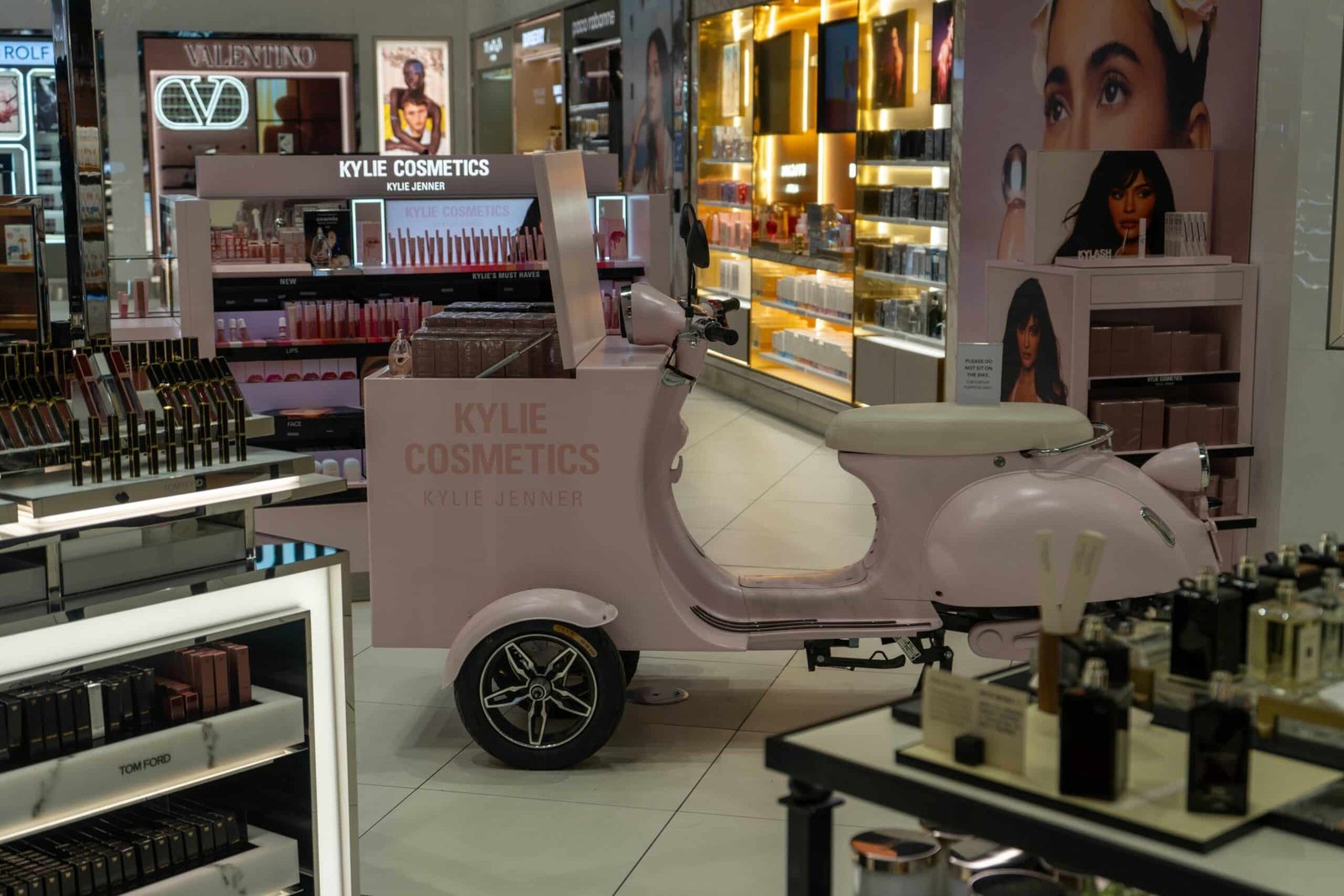
The Yiwu cosmetics hall is on the 3rd floor of District 3 in the International Trade City — 1,100+ booths and roughly 1,200 registered cosmetics entities, according to the trade city’s official floor plan. Many older sourcing guides point to 2F or District 2; those are hats, gloves, and knitwear halls. If you walk in on the wrong floor and start asking about lip gloss, you will be politely redirected upstairs.
Hours run 8:30–17:30 in summer, 8:30–17:00 in winter. Peak buyer traffic hits June through October, matching the same Q3 window that drives the Christmas-goods rush covered in the Yiwu market sourcing guide. The category mix on 3F is roughly split between color cosmetics (foundation, lipstick, eyeliner, mascara) and skincare (mask, moisturizer, serum, cleanser, sunscreen), with a smaller cluster of packaging-only booths at the north end.
The trading-house-vs-factory reality
Most “cosmetics factories” running booths on District 3 3F are trading houses — they take orders in Yiwu, route production to established GMP plants in Guangzhou or Zhejiang’s own coastal cluster, then consolidate the finished product back to Yiwu for packaging and shipping. This is not deception. It is how the market works, and it matches the trading-vs-factory dynamic explained in the factory vs trading company guide. The question is not whether the Yiwu contact is a “real factory” — the question is whether the production plant behind them is ISO 22716 certified and whether the paperwork will match the invoice on arrival.
Stock Formula vs Fully Custom Formula — Two Very Different Minimum-Order Worlds

The single biggest source of quote confusion in Yiwu cosmetics OEM is the gap between stock-formula private label and truly custom OEM. Both get called “private label” in casual quotes. They are not the same business.
| Tier | What you get | Typical minimum | Formula ownership |
|---|---|---|---|
| Stock formula relabel | Factory’s existing formula, your label + your packaging | 500–1,000 units per SKU | Factory keeps it; other brands use the same base |
| Stock formula + scent / color tweak | Base formula, minor cosmetic tweaks, your packaging | 1,000–3,000 units per SKU | Factory keeps base; tweak may or may not be exclusive |
| Semi-custom formula | Modified base with 1–2 signature actives added | 3,000–5,000 units per SKU | Negotiable; typically shared unless contractually exclusive |
| Fully custom OEM formula | R&D lab formulates from your brief; stability + safety testing | 5,000–12,000 units per SKU | You own it if the contract says so; default in China is factory retention |
The 12,000-piece minimum quoted by well-known Yiwu OEM Kasey Cosmetics is real, and it maps to the fully-custom tier — not to stock relabel. A first-time buyer asking Kasey for “a lipstick with my logo” gets a 500–1,000 unit quote; asking for “a lipstick with my own formula, my color, my texture” gets the 12,000 quote. Both quotes are accurate for what was asked.
The practical implication: decide upfront which tier you are shopping. If the brand story rests on a proprietary hero ingredient, price the fully-custom tier and plan an inventory position around it. If the story is about design, community, or curation, stock formula at 1k–3k per SKU is the honest fit and the working capital math actually holds. The low-minimum Yiwu private label strategies post covers the specific negotiation levers on the stock-formula tier.
MoCRA 2026: The Facility Registration + Responsible-Person Split
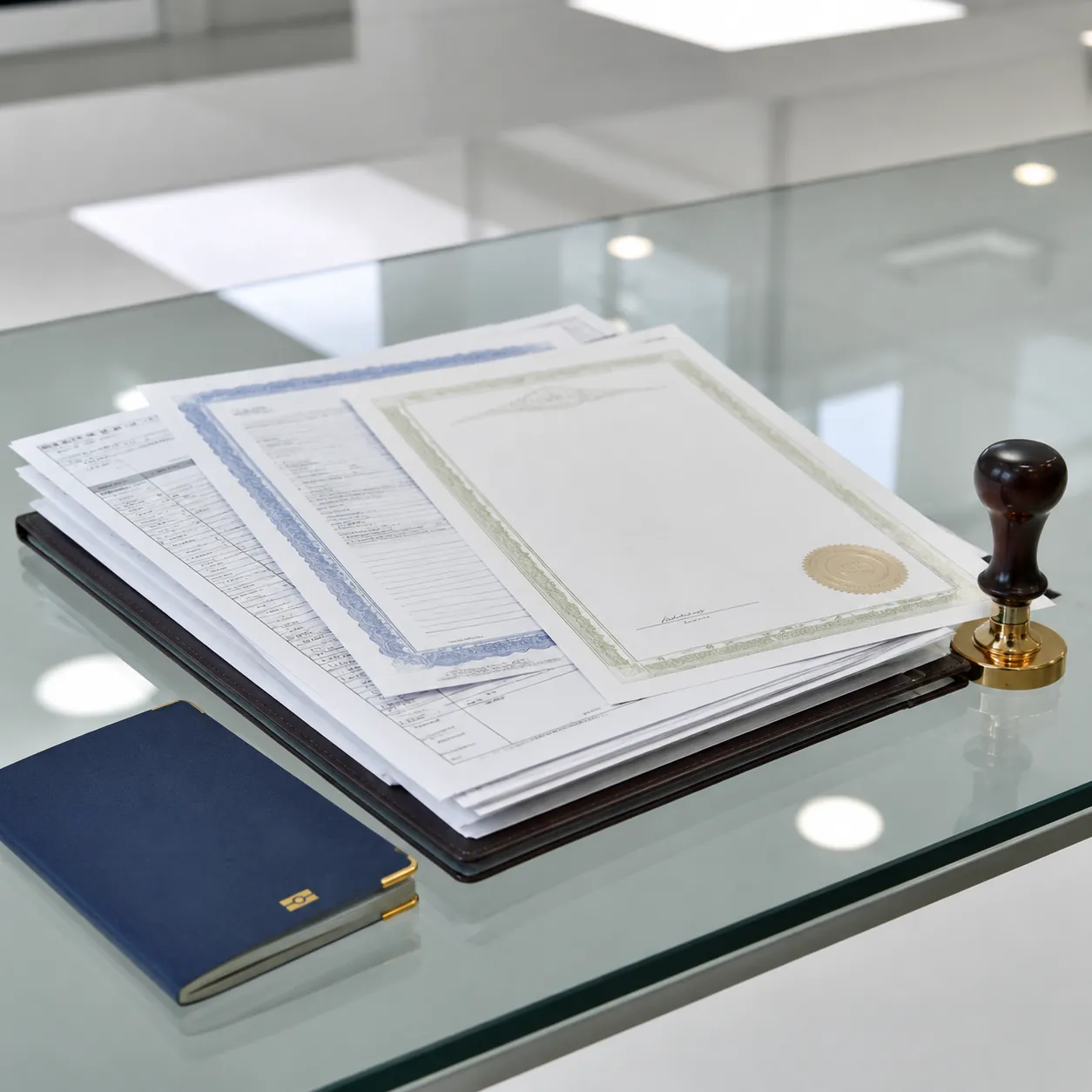
En FDA’s Modernization of Cosmetics Regulation Act (MoCRA), effective phased 2024–2026, split cosmetics compliance into two distinct duties that many first-time indie brands assume are one job.
- Facility registration (the factory’s job). The Yiwu or Guangzhou production plant must register with the FDA using Form FDA 5066, obtain an FEI number first, and submit through the FDA’s Cosmetics Direct portal. Foreign facilities must designate a U.S. agent. First renewal falls by July 1, 2026, then every two years.
- Product listing and Responsible Person (the brand’s job). The brand owner — you — is the Responsible Person. You file the product listings, categorize them, submit ingredient statements, and hold the Cosmetic Product Safety Report (CPSR). No Yiwu factory can legally do this on your behalf, though many will offer to.
The most common failure: an indie founder assumes the Yiwu OEM will “handle FDA,” ships product without their own MoCRA product listing, and receives a customs hold or an Amazon takedown 60 days after launch. The fix is administrative, not technical — but it takes 4–6 weeks to unwind once product is already stuck.
The U.S. agent question
Any foreign cosmetics facility exporting to the U.S. must designate a U.S. agent for FDA correspondence. This is the factory’s obligation, not the brand’s. Ask any Yiwu contract manufacturer: “Who is your U.S. agent under MoCRA, and can I see the appointment letter?” A factory that cannot answer within 24 hours has not registered. Confirm current requirements with an FDA-focused regulatory consultant before wiring your deposit.
EU CPNP and China NMPA — When You Need Which
The U.S. MoCRA path is only one of three regulatory routes a Yiwu-produced cosmetic may need to clear. Selling into the EU means the Cosmetic Products Notification Portal (CPNP), an EU-based Responsible Person, and a Cosmetic Product Safety Report (CPSR) signed by a qualified assessor. Selling into China (domestic) means a separate registration or filing with the National Medical Products Administration (NMPA). Each has its own timeline, cost band, and documentation set.
| Market | Framework | Responsible entity | Typical lead time |
|---|---|---|---|
| Estados Unidos | MoCRA (facility + product listing) | Brand owner = Responsible Person | 2–6 weeks for product listing after facility registration is in place |
| European Union | EU 1223/2009 + CPNP notification | EU-based Responsible Person (brand’s entity or a service provider) | 6–12 weeks including CPSR assessment |
| Mainland China | NMPA registration (special) or filing (general) | Domestic Responsible Person in China | 3–6 months for filing; 6–12 months for special-use registration |
| Reino Unido | UK SCPN (post-Brexit CPNP equivalent) | UK-based Responsible Person | 4–8 weeks after CPSR |
Requirements vary by product type, target market, and the brand’s role — confirm current specifics with a regulatory consultant in each market before finalizing the launch plan. A Yiwu factory can supply the technical documentation the assessments require (ingredient statement, stability data, MSDS, allergen profile), but cannot file the notifications for you in the U.S., EU, or UK. In China, it can — but only if the factory has a domestic Responsible Person entity, and most Yiwu OEMs do not.
Is Yiwu the Right OEM Hub for Cosmetics, or Should You Go to Guangzhou?
Guangzhou is China’s dominant cosmetics production cluster — most of the R&D labs, most of the ISO 22716 factories, and roughly two-thirds of the export volume by value. Yiwu is a market and consolidation hub. The choice is not “which is better” but “which stage of your brand is which best for.”
| Ruta | Best for | Weaker on |
|---|---|---|
| Yiwu private-label | Stock formula at 1k–5k per SKU · consolidated packaging + freight · multi-SKU launches · small brands testing 3–8 SKUs | Proprietary R&D · signature actives · sunscreen / OTC · lab access |
| Guangzhou direct OEM | Custom formulation · signature hero ingredient · stability + safety lab work · larger SKU commitments | Multi-supplier consolidation · packaging market density · one-container mixed loads |
The honest position: a brand launching a 5-SKU indie line at 2,000 units each with stock formulas belongs in Yiwu, because packaging, product, and freight can all be pulled through a single sourcing partner. A brand launching a single hero serum with a proprietary peptide belongs in Guangzhou, because the lab work is where the money and the risk sit — Yiwu adds nothing to that particular workflow. The Yiwu vs Alibaba comparison covers the same trading-house-vs-factory reasoning at a market-wide level.
The 6-Step Vetting We Run Before Wiring a Deposit
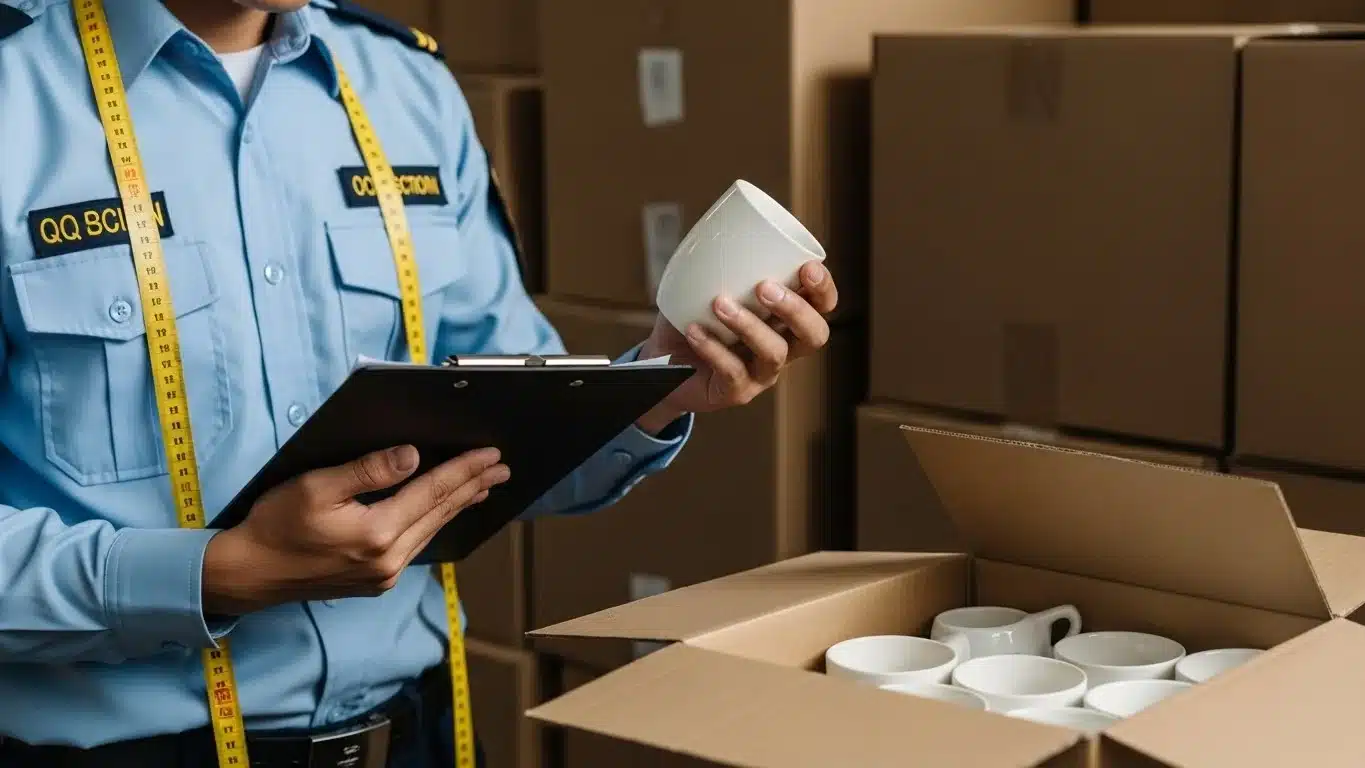
Every Yiwu cosmetics OEM order routed through our team clears this operational check before deposit. It is what actually separates a solvable order from a nightmare four months in:
- Business license name vs. bank account name match. The company on the Yiwu business license must match the account receiving the deposit. Mismatch is the #1 red flag for a rebilling scam.
- Actual production facility named and locatable. If the Yiwu contact routes to a Guangzhou plant, that plant’s name, city, address, and ISO 22716 certificate number go on the purchase order — not on a business card.
- MoCRA facility registration verified. Ask for the FEI number and U.S. agent appointment letter. If the factory has not registered under MoCRA, they cannot legally supply the U.S. market — no matter what their marketing pack says.
- ISO 22716 certificate reviewed at the certificate body, not the factory. Serial number gets verified with the issuing body directly (e.g. SGS, TÜV, Intertek). Fake ISO certificates are common; the cross-check takes 15 minutes.
- Stability and PET (Preservative Efficacy Test) reports on file. For skincare, 3-month accelerated stability + PET are non-negotiable. If the factory cannot produce them for the exact SKU on the quote, the SKU is unfinished — treat any lead time they quote as fantasy.
- Pre-shipment AQL inspection built into the PO. En AQL inspection stages guide covers the specific defect thresholds; for cosmetics, mandatory checks are batch number legibility, seal integrity, fill weight variance, and label placement tolerance.
Realistic Timeline: Concept → Product-in-Hand for a Yiwu OEM Line
The honest first-order timeline for a Yiwu private-label cosmetics line is 90–140 days from concept sign-off to product in a U.S. warehouse. Skincare skews to the upper end because of stability testing; color cosmetics compress toward the lower end. Custom formula adds 8–12 weeks upfront for R&D and stability before production even begins.
| Stage | Stock formula path | Custom OEM path |
|---|---|---|
| Brief + supplier shortlist | Week 1–2 | Week 1–2 |
| Sample + formula selection | Week 3–5 | Week 3–10 (R&D) |
| Stability + PET testing | Skip (uses existing base) | Week 10–18 (3-month accelerated) |
| Packaging design + printing | Week 5–8 | Week 14–18 (parallel to stability) |
| MoCRA product listing filed | Week 7–10 | Week 16–20 |
| Production run | Week 9–12 | Week 18–22 |
| Pre-shipment AQL + freight | Week 12–17 (incl. ocean transit) | Week 22–27 |
| Total to U.S. warehouse | ~90–120 days | ~160–190 days |
Cost Breakdown: What USD 8,000, 20,000 and 50,000 Actually Buy
The three budget bands that come up most often in indie brand launches map cleanly to three different product realities. Numbers below are FOB Ningbo, before U.S. duty, freight to warehouse, or MoCRA compliance service fees.
| Budget | Realistic scope | Trade-off |
|---|---|---|
| USD 8,000 | 3–4 SKUs, stock formula relabel, factory’s default packaging with custom sticker labels, 1,000 units per SKU | Zero product differentiation; other brands ship the exact same base |
| USD 20,000 | 4–6 SKUs, stock formula with scent + color tweaks, custom-printed packaging (not stickers), 2,000–3,000 units per SKU | Formula is still shared; differentiation is packaging + brand story only |
| USD 50,000 | 2–3 SKUs, semi-custom or custom formulation with 1–2 signature actives, full stability + PET, 5,000 units per SKU | Longer timeline (160+ days), higher inventory risk, meaningful IP |
Add roughly USD 3,000–8,000 for MoCRA responsible-person service, product listing filings, and initial 12 months of U.S. agent representation on top of any of these bands. EU launches add USD 2,500–6,000 per CPSR assessment, per product family. The landed cost formula shows how these one-time and per-unit costs compound through duty and last-mile.
Example: A 5-SKU Indie Brand Launch, Yiwu Stock-Formula Route
Illustrative scenario, not a specific customer case. A U.S.-based indie brand launching a 5-SKU vegan skincare line (cleanser, toner, essence, moisturizer, mask), 2,000 units per SKU, stock-formula private label from a District 3 3F trading house that routes production to an ISO 22716 plant in Guangzhou. Amazon US launch, DDP to a 3PL in New Jersey.
The founder shortlists three Yiwu contacts in Week 1 after a 2-day walk through District 3, 3F. Two of the three quote 500-unit stock relabel; one insists on 3,000-unit minimums that turn out to include unrequested custom fragrance. The founder picks the 500-unit-tier supplier and signs an NNN before sharing brand positioning.
Weeks 3–5: samples of all 5 stock formulas arrive; three are approved as-is, two need scent adjustments (pushing them into 3,000-unit tier). Total order: 3 SKUs at 2,000 units + 2 SKUs at 3,000 units = 12,000 units combined. Purchase order signed Week 6; 30% deposit wired to the supplier’s business-license-matching bank account.
Weeks 7–10: packaging design finalized in parallel with the MoCRA product listing filing. The founder pays a compliance service USD 4,200 to handle facility registration verification, U.S. agent confirmation, and the 5 product listings. Week 11 pre-shipment AQL runs at the Guangzhou plant on the supplier’s tab, per PO. One SKU fails fill-weight variance and is reworked; the other four ship.
Week 13: container gate-in Ningbo. Week 15: DDP arrival New Jersey 3PL. Week 16: Amazon Seller Central listings go live with FNSKU labels applied at the 3PL. Total elapsed time 108 days from concept to on-shelf. Total cost including compliance service, freight, and 3PL setup: USD 41,800 for 14,000 units combined, weighted average FOB unit cost USD 2.30 before duty and last-mile.
Contracts That Actually Hold: Formula IP, Exclusivity & Sample Deposits
The generic China supplier contract does not cover the two things a cosmetics OEM buyer actually cares about — formula ownership and exclusivity. Both must be written into the purchase order or a side letter before deposit, or they default to the factory’s favor under Chinese practice.
- Formula IP clause. “The formulation developed for [Brand] under this PO shall be the property of [Brand] and shall not be supplied to any third party.” Without this line, the factory is free to sell the same formula to any competitor. Chinese courts recognize this clause when written in Chinese and signed with the factory’s chop.
- Exclusivity window. Even for stock-formula orders, a 12–24 month category exclusivity in a defined market (e.g., “no supply of this base to Amazon US sellers for 24 months”) is negotiable at the 3,000+ unit tier. Ask for it explicitly.
- Sample deposit refundable on PO. Samples for cosmetics run USD 50–300 per SKU depending on packaging complexity. A refundable-on-PO clause is standard for orders over 1,000 units; if the factory refuses, they are not confident the sample will convert.
- NNN agreement before formula brief is shared. A Non-Disclosure / Non-Use / Non-Circumvention agreement — see the Yiwu contracts guide — must be signed before any proprietary hero-ingredient information leaves your side.
Preguntas frecuentes
What’s the smallest realistic order for private-label cosmetics from Yiwu?
For stock-formula relabel with your logo, 500–1,000 units per SKU is achievable at most District 3 3F suppliers. Anything below 500 usually means a sample-house arrangement in Guangdong at a per-unit premium, not a Yiwu OEM order.
Does the Yiwu factory register with FDA under MoCRA, or do I?
The factory registers the facility (Form FDA 5066, renews July 1, 2026). You, as the brand owner, are the Responsible Person and file the product listing separately. No Yiwu OEM can file the product listing on your behalf, though many will offer to.
Do I need ISO 22716 to sell on Amazon US?
Amazon does not require ISO 22716 as a listing prerequisite for most cosmetics categories, but MoCRA facility registration is legally required. ISO 22716 is a factory-side GMP certification that signals quality; it does not substitute for MoCRA compliance and it is not an FDA license.
Can I own my formula, or does the factory keep it?
Formula ownership depends on the contract. Chinese default practice keeps the formula with the factory unless a signed clause transfers it to the brand. A specific formula-IP clause in the purchase order, written in Chinese with the factory’s chop, is enforceable in Chinese courts and is what turns “your formula” from marketing language into a real asset.
How long does a first Yiwu private-label cosmetics order take start to finish?
Stock formula path lands in a U.S. warehouse in roughly 90–120 days from concept sign-off. Custom OEM formula extends to 160–190 days because of R&D and 3-month accelerated stability testing. Skincare adds 2–4 weeks over color cosmetics either way.
Are Yiwu "cosmetics factories" actually factories, or trading companies?
Most District 3 3F cosmetics booths are trading houses that route production to Guangzhou or coastal Zhejiang plants and consolidate the finished product back to Yiwu for packaging and freight. This is not deception — it is how the market works. Verify the actual production plant’s ISO 22716 certificate at the issuing body, not just the Yiwu contact’s business license.
Do I need a U.S. agent for MoCRA if I use a Chinese OEM?
The Chinese factory needs a U.S. agent — that is the factory’s obligation as a foreign facility. The brand does not need a separate U.S. agent, but does need a U.S. address on file with FDA as part of the product listing. Confirm current specifics with a MoCRA-focused regulatory consultant before launch.
What’s the difference between OEM, ODM, and private label for cosmetics?
Private label = factory’s existing formula, your brand. ODM = factory designs a formula in-house and offers it to multiple brands under different names. OEM = factory manufactures to your specification and design, which can include your proprietary formula. In casual quoting, Yiwu suppliers use all three terms interchangeably — ask specifically which model applies to the SKU you are pricing.
Can I sell the same Yiwu-produced product on Amazon US and Amazon EU?
The physical product can be the same, but the compliance stack is not. US sale needs MoCRA facility registration + product listing. EU sale needs an EU Responsible Person, CPSR assessment, and CPNP notification. Labeling requirements also diverge — INCI ingredient order is common, but EU allergen declarations and PAO symbols are EU-specific.
What’s the cheapest legal way to enter the US cosmetics market as a new brand?
A 3-SKU stock-formula relabel at 1,000 units per SKU, sourced from a MoCRA-registered Yiwu contract manufacturer, sold through an owned Shopify or Amazon storefront, with a paid MoCRA responsible-person service handling the product listing. Total cash out from PO to launch runs USD 12,000–18,000 including compliance, freight, and warehouse. Anything cheaper skips something legally required.
Conclusión
Yiwu deserves its place in private-label cosmetics for indie brands that know the trade — stock formulas at 1k–5k per SKU, consolidated packaging and freight, and a market floor dense enough to shortlist five suppliers in a single day on District 3, 3F. It stops being the right answer at the moment a signature ingredient enters the brief, at which point the R&D lab in Guangzhou is where the money actually goes to work.
If you are pricing a first line and want the MoCRA compliance path mapped, the trading-house vs factory routing verified, and the AQL cosmetics-specific inspection built into the PO before deposit, an on-the-ground team walks the check in a single week that would otherwise take a founder six.
Written by the ChineseYiwu.com team
A Yiwu-based sourcing partner since 2017, handling multi-supplier orders for U.S., U.K., and EU buyers year-round. Our team walks District 3 3F cosmetics booths weekly and manages MoCRA-aware vetting, formula-IP contracting, and AQL inspection for private-label cosmetics shipments out of Ningbo.