Justin
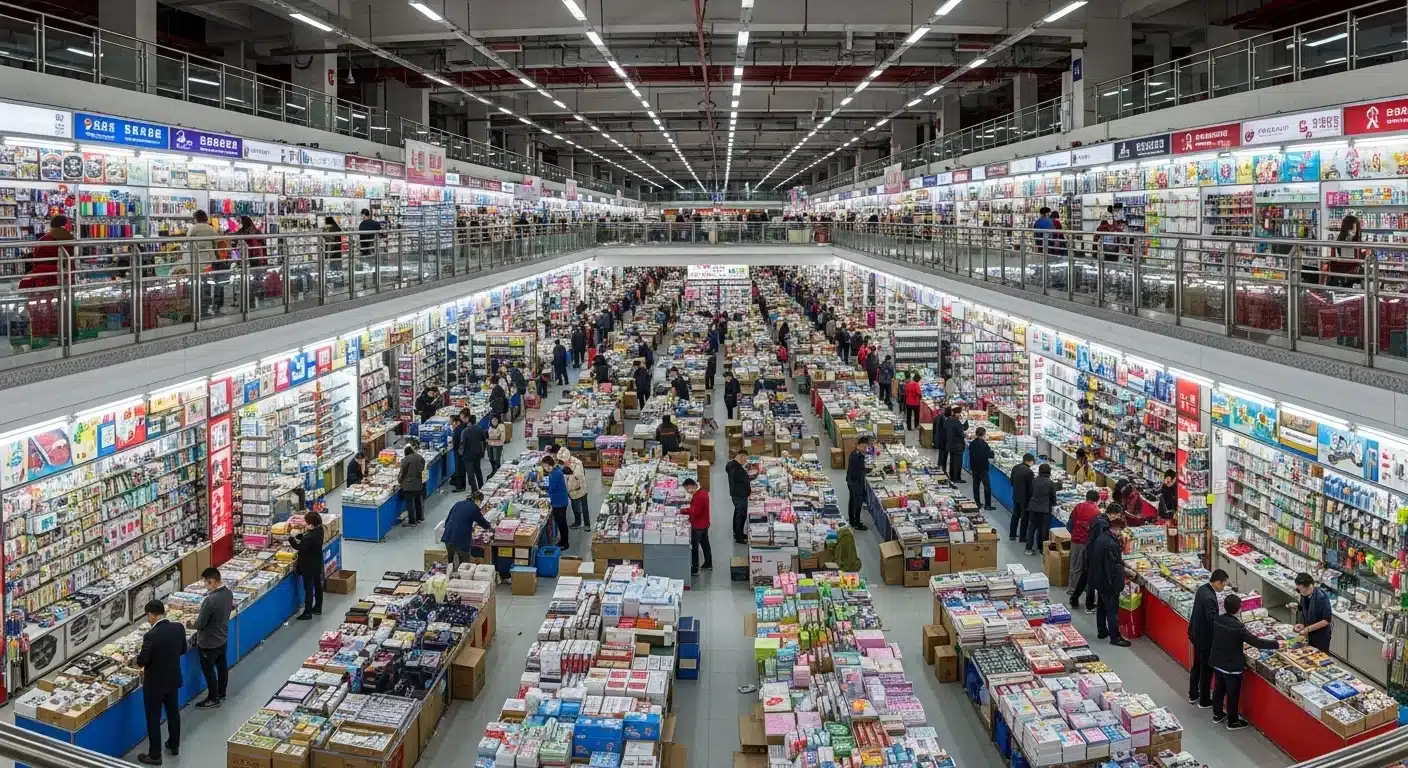
Yiwu moves more artificial flowers than any other single marketplace on earth. Walk the flower and ornament zone of the International Trade City and you pass thousands of booths stacked floor-to-ceiling with silk peonies, latex roses, plastic greenery, and full pre-assembled flower walls — most of it made within 60 kilometers of where you’re standing. For a wholesale buyer, that density is the whole point: you can compare 40 suppliers of the same real-touch rose in an afternoon and walk out with prices no online listing will show you.
The catch is that artificial flowers punish buyers who treat them like any other product. They are light but bulky, quality is almost impossible to judge from a photo, and a shipment that looked perfect in the booth can arrive crushed, faded, or smelling of solvent. This guide covers what actually sells, real MOQ and price bands, the quality checks that matter, and the one shipping math mistake that wipes out margins.
Key Takeaways
- Yiwu’s flower zone sits mainly in District 1 of the International Trade City, alongside toys and ornaments — plan half a day minimum to cover it.
- Typical booth MOQ runs 100–500 stems per style; mixed cartons are negotiable but rarely below a full carton.
- Silk and real-touch PU flowers cost 3–8× more than blow-molded plastic — match the grade to your resale channel, not the cheapest quote.
- Flowers are volumetric cargo: a carton can weigh 4 kg but bill as 18 kg. Air freight is often uneconomical — plan for sea LCL/FCL.
- The three defects that cause returns: UV color fading, solvent odor, and stem-to-head glue failure. Test all three before you pay the balance.
- Weddings, Christmas, and home-decor retail each want a different grade — buy to the occasion, not to a generic catalog.
What Yiwu’s Artificial Flower Market Actually Sells
The trade is broader than “fake flowers.” Booths split roughly into five product families, and knowing which aisle you need saves a full day of walking.
- Single stems — roses, peonies, hydrangeas, eucalyptus and filler greenery sold by the stem or bunch. The volume backbone of the market.
- Real-touch PU flowers — polyurethane-coated blooms that mimic petal texture and weight. The premium tier, aimed at florists and event decorators.
- Pre-made arrangements — bouquets, table centerpieces, and potted fakes finished and boxed, ready for retail shelves.
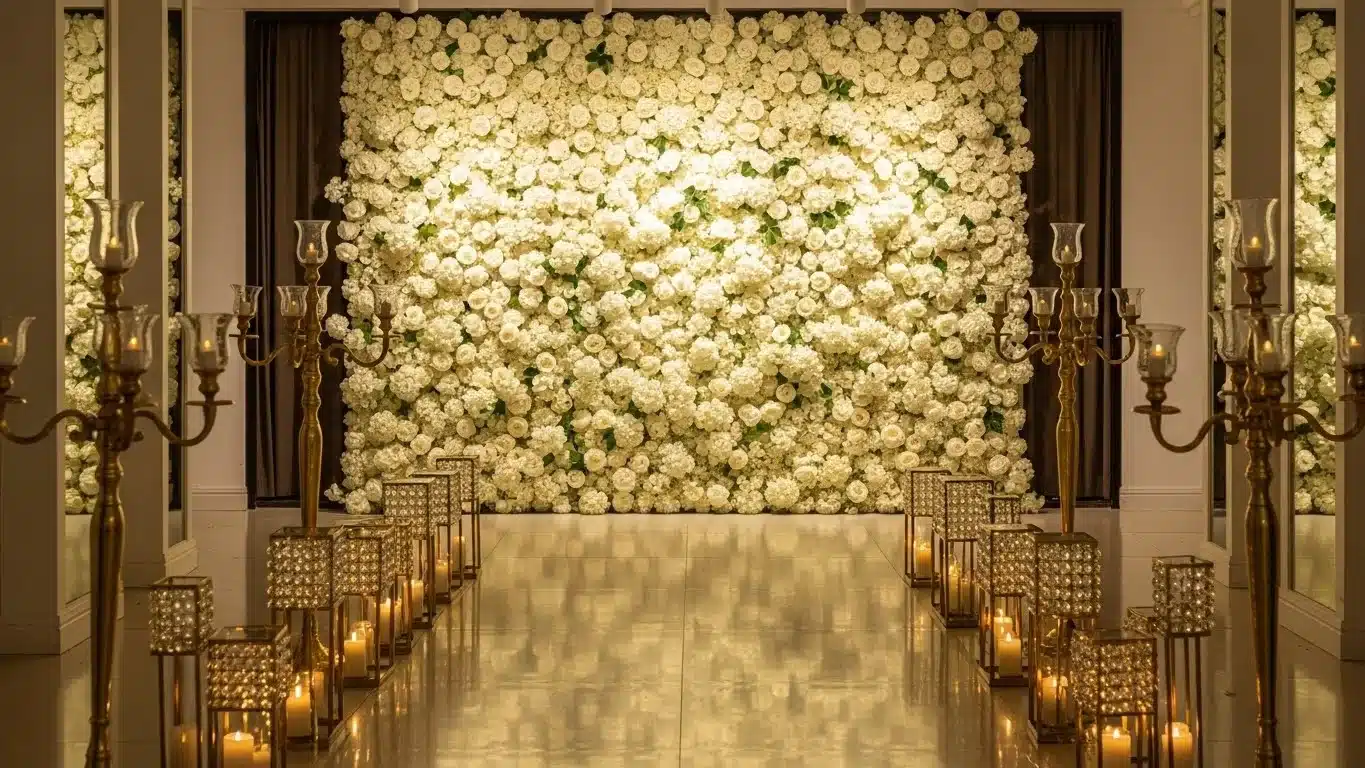
- Flower walls and backdrops — modular panels for weddings and photo studios, a fast-growing export line.
- Seasonal and festive — poinsettias and berry picks for Christmas, blossom branches for spring, marigold garlands for South Asian markets.
Most factories behind these booths sit in Yiwu, Wuyi, and the surrounding towns. Many booths are trading companies, not the mill — which matters when you negotiate price and lead time. Learning to tell a real factory from a trading company is worth more here than in almost any other category, because flower margins are thin and every middleman layer shows up in the quote.
Grades and Materials: Where Your Money Goes
The single biggest pricing driver is material, and buyers who quote only on shape get burned. A “rose” can cost 8 cents or 80 cents depending on how it’s built.
| Grade | Material | Typical EXW / stem | Best resale channel |
|---|---|---|---|
| Economy | Blow-molded plastic / polyester | $0.05–$0.20 | Dollar stores, bulk crafts |
| Standard silk | Printed polyester “silk” | $0.20–$0.60 | Home decor, general retail |
| Real-touch | PU/latex coated | $0.50–$2.50 | Florists, event hire, premium DTC |
| Preserved / dried | Real flowers, treated | $1.00–$5.00+ | Luxury gifting, subscription boxes |
Pick the grade by where the product ends up. A homeware retailer selling a $12 vase filler wants standard silk — real-touch would price them out of their own shelf. An event-hire company charging $600 to dress a venue wants real-touch, because guests touch the arrangements and economy plastic reads as cheap on camera. Buying one grade up “to be safe” is the most common way buyers destroy their own margin in this category.
MOQ, Pricing, and How to Negotiate
Booth MOQs cluster around 100–500 stems per individual style, or one full carton for pre-made arrangements. Suppliers will mix styles within a carton, but almost never break a carton — the packing is built around it. If a supplier offers “no MOQ,” you are usually talking to a trading company buying from the same factory you could reach directly, with a markup baked in.
Three levers move price in the flower zone specifically:
- Stem count per order. Crossing 1,000 stems of one SKU typically earns a real price break; below that you pay near booth-retail.
- Color runs. Sticking to a supplier’s existing stock colors is far cheaper than custom dyeing, which carries its own MOQ (often 3,000+ stems).
- Off-season timing. Prices for wedding whites and Christmas reds climb sharply 3–4 months before peak. Ordering in the trough is a genuine discount, not a trick.
For the actual back-and-forth, the same rules apply as anywhere in the market — anchor low, buy samples first, and never accept the first number. Our guide to negotiating MOQ in Yiwu covers the scripts that work with flower suppliers, who are used to hard bargaining and expect it.
Quality Control: The Three Defects That Cause Returns
Artificial flowers hide their flaws until the customer complains. A booth sample under warm hall lighting tells you almost nothing about how a carton performs after a month on a sunny shelf. Three failures drive nearly every return in this category, and all three are testable before you pay the balance.
UV fading. Cheap dyes bleach out under sunlight — reds go pink, purples go grey. Ask for a colorfastness note, and for any product destined for a window display or outdoor use, insist on UV-stabilized stock and put a sample in a sunny window for two weeks before committing.
Solvent odor. Freshly glued and coated flowers can off-gas a chemical smell that lingers for weeks in sealed cartons. For home-decor and gifting buyers this alone triggers returns. Open a carton, seal a few stems in a bag for 24 hours, then smell-test.
Glue and stem failure. The flower head is glued to a wire stem, often wrapped in tape. Tug every sample head firmly — if it slides or the wire pokes through, the whole batch will shed heads in transit. This is the defect buyers most often miss because they inspect gently.
None of this replaces a proper pre-shipment inspection. Book an AQL inspection before you release the balance payment so a third party pulls samples from the actual packed cartons, not the showroom. For a low-cost, high-volume product, a single bad container can erase a season’s profit.
The Shipping Math That Catches Everyone
Here is the mistake that turns a good flower deal into a loss. Artificial flowers are extremely light for their size — a carton might weigh 4 kilograms but occupy the space of an 18-kilogram box. Carriers bill by whichever is greater, actual or volumetric weight, so you pay for the air inside the box.
The consequences are specific:
- Air freight is rarely economical for flowers except for small, urgent, high-value real-touch orders. The volumetric penalty is brutal.
- Sea freight — LCL for smaller orders, a full container for volume — is almost always the right call. A 40HQ container holds a lot of flowers precisely because they’re light.
- Compressible packing matters. Some suppliers can nest or partially disassemble arrangements to cut cube. Ask before you finalize — it can drop your freight cost by a third.
Run the landed cost with volumetric weight before you place the order, not after. If you’re new to the calculation, our landed cost breakdown shows exactly where dimensional weight hits the P&L. Consolidating flowers with heavier goods in the same container is often the smartest move — the consolidation approach balances the cube.
Buy to the Occasion, Not the Catalog
The same booth sells to a wedding planner, a homeware chain, and a Christmas importer, but each needs a different product. Matching grade and style to the end use is what separates buyers who reorder from buyers who eat returns.
| Best for | Not ideal for |
|---|---|
| Event & wedding decorators wanting on-camera realism (real-touch) | Buyers needing certified flame-retardant stock for regulated venues without documentation |
| Home-decor and gift retailers at $10–$30 price points (standard silk) | Ultra-low-cost dollar-store lines needing sub-$0.10 stems at small volume |
| Seasonal importers timing Christmas or spring ranges months ahead | Last-minute buyers ordering peak stock 6 weeks before the holiday |
| DTC brands ordering a container and controlling their own QC | First-timers air-freighting small mixed orders (volumetric weight kills margin) |
What We Check Before Accepting a Flower Supplier
Because this category is dominated by trading companies and quality is invisible in a photo, our sourcing team runs a fixed checklist on every flower order before a deposit moves:
- Business license name matched against the quotation and the bank account — the payee must be the company, not a personal account.
- Booth number and district recorded, plus whether the booth is the factory or a reseller of a mill we can reach directly.
- Physical samples of every SKU pulled before deposit, with the tug-test, smell-test, and a UV window test on colored stock.
- Carton dimensions and gross weight confirmed in writing, so volumetric freight is priced before the order, not discovered at the port.
- An AQL inspection report on the packed goods before the balance is released.
That process is dull, and it is exactly why flower shipments go right. For a full walk-through of supplier vetting across categories, see the complete Yiwu sourcing guide.
If you’re importing artificial flowers for retail, events, or seasonal ranges — and want the grade, MOQ, and freight cube checked before you pay a deposit — our Yiwu team can source, inspect, and consolidate the order for you.
Preguntas frecuentes
Where in Yiwu market are artificial flowers sold?
Artificial flowers are concentrated mainly in District 1 of the Yiwu International Trade City, in the same zones as toys, jewelry, and ornaments. Seasonal and Christmas flower lines also appear in the festive-goods areas. Plan at least half a day to cover the flower booths properly.
What is the minimum order for artificial flowers in Yiwu?
Most booths set a minimum of roughly 100–500 stems per style, or one full carton for pre-made arrangements. Suppliers will usually mix styles inside a carton but rarely break a carton. “No MOQ” offers typically come from trading companies adding a markup over the factory price.
Should I ship artificial flowers by air or sea?
Sea freight is almost always cheaper because flowers are light but bulky, and carriers bill by volumetric weight. Air freight only makes sense for small, urgent, high-value real-touch orders. Confirm carton dimensions in writing and calculate landed cost using volumetric weight before ordering.
How do I stop artificial flowers from fading or smelling of chemicals?
Specify UV-stabilized stock for anything exposed to sunlight and test a sample in a sunny window for two weeks. For odor, seal a few stems in a bag for 24 hours and smell-test before committing. Both issues are common with economy-grade flowers and are testable before you pay the balance.
Written by the ChineseYiwu Sourcing Team — based inside the Yiwu International Trade City since 2005, with 50+ sourcing specialists handling supplier verification, quality inspection, and consolidated shipping for importers worldwide.