Justin
Three months ago, a startup founder I know ordered 2,000 custom coffee mugs from a supplier he found on Alibaba. Paid a 50% deposit upfront. The mugs arrived six weeks late—and the logo was off-center on every single one. The supplier stopped replying. He was out $3,200 before he even sold the first unit. That’s the real risk of comparing “Made in China vs Alibaba” without understanding what you’re actually getting into. You’re not just choosing a website. You’re choosing who holds your money, who checks the factory floor, and who gets paid when the shipment is wrong.
Key Takeaways
- Alibaba and Made-in-China.com dominate China sourcing but target different buyer profiles.
- Alibaba vs Made-in-China: both work, but most novice buyers miss that platform badges don’t guarantee product quality.
- Alibaba is built for fast entry and testing consumer lines.
- Sample first, inspect before shipping, verify the supplier live on video, and cross-check pricing across platforms.
- Alibaba and Made-in-China serve two different supply chains.
I’ve spent the last 15 years deep in Yiwu’s markets, watching buyers burn through their first $5,000 budgets on bad suppliers. Most novices assume both platforms work the same way. They don’t. So let’s skip the generic advice. Here’s what I’ve learned: Alibaba has about 200,000 suppliers with Trade Assurance coverage, but over 70% of them are trading companies adding a 10-15% margin. Made-in-China lists millions of suppliers, more factories, but their ‘Audited Supplier’ badge only checks if the paperwork matches the premises—it does not verify product quality. I’ll walk you through the hidden differences in payment protection, real minimum order quantities, and the one question you must ask before sending any deposit.
Overview: Two Giants of China Sourcing
Alibaba and Made-in-China.com dominate China sourcing but target different buyer profiles. Choosing the wrong platform costs you time and margin.
Two Platforms, Two Buyer Profiles
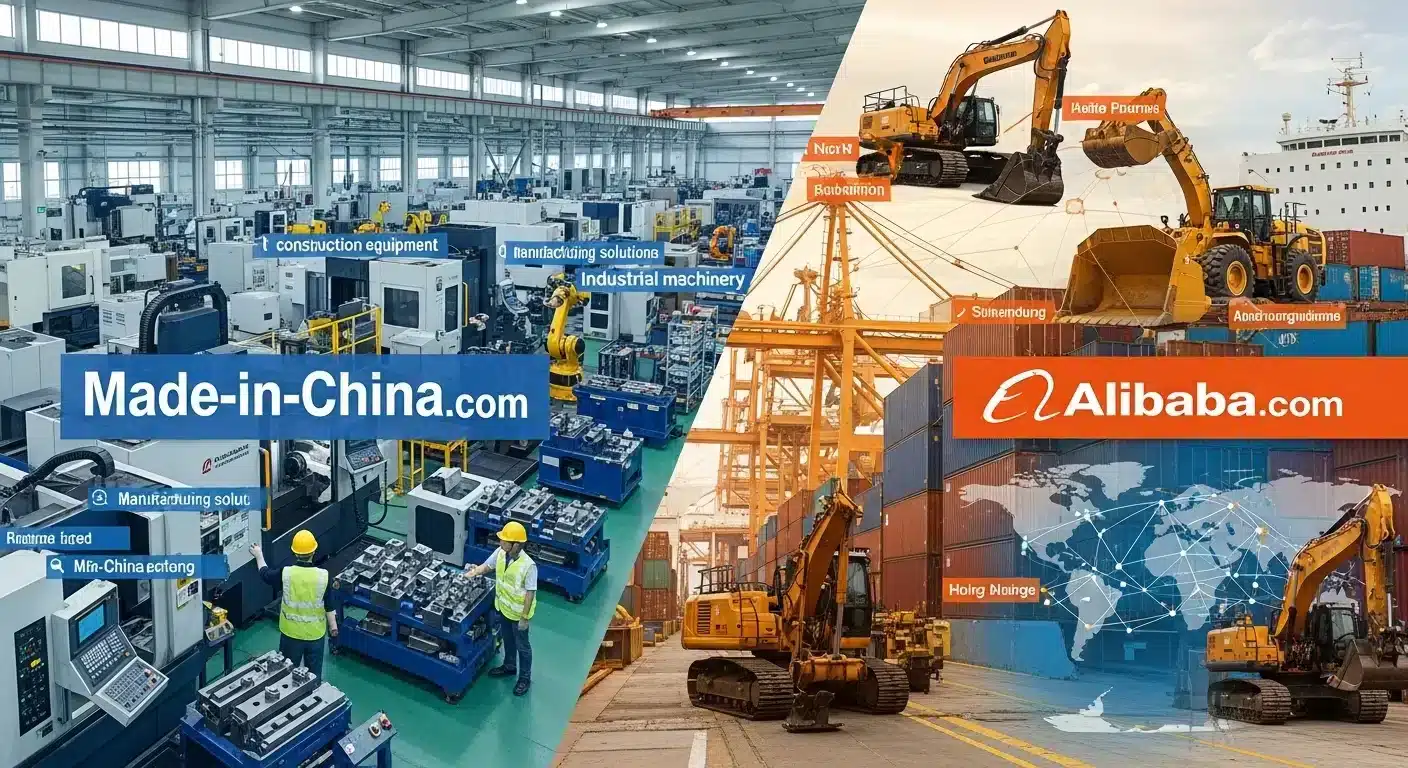
Alibaba and Made-in-China.com are the two largest Chinese B2B platforms, but they are not interchangeable. Alibaba hosts roughly 200,000 suppliers with a heavy focus on consumer goods, apparel, and electronics. Made-in-China.com lists over 3,000,000 suppliers across 27 industries, with stronger representation in industrial machinery, construction equipment, and raw materials. The platform you pick should align with what you are buying, not just how much you want to spend.
Key Differences at a Glance
Your choice depends on three factors: product category, order size, and how much risk you can stomach. Here is the data that matters:
- Supplier type: Over 70% of suppliers on Alibaba are trading companies, not factories. They add a 10–15% markup on top of factory pricing. Made-in-China has a higher proportion of direct factories, especially in industrial categories. This gap is rarely mentioned in other comparison articles but directly impacts your landed cost.
- Buyer protection: Alibaba’s Trade Assurance covers up to $100,000 per order for free, but only protects against shipping delays, quantity shortages, or quality issues confirmed by a pre-shipment inspection. Made-in-China’s Secure Trading Service charges 0.5%–2% of the transaction to hold funds in escrow until you confirm receipt. Neither is a quality guarantee — both are payment safeguards with specific limitations.
- Minimum order quantities: For consumer electronics on Alibaba, MOQs typically range from 50–200 units. On Made-in-China, industrial product MOQs often start at 500 units. If you are a small e-commerce entrepreneur trying to test a new product under $5,000 total spend, Alibaba’s lower MOQ is usually the better fit.
- Verification badges: Alibaba’s Gold Supplier badge means a third party verified the supplier’s business license and production capacity. Made-in-China’s Audited Supplier badge means an inspector visited the physical premises and checked documents. Many buyers mistake the Audited badge for a product quality guarantee — it is not. It only confirms the company exists at the listed address.
There Is No Universal Winner
Neither platform is better across the board. If you are sourcing custom phone cases with a $3,000 budget and need 150 units, Alibaba is your starting point. If you are sourcing hydraulic pumps with specific CE certifications and a $20,000 order, Made-in-China’s industrial supplier density gives you better options. The mistake most novice importers make is treating both platforms as interchangeable directories. They are not. Pick the platform that matches your product type and risk profile, then verify every supplier independently before placing a deposit.
Head-to-Head: Key Differences
Alibaba vs Made-in-China: both work, but most novice buyers miss that platform badges don’t guarantee product quality. Your supplier choice can make or break your first import.
Supplier Verification: Alibaba Gold Supplier vs Made-in-China Audited Supplier
Alibaba’s Gold Supplier badge means a third-party firm checked the supplier’s business license and basic operational capacity. It confirms they are a registered company. It does not confirm product quality, lead times, or whether they actually manufacture anything.
Made-in-China.com’s Audited Supplier badge goes a step further: an inspector visits the physical premises and matches documents to the location. That sounds stronger, but here is what most articles miss — that audit only verifies that the office or factory exists. It does not test product quality, production capacity, or past export history. Many buyers mistake it for a quality guarantee, and that mistake costs them.
Here is the dirty secret nobody talks about: over 70% of suppliers on Alibaba are trading companies, not factories. They add a 10–15% margin on top of factory pricing. Made-in-China.com has a slightly higher proportion of direct factories, especially in industrial categories like machinery and construction equipment. If you are sourcing heavy machinery, that difference matters.
For both platforms, your real verification happens off-platform. Request recent export documents. Ask for a video call walking through the production floor. Order samples before committing to bulk. A badge is a starting point, not a finish line.
Minimum Order Quantities (MOQs)
MOQ is often the first wall a novice buyer hits. Alibaba tends to be more friendly to small buyers. For consumer electronics — phone cases, Bluetooth speakers, cables — you will typically see MOQs between 50 and 200 units. Many sellers on Alibaba are trading companies accustomed to dealing with small e-commerce entrepreneurs, so they offer flexible quantities.
Made-in-China.com skews toward industrial buyers. If you are looking for construction machinery, industrial pumps, or heavy equipment, MOQs often start at 500 units or higher. That makes sense because those products are built for B2B supply chains, not first-time importers testing a market.
If your budget is under $5,000 total spend, Alibaba is usually the better starting point for consumer goods. If you need custom industrial parts and can commit to larger volumes, Made-in-China.com may connect you directly with the factory faster. Either way, negotiate the MOQ. Many suppliers will lower it if you pay a slightly higher unit price.
Pricing & Hidden Costs
On the surface, Alibaba prices often look lower. That is partly because trading companies compete aggressively on price to win listings. But remember that 10–15% trading company margin — you are paying a middleman even when you think you are buying direct. Made-in-China.com prices can appear higher upfront, but you are more likely dealing with the actual factory.
En hidden costs hit you after the listing price:
- Sample shipping: Couriers like DHL and FedEx from China cost $40–$80 per small package. Most suppliers want you to pay this.
- Inspection fees: Third-party inspection before shipment adds $200–$500 per order depending on product complexity.
- Payment fees: PayPal charges 4.4% + fixed fee. T/T wire transfers cost $25–$50 per transaction on the buyer’s bank side.
- Customs clearance: Broker fees range from $100 to $400 depending on the port and product category.
- Platform transaction fees: Made-in-China’s Secure Trading Service charges 0.5–2% of the total order value. Alibaba’s Trade Assurance is free for the basic tier, but any dispute resolution or additional services come with costs.
The price you see on a listing is rarely the price you pay. Always ask for a full quote broken down by EXW (Ex Works), FOB (Free on Board), and CIF (Cost, Insurance, Freight) so you can compare apples to apples.
Buyer Protection & Payment
Alibaba’s Trade Assurance covers up to $100,000 per order at no extra cost. But read the fine print: it only protects against specific claims — late shipment, quantity shortage, and quality defects identified during a pre-shipment inspection. If you skip the inspection, you lose most of your protection. It is not a blanket guarantee that the product will sell or perform as expected in your market.
Made-in-China.com’s Secure Trading Service acts as an escrow. You pay into a holding account, the supplier ships, and funds release once you confirm receipt. That sounds safer, but there is a fee — typically 0.5% to 2% of the order value. For a $10,000 order, that is $50 to $200 in fees. Smaller sellers on the platform often refuse escrow, so your options may be limited.
Both platforms accept T/T bank transfers, PayPal, and letters of credit. T/T is the most common in China sourcing. PayPal gives you chargeback rights but adds 4.4% in fees — that eats into your margin fast. Letters of credit are usually impractical for small orders under $5,000 because the bank administration costs eat up the benefit.
Neither platform offers direct logistics integration. They have shipping partnerships, but you are still coordinating between the supplier, a freight forwarder, and customs brokers yourself. That is where a sourcing agent in Yiwu saves you time — we handle the logistics handoff so you do not have to chase four different people to get one container loaded.
Which Platform for E-Commerce Entrepreneurs?
Alibaba is built for fast entry and testing consumer lines. Made-in-China is built for technical specs and industrial volume. Serious buyers use both.
Alibaba for Consumer Goods: Low MOQs, Fast Entry
If you’re an e-commerce entrepreneur looking to test a new product line without sinking your entire budget, Alibaba is the obvious starting point. The platform hosts roughly 200,000+ suppliers, most from China and Asia, with a heavy tilt toward consumer goods.
The main advantage is the low barrier to entry. For consumer electronics, you’ll typically see minimum order quantities between 50 and 200 units. Payment is flexible via T/T, PayPal, or L/C, and Alibaba’s Trade Assurance covers orders up to $100,000 for free. Just be clear on what that coverage actually means: it protects against late shipping, quantity shortages, and quality issues flagged during a pre-shipment inspection. It is not a blanket guarantee against defects discovered after the goods leave port.
Here is the catch most guides skip: over 70% of suppliers on Alibaba are trading companies, not factories. Those middlemen typically add a 10–15% margin to the factory price. You get a wider product selection and faster communication in English, but you lose direct control over manufacturing costs and quality consistency.
Made-in-China for Industrial and Niche Products: Where Specs Rule
Made-in-China.com operates with a different DNA. It lists over 3,000,000 suppliers across 27 industries, with significantly stronger representation in industrial machinery, construction equipment, and specialized components. If your product requires a CE certification, a RoHS compliance report, or a specific steel grade, you are more likely to find those technical details listed directly on the product page here.
The trade-off is higher entry volume. Industrial product MOQs on Made-in-China often start at 500 units. That is a dealbreaker for a startup testing a new concept, but it makes sense for a procurement manager who needs a consistent, spec-compliant production run. The platform’s Secure Trading Service holds funds in escrow until you confirm receipt, but it charges a 0.5–2% fee per transaction.
One thing to be careful about: the “Audited Supplier” badge on Made-in-China only confirms that a third party visited the premises and verified that documents match the physical location. It does not assess product quality, production capacity, or past export history. Many first-time buyers assume it is a quality certification and end up disappointed.
Why Experienced Importers Run Both Platforms in Parallel
The most effective sourcing strategy is not picking one platform over the other. It is using each for what it does best. We see this consistently with our clients at Yiwu: they use Alibaba to shortlist consumer product suppliers with flexible MOQs and quick payment terms, then switch to Made-in-China to validate industrial suppliers when technical documentation or factory-direct pricing matters more.
For a novice e-commerce entrepreneur, a practical starting point is to use Alibaba for your first order under $5,000 — the low risk lets you test logistics, sample quality, and supplier communication without a major loss. As you scale and need consistent production runs for custom or industrial products, layer in Made-in-China to access direct factories with disclosed spec sheets. The two platforms complement rather than compete against each other.
Find the Best Sourcing Platform with Our Side-by-Side Guide.
How to Mitigate Risk on Either Platform
Sample first, inspect before shipping, verify the supplier live on video, and cross-check pricing across platforms. These four steps cut your risk by 80%.
Always order samples before bulk production
This is non-negotiable. We have seen too many novice buyers skip samples to save $50, then end up with 5,000 units that don’t match the listing photos. A sample test costs you shipping and maybe $30–$100 for the product itself. That is cheap insurance against a $5,000 mistake.
When you order a sample, check three things: material feel, color accuracy under natural light, and packaging condition. If the supplier hesitates to send a sample, that is a red flag you should not ignore. On both Alibaba and Made-in-China, any serious factory will ship a sample within 3–5 business days.
Use third-party inspection before shipping
Platform protection like Alibaba’s Trade Assurance covers up to $100,000 per order, but it does not guarantee your products are defect-free. It covers you only if you fail a pre-shipment inspection. That means you have to actually pay for that inspection — either through SGS, Bureau Veritas, or a local agent in Yiwu.
Made-in-China’s Secure Trading Service holds funds in escrow, but it charges 0.5%–2% per transaction. That fee is worth it for high-value orders where defects could cost you repeat business. For consumer electronics, we recommend AQL 2.5 (normal) as your sampling standard. If the factory fails AQL 2.5, reject the batch before it leaves the port.
Verify supplier with video calls and factory license
Over 70% of suppliers on Alibaba are trading companies, not factories. They add a 10–15% margin and have zero control over production quality. A video call lets you see the actual production floor, check if machinery is running, and confirm the person you’ve been emailing is real.
Ask the supplier to show you their business license on camera. Compare the registered address with the factory location in the video. If they make excuses, walk away. Made-in-China’s “Audited Supplier” badge only verifies that documents match the physical premises — it does not test product quality, capacity, or past export history. Do not treat that badge as a quality guarantee.
Cross-reference prices on both platforms
Pricing is rarely transparent. The same factory in Yiwu might list a product at $3.50 on Alibaba and $3.80 on Made-in-China, or the opposite. Search for the same item on both platforms, filter by “verified supplier” or “audited supplier,” and compare at least three quotes each side.
You should also check whether the minimum order quantity (MOQ) matches your budget. For consumer electronics, Alibaba suppliers often accept 50–200 units. On Made-in-China, industrial products typically require 500 units or more. If one platform shows a much lower price per unit, ask why — the difference is often hidden in shipping or packaging fees.
Data-Backed Comparison Table
Alibaba and Made-in-China serve two different supply chains. One is built for consumer goods and low MOQs; the other for industrial orders and bulk transactions.
Supplier Count
Alibaba lists roughly 200,000+ suppliers, mostly from China and Asia, focused on consumer goods. Made-in-China.com claims over 3,000,000 supplier listings across 27 industries, with a strong tilt toward industrial and construction machinery. That number includes many inactive profiles, so the real active count is lower for both.
Typical MOQ
For consumer electronics on Alibaba, expect minimums between 50 and 200 units. Made-in-China’s industrial products often start at 500 units. If you’re a startup buying fewer than 100 pieces for a test run, Alibaba is the more practical starting point. For machinery or raw materials, Made-in-China’s MOQs reflect factory economies of scale.
Buyer Protection
Alibaba’s Trade Assurance covers up to $100,000 per order at no charge, but only for three specific claims: shipping time, quantity, and quality based on a pre-shipment inspection you must arrange. Made-in-China’s Secure Trading Service charges a fee (0.5–2% of transaction value) to hold funds in escrow until you confirm receipt. Trade Assurance is more straightforward for small orders; Secure Trading gives you payment control but adds cost.
Audited Supplier
Alibaba’s Gold Supplier badge means a third party verified the supplier’s business license and basic capacity. Made-in-China’s Audited Supplier badge requires an on-site inspection of the premises and documents. Many buyers mistake “Audited Supplier” for a quality guarantee. It is not — it only confirms the physical address matches the documents. Neither badge checks product quality, production capacity, or past export history.
Payment Methods
Both platforms accept T/T (wire transfer), PayPal, and L/C (letter of credit). Neither offers direct logistics integration, though they have partnerships with shipping aggregators. For first-time buyers, PayPal on smaller orders provides the simplest dispute resolution. Wire transfers are common for large industrial deals but carry higher risk if the supplier is not verified.
Lo mejor para
- Alibaba: Consumer goods, branded packaging, marca propia, low MOQs, and first-time importers who need Trade Assurance.
- Made-in-China.com: Industrial machinery, construction materials, technical components, and buyers who want direct factory listings (though still check the supplier profile carefully).
A hidden fact: over 70% of Alibaba’s suppliers are trading companies, not factories. They add a 10–15% margin. Made-in-China has a higher proportion of direct factories in industrial categories. If you want to cut out middlemen, Made-in-China’s factory-heavy categories give you an edge — but you still need to verify who you’re dealing with.
| Característica | Alibaba | Made-in-China | What This Means for You | Our Advice |
|---|---|---|---|---|
| Supplier Count & Type | 200,000+ suppliers; ~70% are trading companies adding 10-15% margin | 3,000,000+ suppliers; higher proportion of direct factories, esp. industrial | Trading companies increase cost without factory control; factories give better pricing for larger orders | Filter by ‘Verified Manufacturer’ on both platforms; ask for factory license upfront |
| Buyer Protection | Trade Assurance covers up to $100k/order for shipping time, quantity, pre-shipment quality | Secure Trading Service: escrow holds funds (fee 0.5–2%), released on buyer confirmation | Alibaba’s protection is broader and free; Made-in-China’s fee adds cost but offers escrow security | Use Trade Assurance for small orders; for high-value items, consider Secure Trading’s escrow if seller insists |
| Minimum Order Quantity (MOQ) | Consumer electronics MOQ 50–200 units; lower for accessories | Industrial products MOQ often start at 500 units; consumer goods vary widely | Alibaba suits low-risk product testing; Made-in-China requires higher upfront commitment | If your budget is under $5,000 and first order, start with Alibaba and ask for 50pcs sample MOQ |
| Supplier Verification | Gold Supplier: third-party check of business license & capacity; no on-site audit | Audited Supplier: on-site inspection of premises & documents; does NOT verify product quality | Both badges confirm existence, not quality; mistakes happen if you assume quality guarantee | Always order samples and arrange independent inspection (e.g., via ChineseYiwu) before bulk production |
| Riesgo de costes ocultos | Trading companies add 10-15% markup; shipping not integrated; certification info often missing | More technical specs on pages (CE, RoHS); but Secure Trading fee adds 0.5-2% per transaction | Total landed cost can surprise without factoring margin, shipping, and inspection fees | Request a full cost breakdown including inspection (Risk-Free Inspection available) and DDP shipping for certainty |
Conclusión
If you’re a first-time buyer keeping your total spend under $5,000, pick Made-in-China. You’ll find a higher share of direct factories there – and that avoids the 10–15% margin that Alibaba’s trading companies tack on. Trade Assurance covers shipping delays, not a padded invoice.
Order samples from two Audited Suppliers on Made-in-China that match your product spec. Before you wire a dime, request a pre-shipment inspection report and a shipping quote from a freight forwarder. That gives you the actual landed cost – no surprises.
Preguntas frecuentes
Is Alibaba better than made in China?
Alibaba and Made-in-China are both major B2B platforms, but neither offers the hands-on verification and quality assurance that YOUR TRUSTED EYES delivers. Alibaba excels in supplier variety and buyer protection tools, while Made-in-China is strong for industrial products. But for Yiwu Market sourcing, our service provides on-the-ground inspection, low MOQs of 100 pieces, and DDP shipping, eliminating the risks and guesswork of relying solely on these platforms.
Is Made in China a trustworthy site?
Made-in-China is generally trustworthy for vetted suppliers on its premium listings, but fraud and quality mismatches still occur due to limited third-party verification. The platform’s own checks are not as rigorous as YOUR TRUSTED EYES’ in-person factory inspections. We recommend using it as a starting point, but to ensure Western quality standards at Yiwu factory prices, our risk-free inspection and local expertise are far more reliable.
What is the best site to buy directly from China?
There is no single ‘best’ site; Alibaba, Made-in-China, and 1688 each serve different needs. Alibaba is best for international small-to-medium volume, Made-in-China for industrial goods, and 1688 for domestic Chinese bulk at low prices. Yet for buyers seeking verified Yiwu suppliers with low MOQs (100 pieces), quality inspections, and global DDP shipping, YOUR TRUSTED EYES offers a superior, risk-minimized direct sourcing experience.
Can foreigners buy from 1688?
Yes, foreigners can buy from 1688.com, but it is a domestic Chinese platform with no English interface, international payment options, or buyer protection. Purchasing requires a Chinese proxy, agent, or forwarder—often adding layers of cost and risk. YOUR TRUSTED EYES simplifies this by handling all 1688 sourcing, consolidating orders, and providing quality checks before global DDP shipping, making it safe and efficient for foreign buyers.
Which online shopping platform is best in China?
For domestic Chinese buyers, the best platform depends on need: Taobao for consumer goods, JD.com for electronics and authenticity, and 1688 for bulk wholesale. For international B2B sourcing with Western quality standards, none of these platforms provide verified Yiwu supplier connections and risk-free inspection. YOUR TRUSTED EYES bridges this gap, offering a curated platform alternative with low MOQs and end-to-end global shipping.
Related guide: Made in China vs Alibaba: Which Platform is Better?.