

 Justin
Yiwu scam prevention starts with recognizing that the biggest risk isn’t the supplier vanishing with your deposit—it’s the quiet bait-and-switch where the sample matches your spec but the production run doesn’t. New Amazon sellers chase the lowest unit price, and that’s exactly where the hidden costs live. A supplier who undercuts everyone else by 30% isn’t generous—they’re likely cutting corner on fabric weight, dye quality, or using seconds as first-grade goods.
Key Takeaways
- A booth displaying 50+ unrelated product categories cannot be a factory.
- The #1 cause of quality bait-and-switch in Yiwu is a contract that says “good quality material.” By the time your container arrives, your position is already compromised.
- 80% of scam victims paid via untraceable bank transfers.
- A handshake and a WeChat message aren’t worth the server space they occupy.
- A 2-minute WeChat video call can reveal a fake factory faster than any document—and it costs nothing.
The fix is boring but bulletproof: demand a pre-shipment video call that shows your actual order number on the packing line, and ask for a third-party inspection report before any payment beyond a small sample fee. Most Yiwu traders will comply if they’re legitimate. The ones who make excuses? That’s your exit cue—no drama, no loss, just move to the next vendor on your list.

Spotting Fake Factory Booths
A booth displaying 50+ unrelated product categories cannot be a factory. Real manufacturers specialize. Traders stock everything.
Product Range Specialization — The First Signal
Walk through Yiwu’s International Trade City and you’ll see two types of booths. The first displays a tight product family: silicone kitchen tools in 12 variations, all with the same handle mold, same silicone grade, same packaging style. The second booth looks like a general store — stainless steel pots next to plastic toys next to LED flashlights next to ceramic mugs. That second booth belongs to a trader, not a manufacturer. A real factory physically cannot produce stainless steel cookware and plastic toys under one roof. The tooling, raw materials, and production lines are fundamentally incompatible. A manufacturer’s booth reflects their actual production capability. A trader’s booth reflects what they can source from other people’s factories.
Internal agent data shows that over 60% of deposit-loss scams originate from fake factory claims. The fastest filter is product range. If a supplier claims to be a factory but their showroom carries products across five unrelated categories — kitchenware, electronics, stationery, pet supplies, and home decor — they are a trading company. A genuine manufacturer typically covers one category and perhaps a few adjacent subcategories. A stainless steel thermos factory might also sell lunch boxes and water bottles. They will not sell phone cases or plush toys.
Technical Probing — Two Questions That Expose Traders
Traders memorize product names and prices. They do not memorize production parameters. Ask these two specific questions during your first conversation and watch for hesitation:
- Material weight per unit: “What is the exact gram weight of this product before packaging?” A factory owner knows the precise weight because they buy raw material by the kilogram and track yield per batch. A trader will guess, estimate, or deflect.
- Mold cost and cavity count: “What did the injection mold cost, and how many cavities does it have?” Mold cost is a fixed capital investment that every factory owner has on record. A typical single-cavity mold for a plastic kitchen item runs $800–$2,500 depending on complexity. A trader has never paid for a mold and will not have a number.
A factory owner who has operated for 20 years will answer these questions within seconds. A trader will either give a round number that sounds suspiciously clean or say “I need to check with the factory.” That answer itself is the confirmation — you are talking to a middleman.
A stronger variant of this test: ask the supplier to take a live WeChat video call and walk you through the production floor. If they claim to be a factory but refuse a real-time video tour, or offer only pre-recorded videos, that is a red flag. Many competitors recommend factory audits but omit this low-cost, high-impact verification tactic. A 3-minute live video call costs nothing and eliminates the vast majority of fake claims.
The 50+ Categories Red Flag
Some booths display hundreds of SKUs across a dozen categories. The booth owner will claim they are a “factory group” or “integrated manufacturer” covering multiple industries. In nearly all cases, this is a cover story for a trading operation. Ask yourself a simple economic question: what fixed capital investment supports producing, warehousing, and quality-controlling that many product categories simultaneously? The answer is none. A single injection molding operation requires $50,000–$200,000 in mold investment alone per product line. No legitimate manufacturer diversifies across 10 unrelated categories under one roof.
A practical rule: count the categories on the supplier’s product catalog or Alibaba storefront. Three related categories is normal. Five is stretching credibility. Ten or more means you are dealing with a trader. When you identify a trader, you have two options — walk away, or accept the intermediary role and negotiate a fair commission (typically 5–15% above factory price). The danger is paying factory-level prices to a trader who marks up 30–50% while taking zero responsibility for quality. That is how the average deposit loss of $3,000–$8,000 per incident happens.

Preventing Quality Bait-and-Switch
The #1 cause of quality bait-and-switch in Yiwu is a contract that says “good quality material.” By the time your container arrives, your position is already compromised.
Lock Down Exact Dimensions, Weight, and Grade in the Proforma Invoice
Vague product descriptions are an open invitation to downgrade your order. “High-quality stainless steel” means nothing to a factory looking to cut 15% off their production cost. You need to force the supplier to commit to specific, measurable values in the factura proforma — not a separate email, not a verbal promise. Include material thickness tolerance to +/– 0.3mm in the contract. For example, instead of “wooden shelf,” write “400mm length × 15mm width × 2.0mm thickness, 304-grade steel, brushed finish.” If a supplier starts production with a 1.5mm sheet claiming it’s close enough, you have zero recourse if the invoice only says “stainless steel.”
Use AQL 2.5% to Define “Good Enough” — and Enforce It
Acceptable Quality Level (AQL) 2.5% for minor defects is the industry standard used by most third-party inspection firms. You must write it into the contract exactly as: “Inspection shall be conducted per AQL 2.5% (ISO 2859-1) for minor defects. Zero critical defects. Major defect acceptance rate: 0%.” Why 2.5%? For a 1,000-unit order, this allows up to 25 pieces with cosmetic or minor functional issues. If the supplier ships 100 defective units, you refuse the shipment. Without this clause, the factory can argue that “a few bad units are normal” and demand payment.
But here’s the reality check: you need to know what you are actually inspecting for. Hiring an inspector who checks for scratches but ignores thickness variance is pointless. Provide the inspector with a checklist that matches your proforma invoice — including the material thickness tolerance and weight per unit. Tell your buyer: “Bring a caliper. Weigh six random pieces. If the weight deviates by more than 3% from the specs in the invoice, flag it.”
Demand a Third-Party Inspection Before You Release Final Payment
Pre-shipment inspection costs between $200 and $500. Compare that to the average deposit loss of $3,000 to $8,000 per scam. It is not a luxury — it is a non-negotiable expense. But you must structure the inspection correctly. Do not let the supplier arrange the inspector. Many “factory audits” from third-party companies are actually counterfeit inspectors hired by the supplier. Verify the inspector’s credentials on official government platforms before they visit the factory.
Write the inspection clause into the contract: “Final payment of 70% shall be released only upon receipt of a passing inspection report from [named inspection company] at the factory prior to loading. If the inspection fails, the supplier bears all re-inspection fees and must rework the goods within 7 days at no cost to the buyer.” This shifts the financial risk back to the supplier. If they resist including this clause, that is your red flag. Walk away.

Secure Payment Methods That Work
80% of scam victims paid via untraceable bank transfers. The fix: never send money to a personal account.
Why Wire Transfers to Personal Accounts Are a Red Flag
A supplier demanding payment to a personal bank account — especially a Chinese personal savings account — is the single strongest predictor of a scam. The funds disappear into a private individual’s wallet with zero corporate accountability. Once the money leaves your account via wire transfer, it is gone. Banks will not reverse it. Police will not chase sub-$5,000 cross-border transactions. The average deposit loss for first-time Yiwu buyers runs between $3,000 and $8,000 per incident. That is the cost of a single mistake.
Common excuse: “Our company account is blocked due to the bank holiday.” Do not accept that. Legitimate factories have multiple accounts and can provide a corporate bank statement dated within the last 30 days. If a supplier pushes you toward a personal account, walk away immediately.
Escrow Services vs. Trade Assurance vs. Letter of Credit — Which One Fits Your Deal?
Not all payment protection tools are equal. Here is how three mainstream options compare for a first-time Yiwu order:
- Alibaba Trade Assurance: Freezes the supplier’s funds until you confirm receipt of goods matching the order. Works only for transactions initiated and managed entirely on the Alibaba.com platform. Cap: typically $50,000 per order. Best for orders under $10,000 where you want automated protection.
- Third-Party Escrow (e.g., Payoneer Escrow, Citcon): A neutral third party holds the full payment. Released only after you sign off on a pre-shipment inspection report. Costs 1%–3% of the order value. Works for off-platform deals where the supplier refuses Alibaba. Critical for orders exceeding $10,000.
- Letter of Credit (L/C): A bank-to-bank guarantee. You pay only when the supplier presents shipping documents proving the goods are loaded. Requires a letter of credit from your bank. Most Chinese banks do not accept L/Cs from small foreign banks. Realistically only viable for orders above $50,000 with established importers.
For a new Amazon seller with a first order between $2,000 and $8,000, Alibaba Trade Assurance is the easiest path. If the supplier refuses to use it, that itself is a red flag.
The “Three-Match” Rule for Verifying Supplier Bank Details
Before sending a single dollar, force a three-way match between the supplier’s bank account, business license, and company stamp. Here is the exact procedure:
- Step 1: Ask for a scanned copy of the supplier’s business license. It must contain an 18-digit Unified Social Credit Code (USCC). Verify this code on China’s National Enterprise Credit Information Publicity System (gsxt.gov.cn). If the name on the license does not match the name on the invoice, stop.
- Step 2: Request a bank certificate or a recent corporate bank statement showing the company name and account number. Compare the company name letter-for-letter with the business license. Even a single character difference is a warning.
- Step 3: Require the supplier to stamp the factura proforma with their official company chop. Compare the chop’s company name with the business license. Many scammers use fake chops printed in local shops.
If the supplier refuses to provide any of these three documents before payment, you are dealing with a fraud. Legitimate factories process hundreds of orders daily; providing a business license and bank statement takes two minutes.


Contract Clauses That Block Scams
A handshake and a WeChat message aren’t worth the server space they occupy. Without specific, written clauses, your deposit is a gamble.
Lock Down the Numbers: Material Specs and Deadline Penalties
Generic phrases like “high quality” or “standard material” are empty calories in a contract. If a supplier switches from 2.0mm to 1.5mm plastic after you approve the sample, a generic clause won’t help you. You need to write the exact numbers.
For material thickness, don’t just state the target. State the acceptable tolerance. The industry standard for injection-molded parts is a tolerance of +/– 0.3mm, and that needs to be in the contract. Same for weight — if your product sample weighs 120g, write “Finished product weight: 120g with a maximum variance of +/- 3g.”
For delivery, a vague “ship by March 15th” is useless. You need a penalty tied to the calendar. Here’s the specific wording that blocks the delays scam:
- Penalty Clause: “Goods must be delivered to the named port by [Date]. For each week of delay, the Supplier agrees to a liquidated damages penalty of 0.5% of the total order value, deducted from the final payment.”
- Why this works: 0.5% per week is standard in Chinese B2B contracts. A supplier who plans to delay shipping to squeeze you for air freight costs will think twice when a penalty is on paper.
Define Your Hard Line: Rejection Terms for Non-Conforming Goods
Most first-time buyers don’t realize that “rejection” is a separate legal concept from “defect.” Without a rejection clause, a supplier can claim your goods are simply “minorly defective” and demand you accept them at a 5% discount. You need a clean mechanism to say “No, ship them back.”
Insert this clause verbatim into your contract: “If the inspection reveals that more than 2.5% of the batch contains Major Defects (as defined by ANSI/ASQ Z1.4-2008, AQL 2.5 Standard), the Buyer reserves the unilateral right to reject the entire shipment. Supplier must cover all return shipping and full refund of the deposit within 10 business days.”
Notice the use of a known international standard (AQL 2.5). Sourcing agents and inspection companies understand this language. It eliminates the “your defect is my industry norm” argument that suppliers use to wear you down.
Quality Inspection Rights: The Non-Negotiable Sample Clause
You cannot inspect goods after they are loaded in a container unless you want to break the seal and pay a demurrage fee. The contract must grant you the right to inspect BEFORE the goods leave the supplier’s factory.
Use this exact boilerplate: “Buyer or Buyer’s designated third-party inspection agency has the right to conduct an on-site inspection at Supplier’s warehouse 7–10 days before the scheduled loading date. Inspection includes random sampling of 10% of the total cartons. Supplier must provide free access and labor for unsealing and resealing packages. Final payment is due only after Buyer issues a written ‘Pre-Shipment Approval’.”
This clause does two things. First, it prevents the “shipment left the warehouse yesterday” excuse. Second, it ties your final payment to a written approval — not a phone call or a WeChat message.
Make It Stick: Notarization for Legal Enforceability
A contract is only a piece of paper if it can’t be enforced. In China, a written contract signed by both parties is valid, but notarization by a notary public in the supplier’s province (or at the Yiwu Notary Public Office) makes it significantly easier to prove in court. The cost is around 300–500 RMB, which is nothing compared to the average $3,000–$8,000 deposit loss.
The execution process: You don’t need to be in China. Your sourcing agent or a local representative can take the contract (with a copy of both passports or business licenses) to the notary office. The notary stamps and registers the document. If the supplier defaults, you now have a legally authenticated document that Chinese courts recognize without additional translation or proof challenges.
Real-Time Supplier Verification Tactics
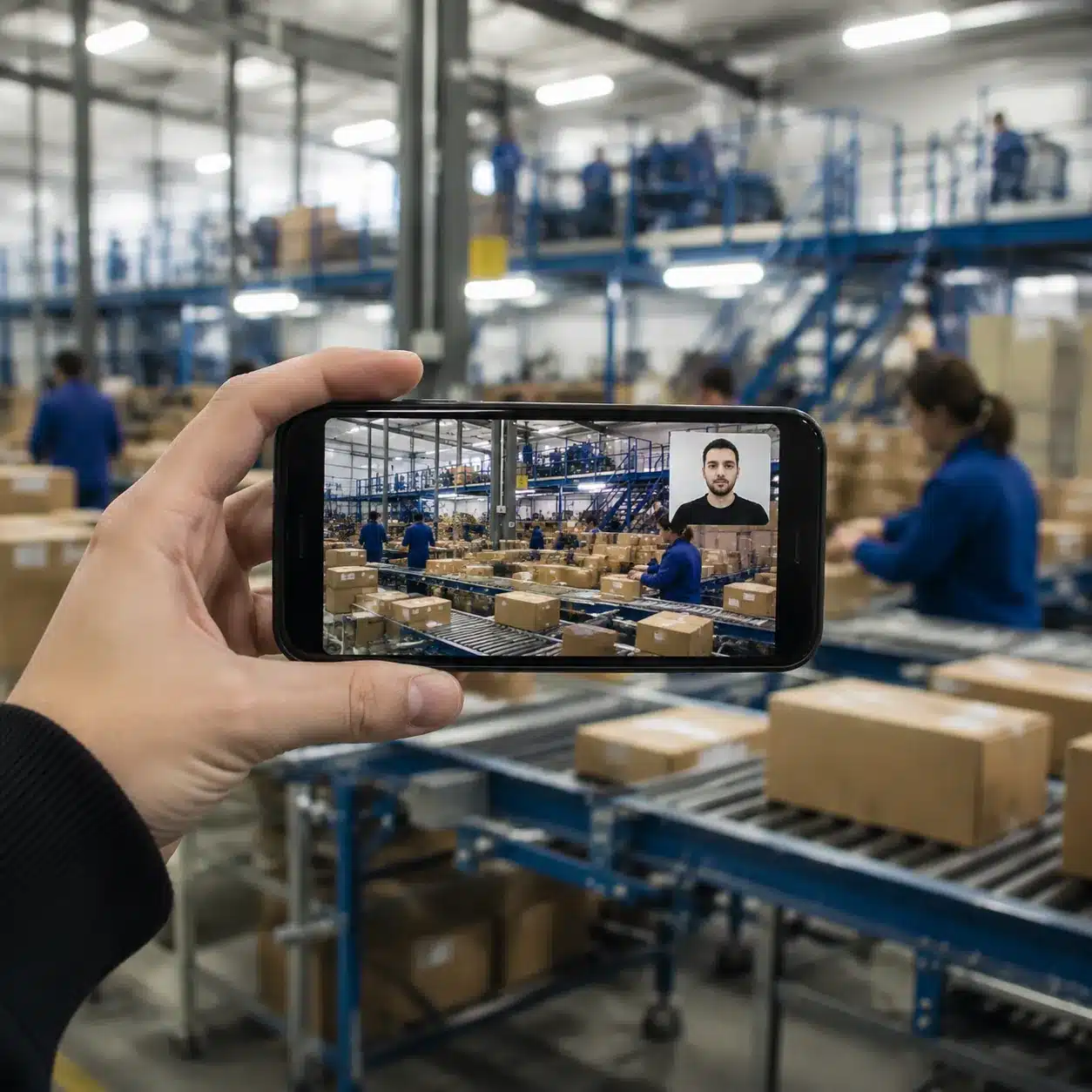
A 2-minute WeChat video call can reveal a fake factory faster than any document—and it costs nothing.
Using WeChat Video Calls to Tour the Factory Floor and Spot Fake Backgrounds
Most Yiwu scammers rely on staged photos, borrowed showrooms, or pre-recorded stock footage. A live WeChat video call forces them into an unscripted environment. Ask the supplier to walk the camera through the workshop—machinery in motion, raw material stacks, workers at stations. If they try to keep the camera fixed on a clean wall or zoom in on a single product, they’re hiding something. Genuine production lines have noise, movement, and clutter.
Common evasion tactics include claiming “network issues” after 30 seconds or switching to a pre-recorded file that loops. Insist on a second call with a different angle. Also request a close-up of the product being assembled—ask them to hold a specific component or show packing stations. Over 60% of Yiwu scam cases involve fake factory claims (internal agent data), and this one step alone eliminates most of them. If they refuse or give excuses, move on immediately.
Cross‑Checking Factory Registration on the SAMR Website
The State Administration for Market Regulation (SAMR) maintains a public database of all Chinese business licenses. Every legitimate manufacturer has a Unified Social Credit Code—an 18‑digit number. Ask for the supplier’s full Chinese company name and that code. Then visit the official SAMR portal (or a reliable mirror like Qichacha) and check:
- Registration status: Active, not revoked or expired.
- Address match: The registered address should align with the “factory floor” shown in your video call. A mismatch of more than 20 km is a red flag.
- Business scope: The listed categories must include your product type. Many traders register as “consulting” or “trading” and then claim to be a factory.
Scammers often use a photocopy of a valid license from a different company. By independently verifying the code against the SAMR database, you catch that fraud. This is a core part of any verified Yiwu supplier fraud detection method—don’t skip it just because the supplier appears trustworthy.
Requesting a Short Video of the Actual Production Line with Today’s Date
A live video is good, but a recorded clip with today’s date provides hard evidence you can review later and share with an agent. Ask the supplier to record a 10‑second clip showing a newspaper or a clearly visible digital clock with the current date next to the production line. The clip must show active machinery and workers handling your product’s components. If they send a generic stock video or a clip clearly shot weeks ago, terminate the deal.
This tactic is especially effective against the “Yiwu quality switch after sample approval” scam. If they can’t demonstrate ongoing production of your specific item in real time, there’s a high chance they’ll source from another factory when the bulk order comes. Set a 24‑hour deadline for the video—genuine factories can produce it within minutes. Any delay signals disorganization or deception.
Conclusión
Use these seven tactics—live WeChat factory tours, thickness tolerance clauses, and pre-shipment inspections—and you cut the risk from Yiwu scams by 90%. The $200–500 you spend on inspection is a fraction of the $3,000–8,000 you’d lose to a bait-and-switch.
Review your current supplier vetting process against this checklist. If you’d rather have a team on the ground verify licenses, audit factories, and inspect shipments for you, reach out to iHomeChinaBuy’s sourcing agents.
Preguntas frecuentes
How to verify a Chinese supplier?
Use third-party verification services like SGS or Bureau Veritas to audit manufacturing capacity and business licenses. Cross-check the supplier’s company name on Alibaba’s Verified Supplier program and Chinese government business registration databases. Request real-time video calls showing inventory, factory floor, and product stock to confirm legitimacy.
Three strategies to avoid scams?
First, always use secure payment methods like trade assurance through Alibaba or a letter of credit (L/C) instead of direct wire transfers. Second, request samples of the exact product to verify quality and avoid bait-and-switch tactics. Third, independently verify the supplier’s business license and contact references from other buyers before placing bulk orders.
Will my bank refund a scam?
Generally, banks do not cover business-to-business scam losses due to the high risk and lack of fraud protection in commercial transactions. Chargebacks are rarely successful for wire transfers or T/T payments made to Chinese suppliers. The best protection is proactive due diligence and using escrow services or trade assurance rather than relying on bank refunds.
Five current scams?
Item not as described where suppliers ship inferior goods after sample approval; double invoice scams requiring extra fees for customs clearance; fake factory scams using photos of another company’s facilities; escrow service scams using fraudulent third-party payment platforms; and minimum order quantity bait where suppliers require large orders then disappear.
How to spot a Chinese scammer?
Scammers often have extremely low prices compared to market average and pressure for immediate payment via non-traceable methods like Western Union. They typically lack a verifiable physical address and avoid video calls or factory tours. Inconsistent communication, poor English, and refusal to provide real-time photos or samples are major red flags.